
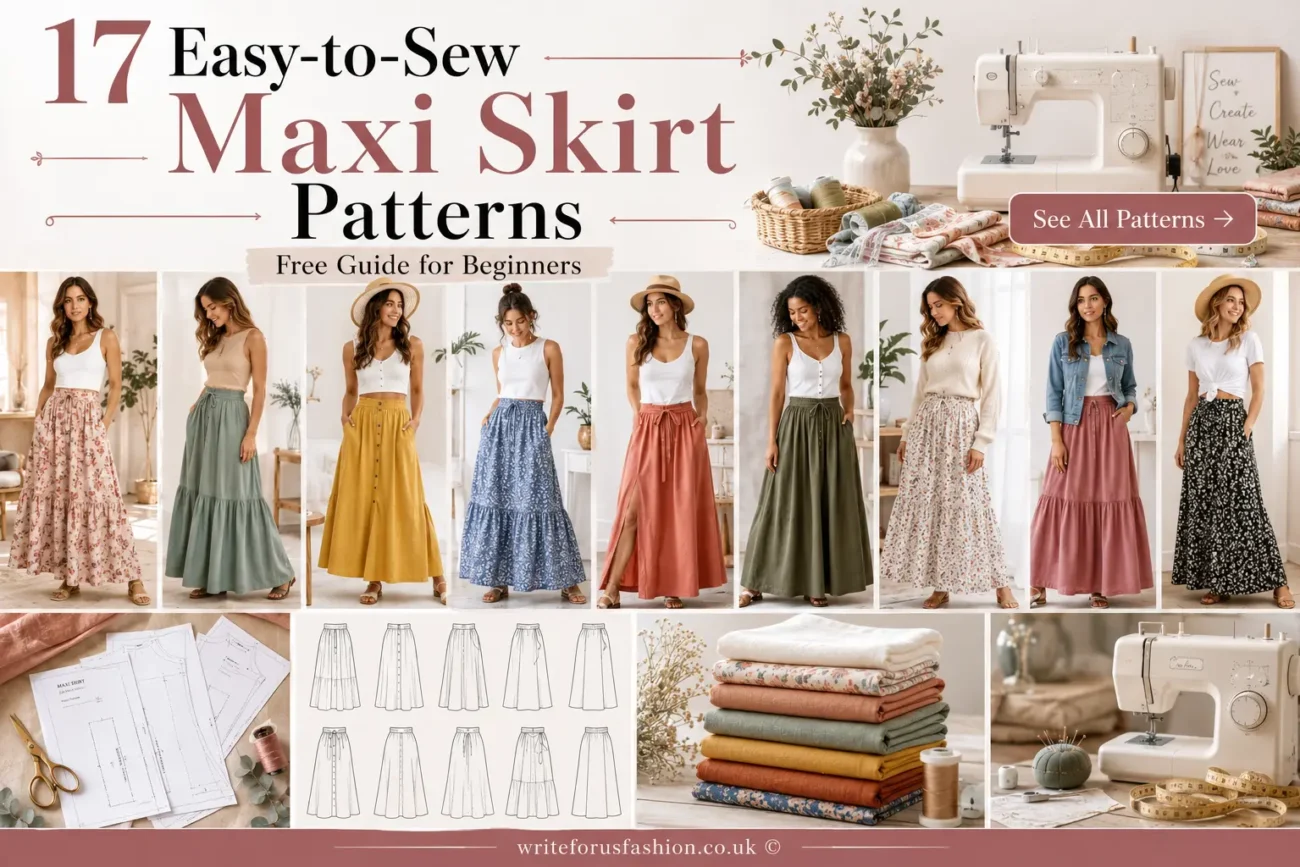
A maxi skirt is one of those pieces you can wear all year long. It feels comfy, it looks pretty, and you can dress it up or down. The best part? You don’t need years of sewing skill to make one. This guide shows you an easy to sew maxi skirt pattern for almost any style you like, from simple elastic-waist designs to flowy tiered skirts. Grab your fabric and sewing machine, and let’s get started.
1. Why an Easy Maxi Skirt Pattern Is Perfect for Beginners
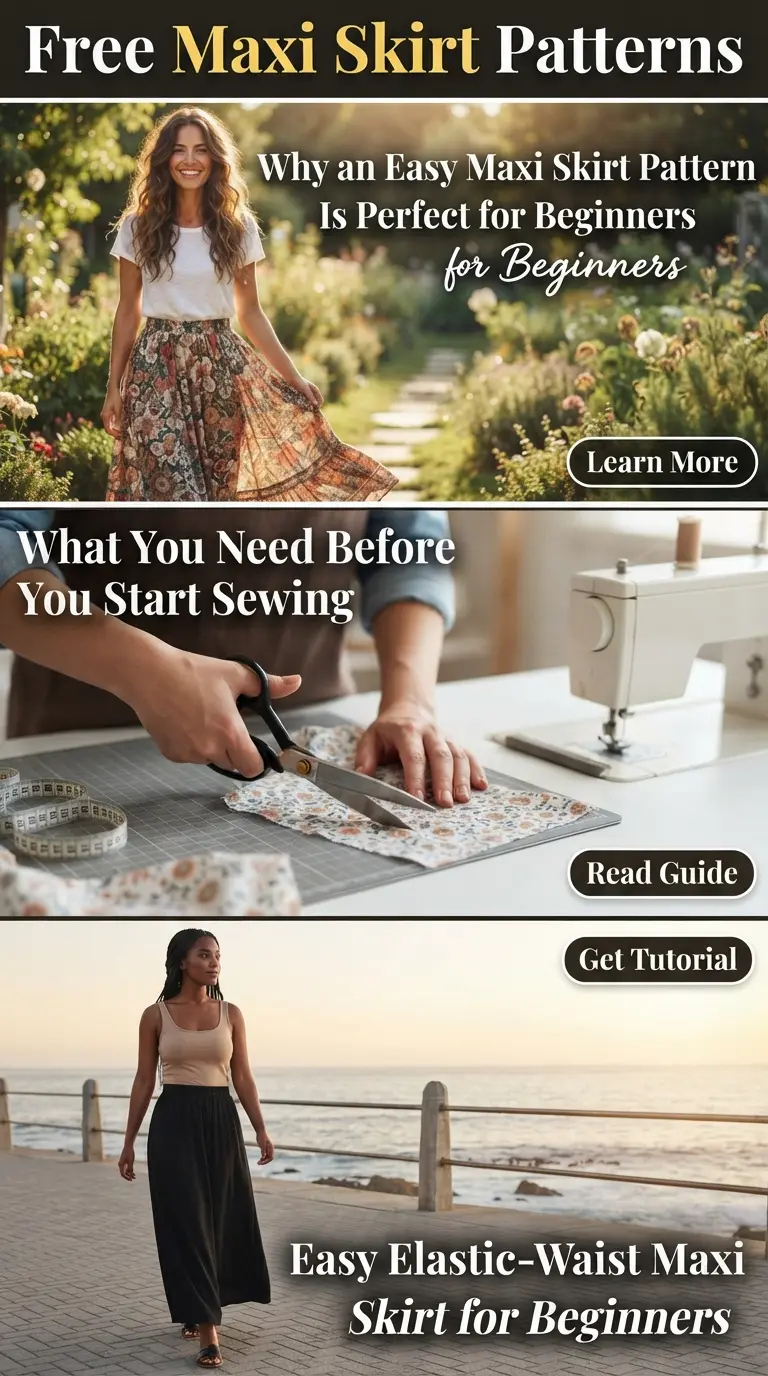
Maxi skirts are great for new sewers because most designs use simple shapes. Many patterns need just a rectangle or two for the main skirt piece. There are no tricky curves like you find in fitted dresses.
You also get quick results. A basic maxi skirt can come together in one afternoon. This makes it a fun project when you want to build confidence with your sewing machine. Once you learn the basic steps, you can change the fabric, length, or waistband to create a totally new look.
2. What You Need Before You Start Sewing
Before you cut any fabric, gather your supplies. Having everything ready saves time and stops mistakes.
Here is what most maxi skirt projects need:
- A sewing machine with a straight stitch
- Fabric (cotton, chiffon, denim, or lace, depending on the style)
- Matching thread
- Elastic (for elastic-waist styles)
- A zipper (for fitted waist styles)
- Measuring tape and fabric scissors
- Pins or fabric clips
- An iron for pressing seams
Wash and iron your fabric first. This stops the skirt from shrinking after you finish it.
3. Easy Elastic-Waist Maxi Skirt for Beginners
This is the simplest maxi skirt you can make. It uses two large fabric rectangles sewn into a tube, with an elastic waistband on top.
To make one, measure your waist and hips, then add extra room for comfort. Sew the side seams first, leaving a small gap for the elastic later. Fold over the top edge to create a casing, sew it down, and thread the elastic through. Close the gap, and you have a finished skirt.
This style works well with cotton, linen, or jersey knit fabric. It needs no zipper and no buttons, which makes it a great first project.
Read: 21 Free Bikini Sewing Patterns You Can Try at Home
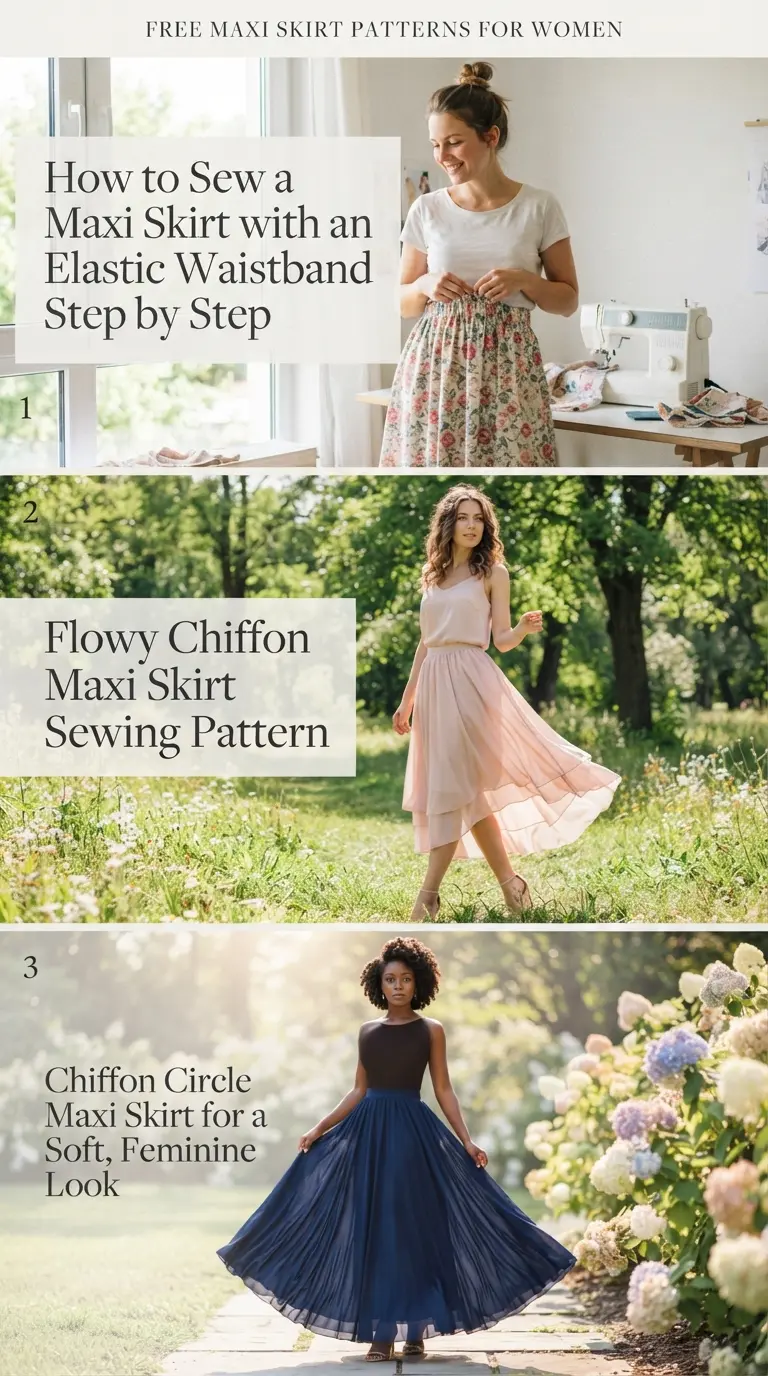
4. How to Sew a Maxi Skirt with an Elastic Waistband Step by Step
If you want more detail on the waistband part, here’s the simple version. Cut a long strip of fabric about three inches wide for the casing, or fold your skirt fabric over instead.
Sew the casing along the top edge, but leave a two-inch opening. Cut your elastic to fit snugly around your waist, then use a safety pin to guide it through the casing. Overlap the elastic ends and stitch them together. Close the opening in the casing, and your waistband is done.
This method gives a comfortable fit without any exact measurements needed.
5. Flowy Chiffon Maxi Skirt Sewing Pattern
Chiffon fabric gives your skirt a soft, floaty movement that looks lovely for warm days or evening wear. It takes a little more care than cotton because it slips easily while cutting and sewing.
To make cutting easier, pin your chiffon to tissue paper before you cut it. This stops the fabric from sliding. Use a fine needle and a longer stitch length to avoid puckering the seams.
A circle skirt shape works beautifully with chiffon because it lets the fabric flow and swirl. Add a lining underneath in a matching color so the skirt isn’t see-through.
6. Chiffon Circle Maxi Skirt for a Soft, Feminine Look
A circle skirt pattern uses a large circle of fabric with a smaller circle cut out for the waist. This shape gives you a full, swishy skirt without any pleats or gathers needed.
To draft your own pattern, use your waist measurement to work out the radius of the inner circle, then decide how long you want the skirt for the outer circle. Cut the fabric, sew a small zipper or elastic at the waist, and hem the bottom edge.
This pattern uses more fabric than a straight skirt, but the flowing result is worth it for special outings.
7. Tiered Maxi Skirt Pattern for Extra Volume
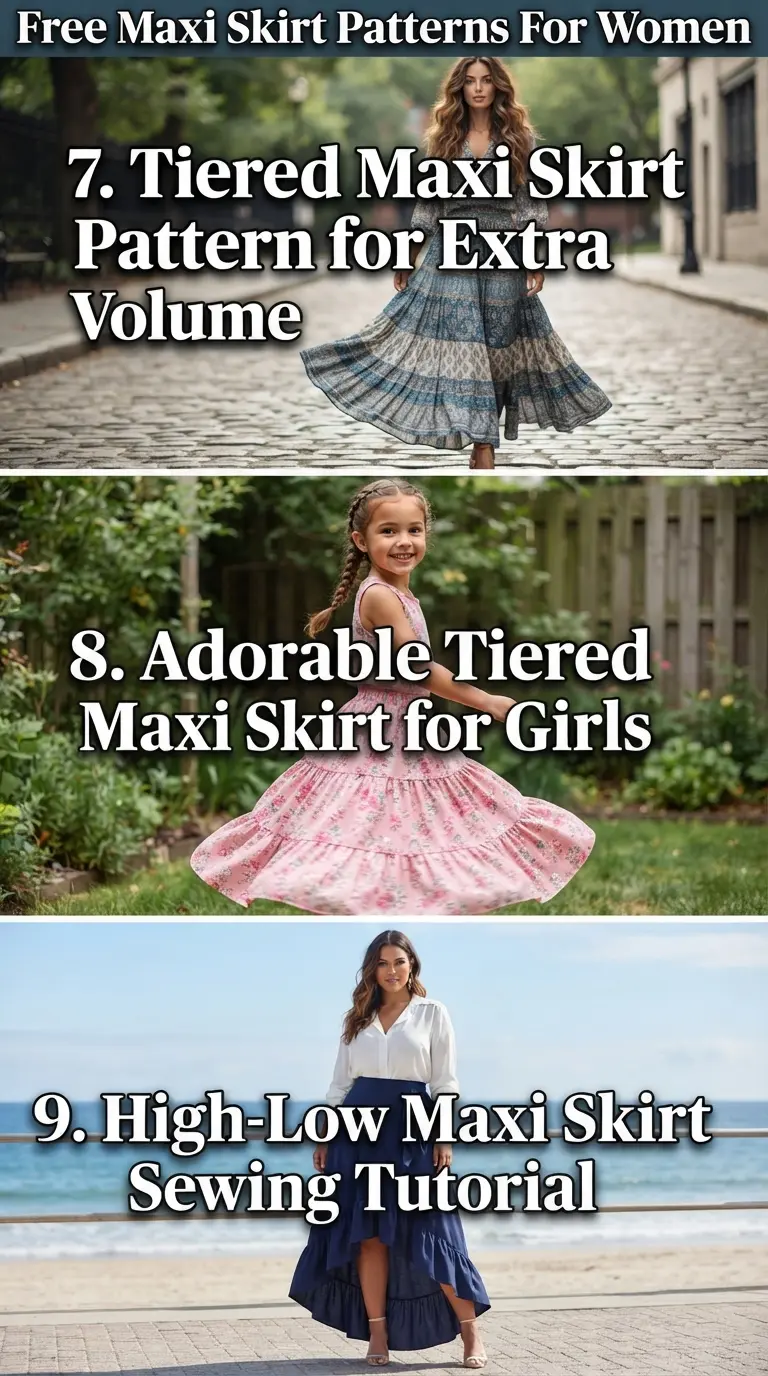
A tiered skirt has two or three fabric layers stacked and gathered together, getting wider toward the bottom. This design adds movement and works well for both kids and adults.
Start by cutting three rectangles, each one wider than the last. Gather the top edge of each lower tier to fit the bottom edge of the tier above it, then sew them together. Finish with a waistband and hem.
This style is forgiving because the gathers hide small sewing mistakes. It also looks great in lightweight cotton or floral prints.
8. Adorable Tiered Maxi Skirt for Girls
The same tiered method works beautifully for a child’s maxi skirt too. Simply scale down the measurements to fit a smaller waist and shorter length.
Choose soft, washable fabric since kids’ clothes need frequent washing. An elastic waistband is best for children’s skirts because it’s comfortable and easy for them to put on by themselves.
Add a fun touch like a ribbon trim or a contrasting bottom tier to make the skirt feel special. This project is quick enough to finish in one sitting, even with a young helper by your side.
9. High-Low Maxi Skirt Sewing Tutorial
A high-low skirt is shorter at the front and longer at the back. It gives a modern, stylish shape while still keeping that maxi-length flow.
To create this shape, start with your regular skirt pattern piece, then curve the front hemline upward while keeping the back hem straight and long. A rounded ruler or a large plate can help you draw a smooth curve.
Read: 21 Free Sewing Patterns for Women’s Tops You’ll Want to Make ASAP
This style pairs nicely with a simple elastic waist or a fitted waistband with a zipper. It’s a great way to try something different once you’re comfortable with basic maxi skirt sewing.
10. Easy Pleated Maxi Skirt Sewing Pattern
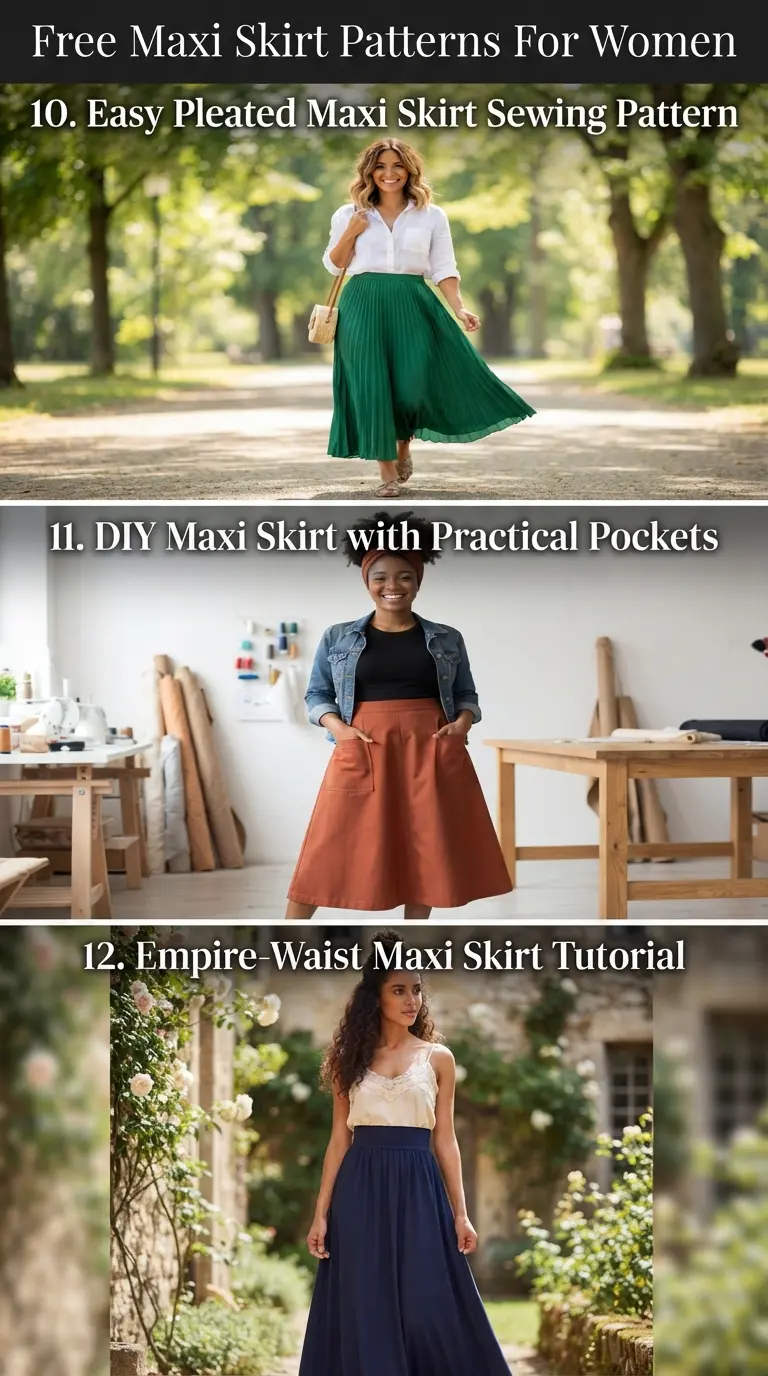
Pleats give a skirt a neat, structured look instead of loose gathers. Box pleats or knife pleats both work well for a maxi skirt.
Measure and mark your pleat placement evenly around the waist before folding. Press each pleat with your iron, then pin it in place. Stitch across the top of the pleats to hold them, and attach your waistband.
Pleated skirts look sharp in cotton, linen, or denim. This style takes a bit more planning than a gathered skirt, but the finished look is clean and polished.
11. DIY Maxi Skirt with Practical Pockets
Pockets turn a simple skirt into a much more useful piece of clothing. In-seam pockets are the easiest type to add, since you sew them right into the side seams.
Cut two pocket pieces from lightweight fabric. Sew them to the front and back skirt pieces before you sew the side seams together. Then sew the side seams as normal, leaving the pocket opening free.
This small addition makes a big difference for everyday wear. You can carry your phone or keys without needing a bag.
12. Empire-Waist Maxi Skirt Tutorial
An empire-waist style sits higher, just under the bust area, and flows loosely from there. This design usually pairs with a fitted top, but you can also sew a standalone skirt with a wide, soft waistband that sits above your natural waistline.
Cut your skirt fabric with extra gathers at the top to attach to a fitted waistband. This creates a flattering, comfortable shape that skims over the tummy area.
This style suits soft, drapey fabrics like rayon or jersey knit best, since stiff fabric won’t gather smoothly.
13. DIY Denim Paperbag Maxi Skirt with a Waist Belt
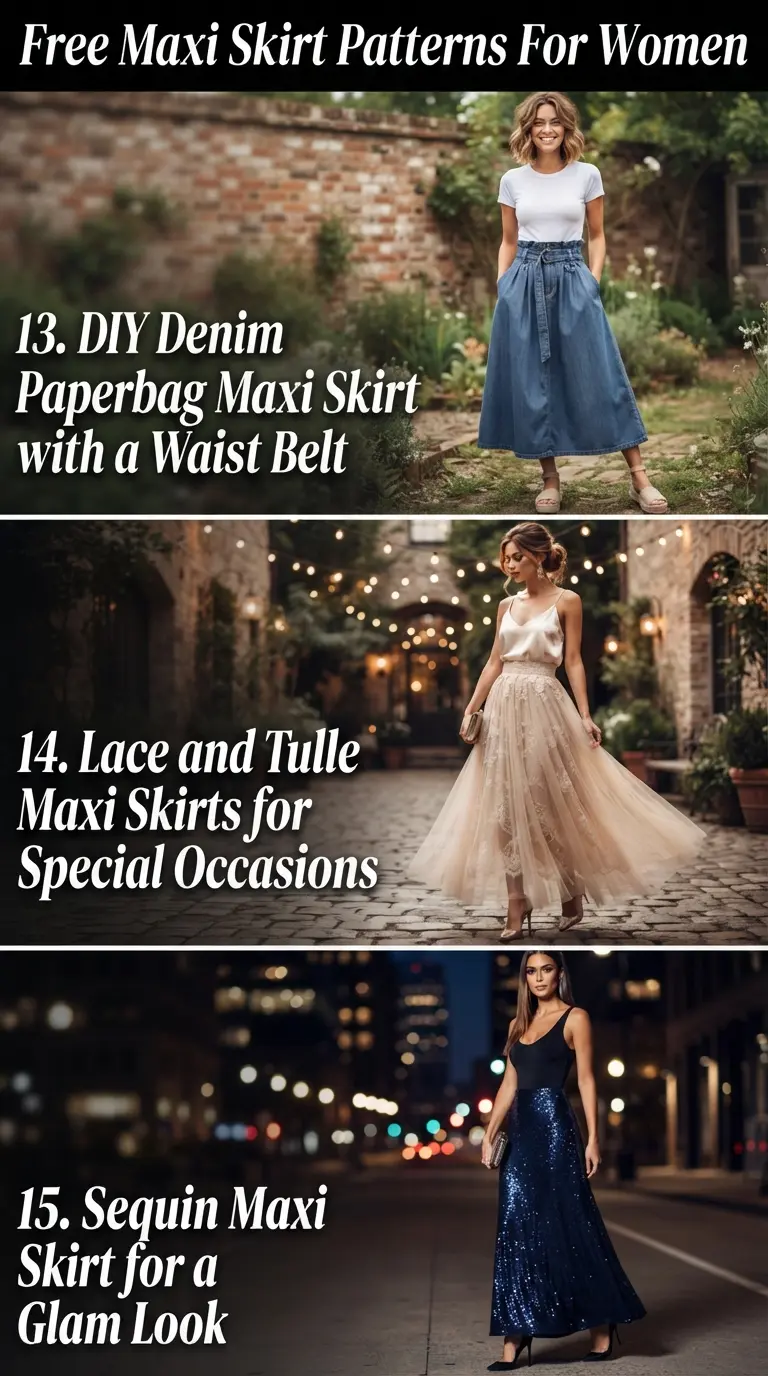
A paperbag waist has soft folds at the top, cinched in with a fabric belt or tie. It gives a relaxed, casual look that works great in denim.
Cut your skirt with a few extra inches of height at the waist. Sew a casing near the top and thread elastic through it, then let the extra fabric fold over to create the paperbag effect. Add fabric belt loops and a matching tie belt to finish the look.
Denim is a sturdy fabric, so use a heavier needle on your machine to avoid skipped stitches.
14. Lace and Tulle Maxi Skirts for Special Occasions
Lace and tulle skirts suit weddings, parties, and photo shoots. These fabrics need gentle handling, since lace can fray and tulle can snag on pins.
For a lace skirt, sew a lining first, then attach the lace layer over it. For tulle, gather several layers together at the waist for a fuller, dreamier shape. A concealed zipper at the back gives these skirts a neat, professional finish instead of a bulky elastic waist.
These fabrics cost more than cotton, so measure carefully before cutting to avoid waste.
15. Sequin Maxi Skirt for a Glam Look
Sequin fabric adds sparkle for evenings out or celebrations. It’s trickier to sew because of the hard sequin pieces, but a few tricks make it manageable.
Use a walking foot on your machine if you have one, since it helps feed the thick fabric evenly. Trim away sequins from the seam allowance before sewing to reduce bulk and protect your needle. A plain lining underneath keeps the skirt comfortable against your skin.
Read: 20 Adorable Picture Day Hairstyles for Curly Hair Girls
Take your time with this project. Sequin fabric needs slower, careful stitching rather than quick sewing.
16. Simple Vintage-Inspired Long Skirt Pattern
A vintage-style maxi skirt often features a fitted waist, soft gathers, and a classic silhouette. Cotton prints with small florals or polka dots give this look instantly.
Use a fitted waistband with a button or zipper closure for that classic finish. Add a wide hem for a graceful swing when you walk. A simple gathered skirt shape, rather than a fitted one, keeps the sewing easy while still giving that retro feel.
This style works for everyday wear or a themed event, and it never really goes out of style.
17. Choosing the Right Fabric for Your Maxi Skirt
Fabric choice changes how your skirt looks, feels, and behaves while sewing. Lightweight fabrics like cotton lawn, chiffon, and rayon drape softly and suit warm weather.
Heavier fabrics like denim or twill give a more structured shape and work well for everyday casual skirts. Stretchy fabrics like jersey knit are the most forgiving for beginners, since they don’t need a zipper and hide small fitting issues.
Always check the fabric care label too. A skirt you can toss in the wash is far more practical than one needing special cleaning.
Common Mistakes to Avoid When Sewing a Maxi Skirt
A few small errors can affect your finished skirt. Knowing them ahead of time helps you avoid frustration.
- Skipping the pre-wash step, which can lead to shrinking later
- Cutting fabric off-grain, which causes the skirt to twist when worn
- Using the wrong needle size for thick or delicate fabric
- Rushing the hem, which leaves an uneven bottom edge
- Forgetting to try on the skirt before finishing the waistband
Slowing down at each step makes a real difference in how professional your finished skirt looks.
Final Thoughts on Sewing Your Own Maxi Skirt
Sewing your own clothes gives you a skirt that fits your style and your body, not just what’s on a store rack. With an easy to sew maxi skirt pattern, you can start with a basic elastic-waist design and work your way up to lace, tiers, or pleats as your skills grow.
Pick a style from this list, gather your fabric, and give it a try. Every skirt you sew teaches you something new for the next project. Soon, you’ll have a whole wardrobe of maxi skirts made just the way you like them.
Frequently Asked Questions
What is the easiest maxi skirt pattern for a beginner?
An elastic-waist maxi skirt is the easiest style to start with. It uses simple rectangle pieces and needs no zipper, buttons, or fitted waistband.
How much fabric do I need for a maxi skirt?
Most adult maxi skirts need about two to three yards of fabric, depending on your height and how full you want the skirt. Circle skirts and tiered styles usually need more fabric than straight designs.
Can I make a maxi skirt without a sewing pattern?
Yes, many maxi skirt styles only need simple rectangles or a large circle, which you can measure and cut directly from your fabric. A printed pattern helps with more fitted designs, but it isn’t always necessary.
What fabric is best for a flowy maxi skirt?
Chiffon, rayon, and lightweight cotton give the softest, most flowing movement. These fabrics work well for warm weather and casual or dressy occasions.
How do I stop my maxi skirt from being see-through?
Add a lining underneath your main fabric layer. This is especially useful for chiffon, lace, and other lightweight or sheer materials.
