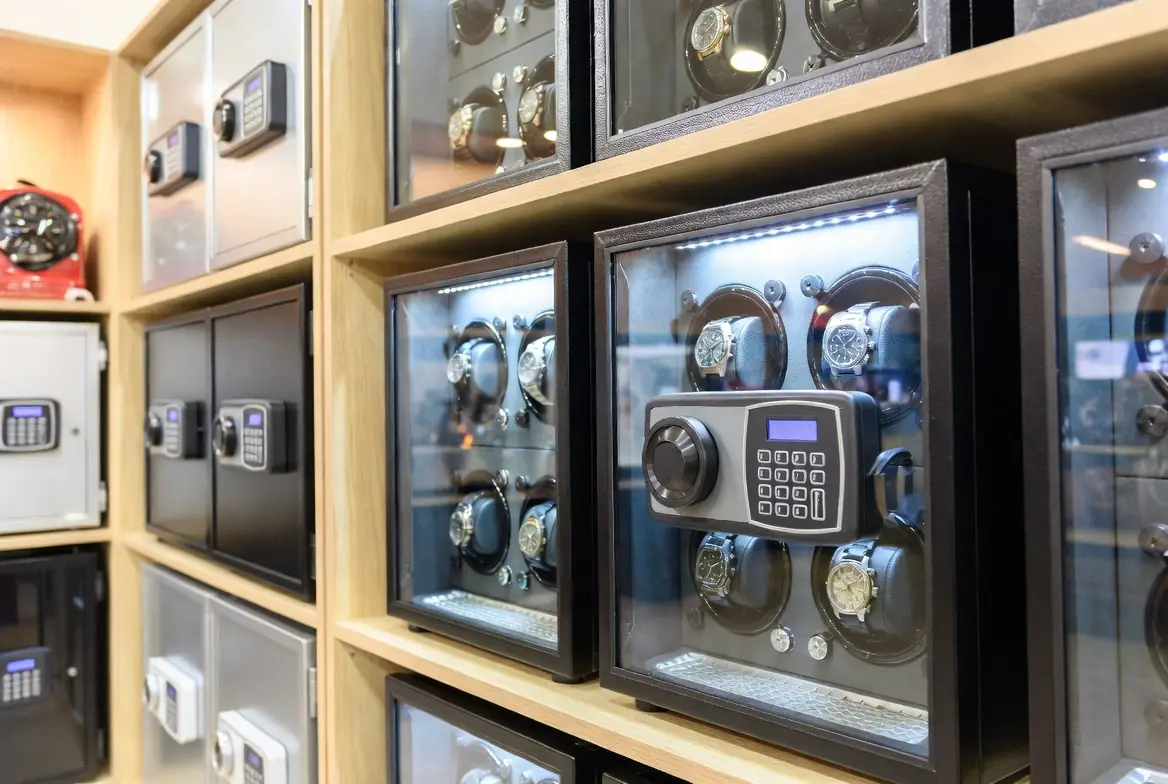
For the dedicated horologist, a luxury watch is far more than a tool for telling time; it is a mechanical masterpiece, an heirloom, and a significant financial investment. As your collection grows, so does the responsibility of maintaining it. While a standard watch box provides a home and a basic winder keeps the gears moving, a watch winder safe offers the ultimate fusion of high-security protection and precision mechanical care.
In this guide, we explore why a watch winder safe is the gold standard for serious collectors and how to choose the right vault to ensure your timepieces remain secure, wound, and ready for the wrist at a moment’s notice.
What is a Watch Winder Safe & Why It Matters
A watch winder safe is a specialized security vault designed specifically for automatic watches. Unlike a standard home safe, it features integrated motorized rotors that mimic the natural motion of the human wrist. This ensures that the mainspring of an automatic watch remains wound, preventing the internal lubricants from settling or “gumming up”—a common issue that can lead to expensive servicing requirements.
Beyond mechanical maintenance, these safes provide physical security that a wooden display box simply cannot. Crafted from reinforced steel and often featuring fireproof insulation, they protect your assets from theft, fire, and environmental damage. For those who own pieces from Rolex, Patek Philippe, or Audemars Piguet, a watch winder safe is not just an accessory; it is an essential insurance policy for your collection.
Key Features & Benefits of a Premium Watch Winder Safe
When investing in a high-end safe, you aren’t just buying a metal box. You are investing in several layers of advanced technology:
1. Advanced Security & Insurance Ratings
Aevitas watch winder safes are built to professional standards, with many models offering specific insurance ratings (such as Grade 1 through Grade 5). These ratings indicate the level of resistance against forced entry, allowing you to secure coverage for collections valued from £10,000 to over £1,000,000.
2. Independent Programmable Rotors
Not all watches are created equal. A Rolex Submariner may require a different number of Turns Per Day (TPD) than a Patek Philippe Perpetual Calendar. Premium safes allow you to program each rotor individually, setting the direction (clockwise, counter-clockwise, or bi-directional) and the TPD to match the exact specifications of each movement.
3. Fire and Water Resistance
Many luxury safes include fire-resistant liners that can withstand extreme temperatures for 30 to 60 minutes. This ensures that even in the event of a household disaster, your horological investments—and the sentimental stories they carry—remain intact.
4. Silent Operation and Aesthetic Design
The best safes use ultra-quiet Japanese Mabuchi motors, making them suitable for placement in a master bedroom or private study. Inside, you’ll often find LED lighting and plush leather or velvet interiors that turn a security device into a stunning gallery for your watches.
Who This Collection Is Best For
The High-Net-Worth Collector
If your collection includes multiple high-complication watches (like moon phases or perpetual calendars), the time required to reset them after they stop can be exhaustive. A multi-watch safe keeps them perfectly synchronized.
The Security-Conscious Investor
For those who view watches as a portable asset class, a safe is a necessity. If you frequently travel or leave your home unattended, a bolted-down, insurance-rated safe provides the peace of mind that your “wearable investments” are protected against burglary.
The Style-Conscious Enthusiast
You appreciate the finer things in life. You don’t want a clunky, industrial safe in your dressing room. You need a piece of furniture that reflects the quality of the watches inside—something with a leather-wrapped exterior and a high-tech biometric interface.
How to Choose the Right Watch Winder Safe
Choosing a safe requires a balance between your current needs and your future collecting goals. Consider the following:
- Capacity: Always buy for the collection you want, not just the one you have. If you currently own four watches, an 8-watch safe provides room for growth without needing an upgrade next year.
- Security Level: Check the insurance value of your total collection. If your watches are worth £150,000, look for a “Grade 2” safe which typically covers that value.
- Locking Mechanism: Biometric (fingerprint) locks offer the fastest access, while digital keypads provide a reliable, battery-backed solution. Some collectors prefer dual-entry systems for maximum security.
- Power Source: While many safes plug into the wall, look for models with battery backup or a luxury watch winder system that ensures the rotors keep turning even during a power outage.
Why a Watch Winder Safe is a Smart Long-Term Investment
Many buyers hesitate at the initial cost of a high-end safe, but the long-term value is undeniable.
- Reduced Service Costs: By keeping the movement active, you ensure that oils remain distributed. This can extend the interval between professional services, which often cost hundreds of pounds per watch.
- Increased Resale Value: Collectors who can prove their watches were stored in a temperature-controlled, wound environment often command higher prices on the secondary market.
- Consolidated Storage: Most safes include additional drawers for jewellery, passports, and spare watch straps, acting as a central hub for all your most valuable watch boxes and accessories.
Common Mistakes Buyers Should Avoid
- Buying Too Small: As mentioned, watch collections tend to grow. A safe is a heavy, permanent fixture; replacing it because you ran out of room is a logistical headache.
- Ignoring TPD Settings: Using a “dumb” winder that spins 24/7 can cause unnecessary wear. Ensure your safe has “rest cycles” to simulate natural wear patterns.
- Focusing Only on Steel: While the exterior must be strong, the interior must be soft. Low-quality watch holders can scratch gold cases or stretch leather straps. Look for adjustable, cushioned holders.
- Forgetting the Bolt-Down: A safe is only secure if it stays put. Ensure your safe is professionally installed and bolted to the floor or wall to prevent “carry-away” theft.
Conclusion
A luxury watch collection represents your taste, your history, and your hard-earned success. Protecting that collection requires more than a simple lock and key. By investing in a professional-grade watch winder safe, you are ensuring that your timepieces are shielded from external threats while receiving the mechanical care they need to last for generations.
Whether you are looking for a compact 4-watch vault or a Grade 5 high-capacity safe, choosing a solution that prioritizes both security and horological precision is the hallmark of a true collector. Explore the range of insurance-rated protection today and give your collection the home it deserves.
FAQs
1. Does a watch winder safe damage my watch over time? No, provided it is a high-quality unit with programmable TPD. Modern automatic watches are designed to be worn daily; a good winder simply mimics this behavior.
2. How many Turns Per Day (TPD) do I need? Most modern watches require between 650 and 900 TPD. You should check your specific watch manufacturer’s guidelines for the optimal setting.
3. Can I store manual-wind watches in a winder safe? You can store them in the safe for security, but the winding rotors will not work on manual-wind watches. Look for safes that include static storage drawers for manual and quartz pieces.
4. Are these safes fireproof? Many are. Look for models with a fire-resistance rating (usually 30 or 60 minutes) to protect your watches from heat damage.
5. How do the winders get power inside a thick steel safe? Most safes feature an internal power relay that connects to an external AC adapter. High-end models also include a battery backup system.
6. Is a biometric lock better than a keypad? Biometric locks are faster and prevent you from needing to remember a code, but high-quality digital keypads are often considered more robust for long-term use.
7. Can the magnets in the motors damage my watch? Cheaper winders may have unshielded motors, but premium safes use shielded, low-EMF motors specifically designed to prevent magnetization of the watch’s hairspring.
8. Do I need to bolt the safe down? Absolutely. To meet insurance requirements and prevent theft, a safe should always be bolted to a solid concrete floor or a structural wall.
Leave a Reply