
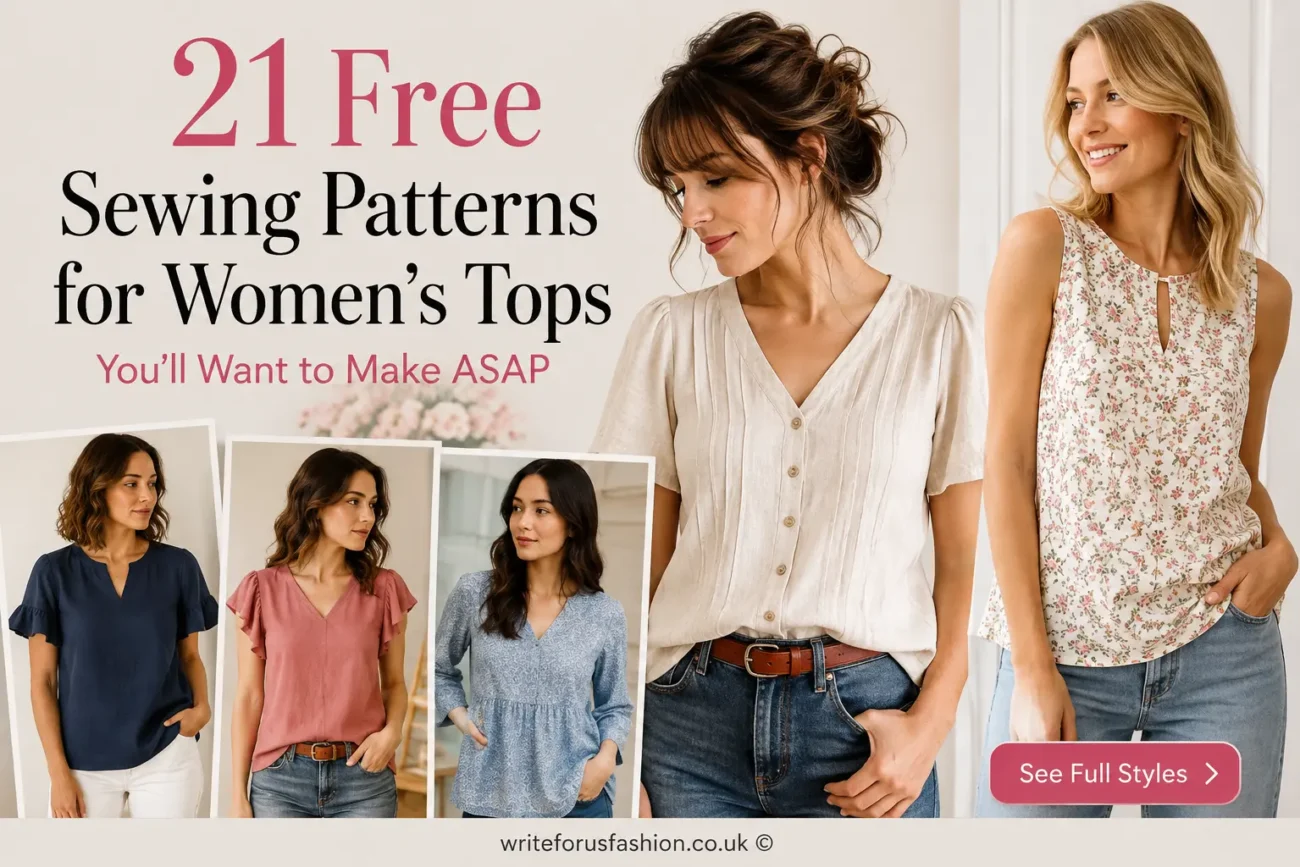
If you love making your own clothes, a good pile of free sewing patterns for women’s tops can save you real money and give you a wardrobe full of pieces made just for you. Sewing your own top also lets you pick the fabric, the fit, and the little details that stores never seem to get right. In this article, you will find 21 free patterns for tops, from simple beginner shirts to fun tunics and crop tops. Grab your fabric and your machine, because you are about to find your next favorite project.
1. Easy Gingham Flutter-Sleeve Top
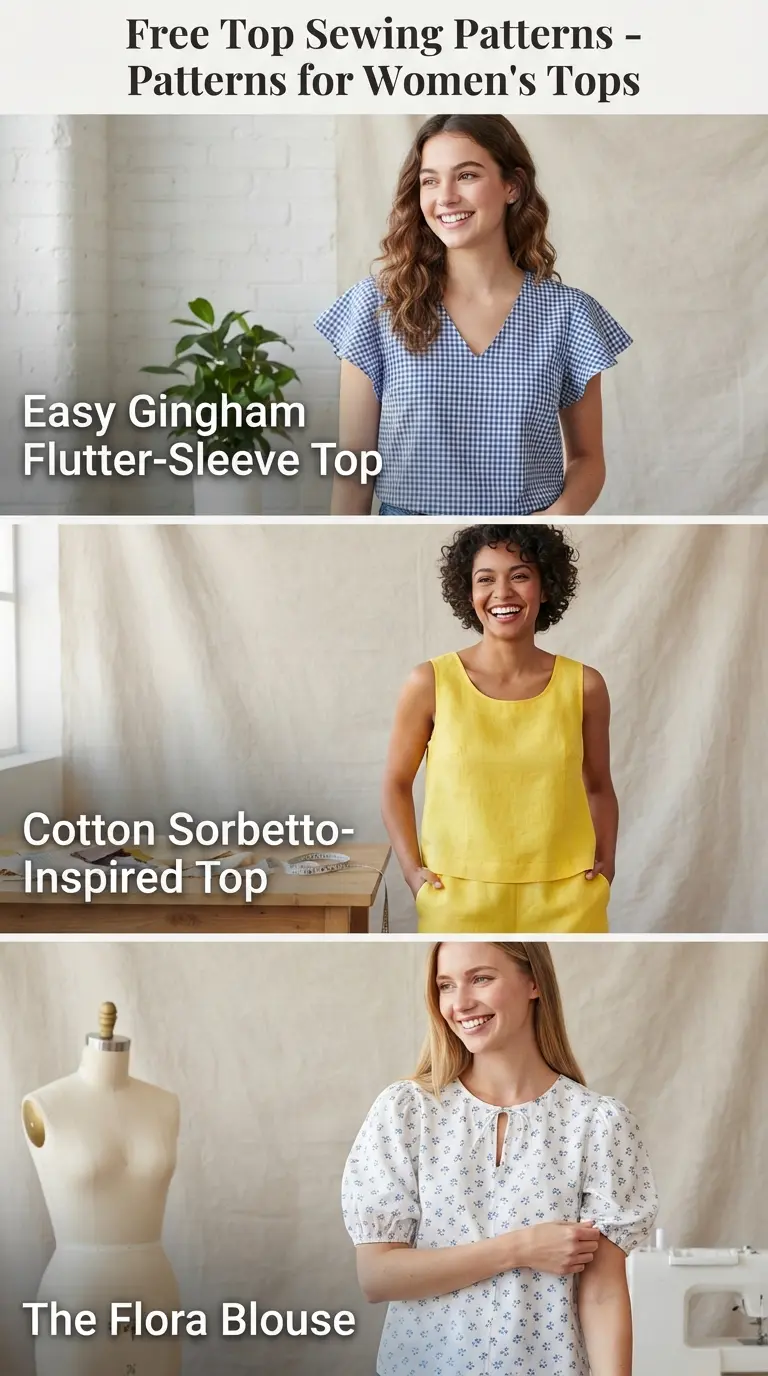
This top has soft, floaty sleeves that move when you walk. Gingham fabric gives it a fresh, playful look, but any light cotton works well. The pattern uses simple pieces, so cutting and sewing go fast.
Beginners often pick this pattern because the sleeve is easy to attach. You just gather the fabric a little at the top before sewing it to the armhole. The result looks fancy, but the steps stay simple the whole way through.
2. Cotton Sorbetto-Inspired Top
This top has a clean, boxy shape with a pretty pleat down the front. It fits loosely, so it feels comfortable in warm weather. Cotton works best because it holds its shape and breathes well.
The front pleat is the only tricky part, and even that just needs careful pressing. Once you fold and pin it in place, the sewing itself is straight seams. This makes it a great next step after your very first sewing project.
Read: 20 Adorable Picture Day Hairstyles for Curly Hair Girls
3. The Flora Blouse
The Flora Blouse has a soft, feminine shape with a rounded neckline and gentle darts at the bust. Darts help the top fit closer to your body instead of hanging straight down. This gives you a more polished look.
If you have never sewn a dart before, take your time and follow the pattern markings closely. A few practice tries on scrap fabric can help. Once you get the hang of it, this blouse becomes one you will want to sew again and again.
4. DIY Tie-Front Top
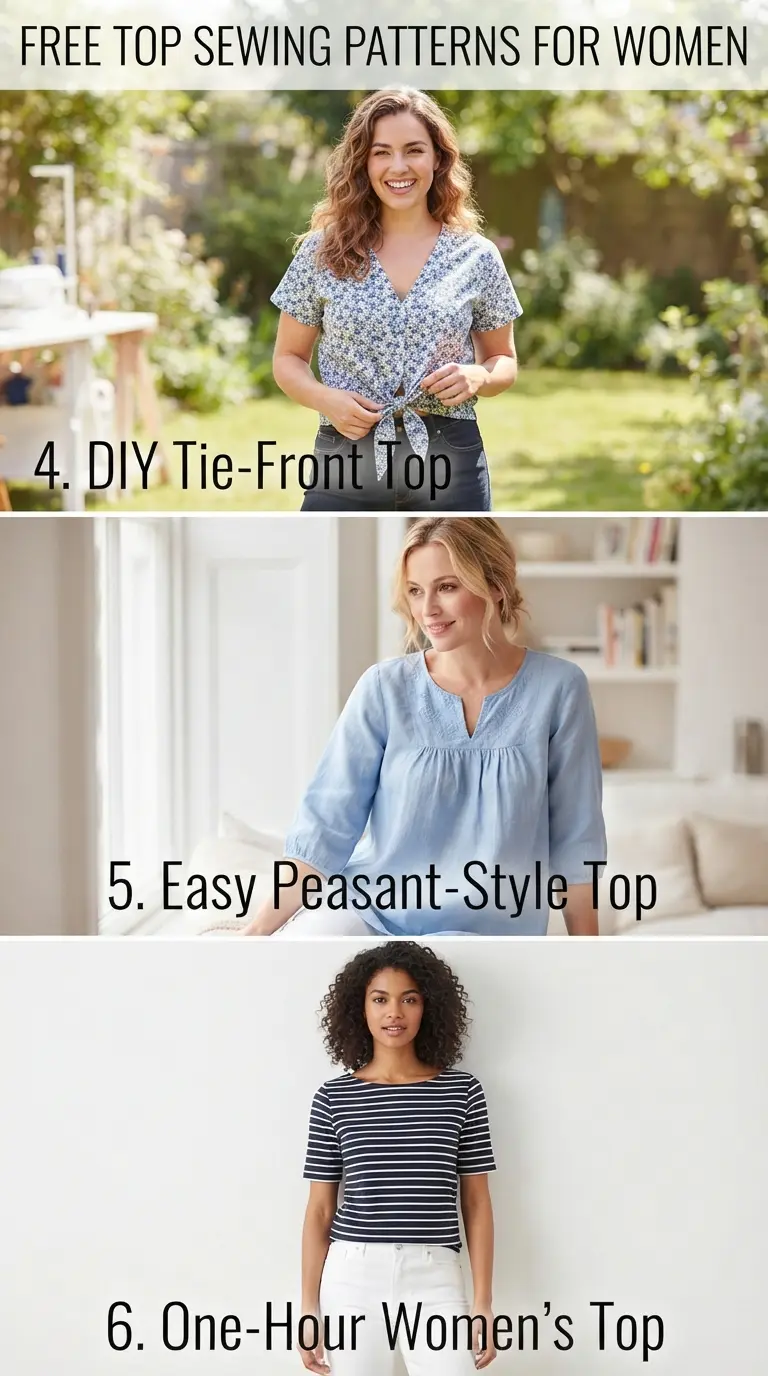
A tie-front top ties in a knot or bow at the front, which lets you adjust the fit right on your body. This makes it forgiving if your measurements sit between two sizes. It also adds a fun style detail without extra sewing steps.
You can crop this top short for a summer look or leave it longer for everyday wear. The tie itself is just two long fabric strips, so it costs almost nothing extra to make. It is a simple way to add personality to a basic top pattern.
5. Easy Peasant-Style Top
Peasant tops have a loose, relaxed fit with a gathered neckline, often finished with elastic or a drawstring. They hang away from the body, which makes them comfortable in hot weather. This style also hides fit issues well, since the fabric skims rather than clings.
Lightweight cotton, rayon, or linen all work nicely for this pattern. Because the shape is so forgiving, beginners often find this one of the easiest tops to sew. Add embroidery or trim along the neckline if you want a more decorative finish.
6. One-Hour Women’s Top
Some patterns really can be sewn in about an hour, and this is one of them. It usually has just a front piece, a back piece, and simple sleeve or armhole finishing. Fewer pieces mean fewer steps and less time at the machine.
This pattern works well when you want a quick refresh for your closet without a big time commitment. It is also a smart choice for practicing a new fabric type, since you are not risking hours of work if something goes wrong. Keep a few made up for quick, easy outfits.
7. Gingham Drop-Waist Peplum Top
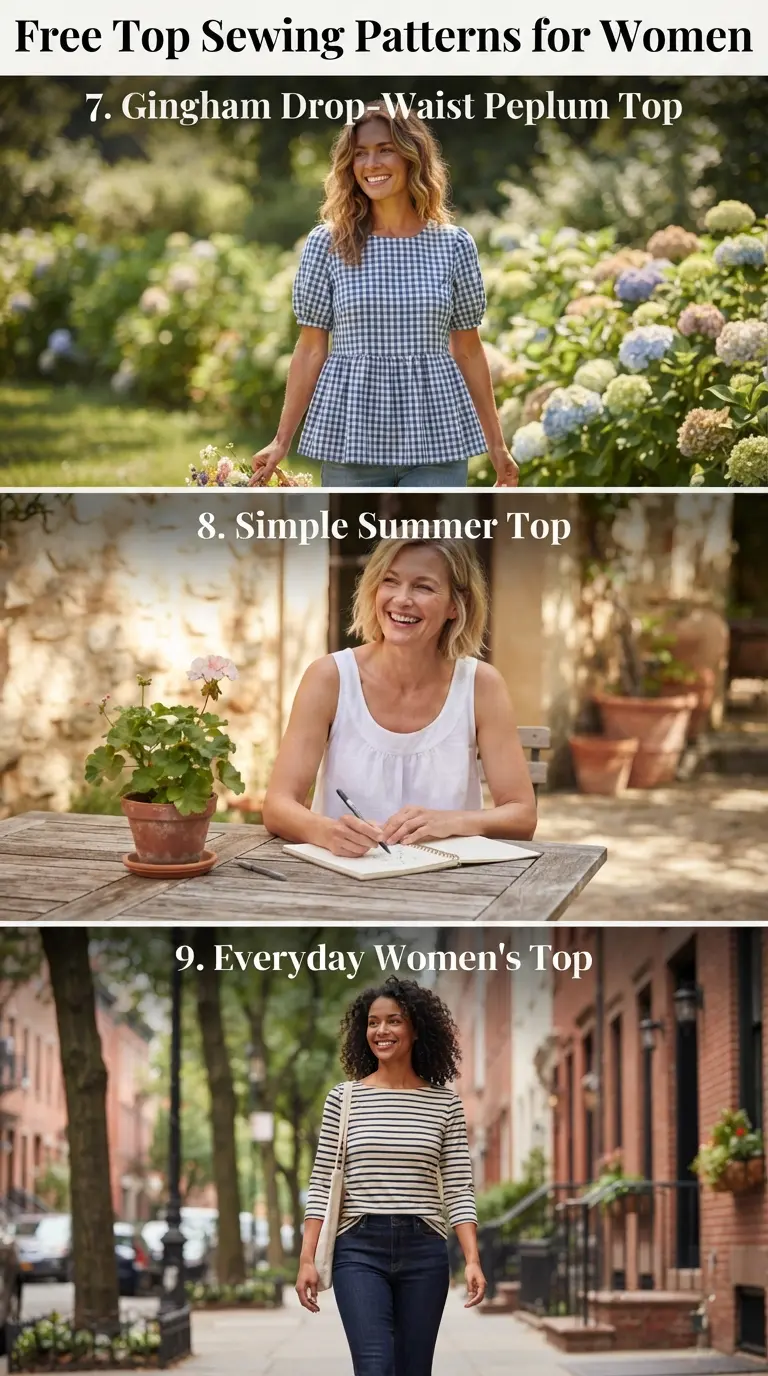
A peplum top has a fitted upper section with a flared piece added at the waist, which flares out over the hips. The drop-waist version places that flare a bit lower than usual, which suits many body shapes. Gingham fabric adds a classic, cheerful touch.
This pattern involves a bit more construction than a basic top, since you sew and attach the peplum piece separately. It is a good project once you feel comfortable with simple seams and want to try something with more shape. The payoff is a top that looks store-bought.
Read: 20 Gorgeous Pageant Hairstyles With Soft Curls for a Glamorous Look
8. Simple Summer Top
A simple summer top usually means light fabric, short or no sleeves, and a relaxed cut that keeps you cool. These patterns focus on comfort first, with minimal fitting or shaping involved. That makes them fast to sew and easy to wear.
Linen, cotton voile, and rayon challis are popular fabric choices for this style. Because the pattern stays basic, it is a great one to sew in multiples using different prints. You can build a whole warm-weather wardrobe from just one pattern piece set.
9. Everyday Women’s Top
An everyday top is designed to work with jeans, skirts, or shorts, which makes it one of the most useful patterns in your collection. It usually has a simple neckline, set-in or raglan sleeves, and a comfortable fit through the body. Nothing about it feels fussy or complicated.
Because you will likely sew this one often, it is worth choosing a good quality cotton or knit fabric. Once you understand how the pattern fits you, you can adjust the length or neckline slightly each time for variety. This becomes the reliable pattern you return to again and again.
10. Scooped-Hem Blouse
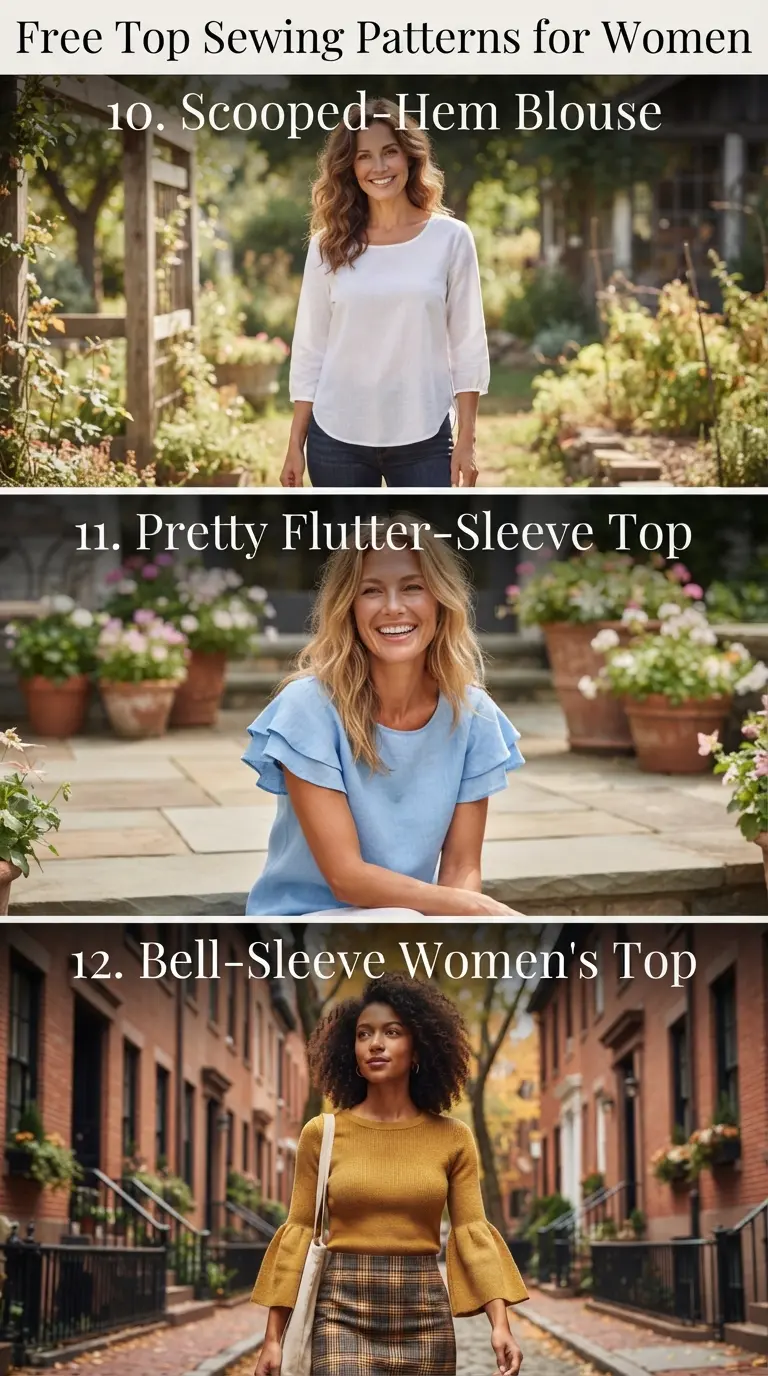
A scooped hem curves downward at the sides instead of staying straight across, which adds visual interest and a flattering line. This detail works well over leggings or tucked into high-waisted bottoms. It is a small change that makes a big style difference.
Sewing a curved hem takes a bit more patience than a straight one, since you need to ease the fabric smoothly around the curve. Pressing as you go helps keep the edge neat. Once finished, this blouse gives a simple top a more thoughtful, designed look.
11. Pretty Flutter-Sleeve Top
Flutter sleeves are short, light sleeves that flare gently instead of fitting close to the arm. They add a soft, feminine touch without adding much sewing difficulty. This pattern usually pairs well with a simple front and back for an easy overall project.
Choose a fabric with a bit of drape, like rayon or a soft cotton blend, so the sleeve moves nicely. Stiffer fabrics can make the flutter look stiff instead of soft. This top works well for both casual days and slightly dressier occasions.
12. Bell-Sleeve Women’s Top
Bell sleeves flare out dramatically from the elbow down, creating a bold, eye-catching shape. They add drama to an otherwise simple top without requiring any extra shaping on the body. The sleeve itself does most of the styling work.
Because the sleeve flares so much, a soft or medium-weight fabric drapes best. Stiff fabric can hold the shape but may feel heavy on the arm. Hemming the wide sleeve opening evenly takes a little care, but the finished look is well worth the extra attention.
13. Classic Women’s Shirt
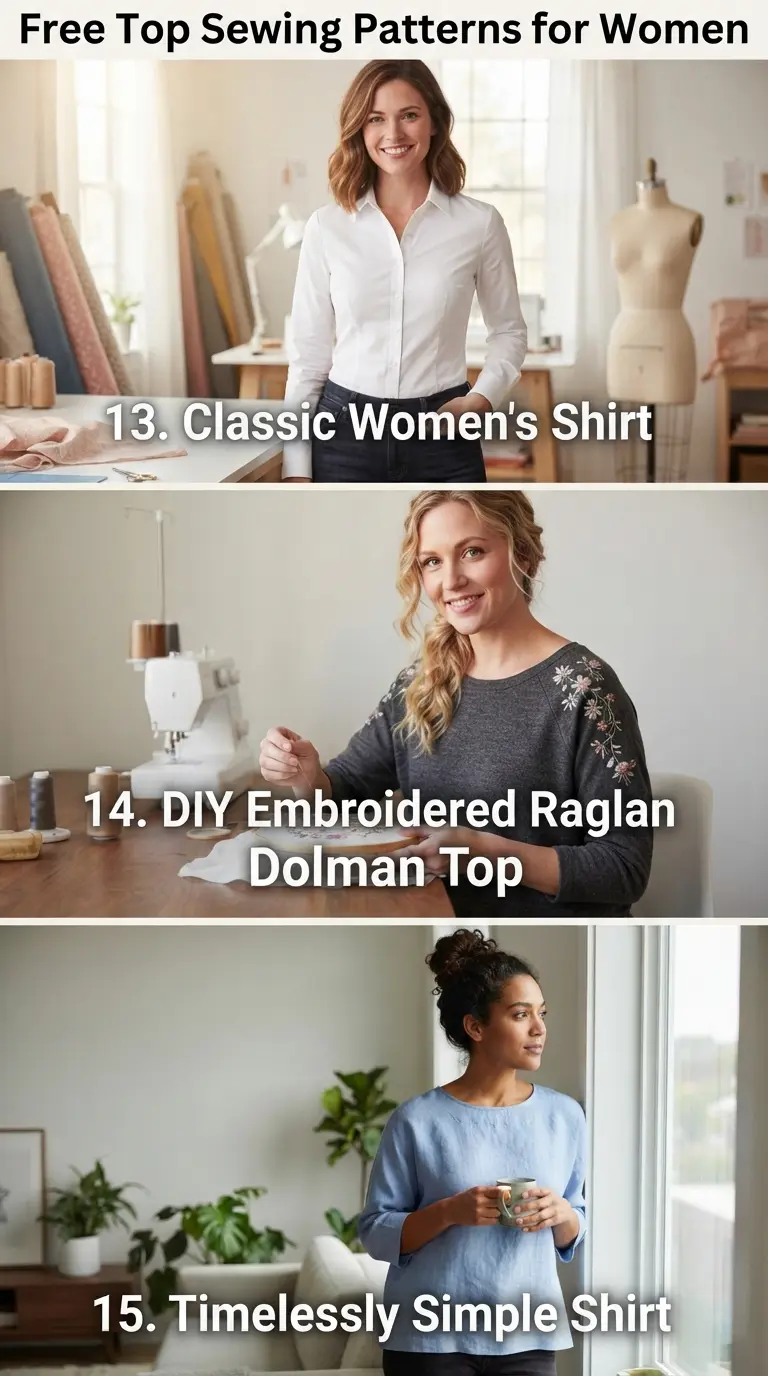
A classic shirt pattern usually includes a collar, button placket, and set-in sleeves, which makes it more advanced than a simple pullover top. It gives you a polished, put-together look suited for work or everyday wear. Learning this pattern teaches skills you will use in many future projects.
Take your time with the collar and buttonholes, since these areas need the most precision. Practicing on a sample piece before cutting your good fabric can help you feel more confident. Once mastered, this pattern becomes a valuable addition to your sewing skills.
Read: 20 Gorgeous Passion Twists With Curly Ends Hairstyles to Inspire Your Next Look
14. DIY Embroidered Raglan Dolman Top
A raglan dolman top has sleeves that extend in one piece from the neckline to the wrist, without a separate shoulder seam. This creates a relaxed, roomy fit that suits many body types. Adding embroidery along the neckline or sleeve turns a plain top into something special.
Because the sleeve and body connect in fewer pieces, this pattern actually sews up quickly despite its interesting shape. Choose a soft knit or lightweight woven fabric for the most comfortable fit. Even simple hand embroidery, like small flowers or dots, can make the top feel one of a kind.
15. Timelessly Simple Shirt
Some patterns stay popular for years because the shape never really goes out of style. A timeless shirt pattern usually has a classic fit, a simple neckline, and clean lines that work with almost any bottom or occasion. It is the kind of piece you can wear for years.
Because the design is so simple, the fabric you choose makes a big difference in the final look. A crisp cotton feels more tailored, while a soft rayon feels more relaxed. This pattern is worth keeping in your collection as a dependable go-to.
16. Open-Shoulder Blouse
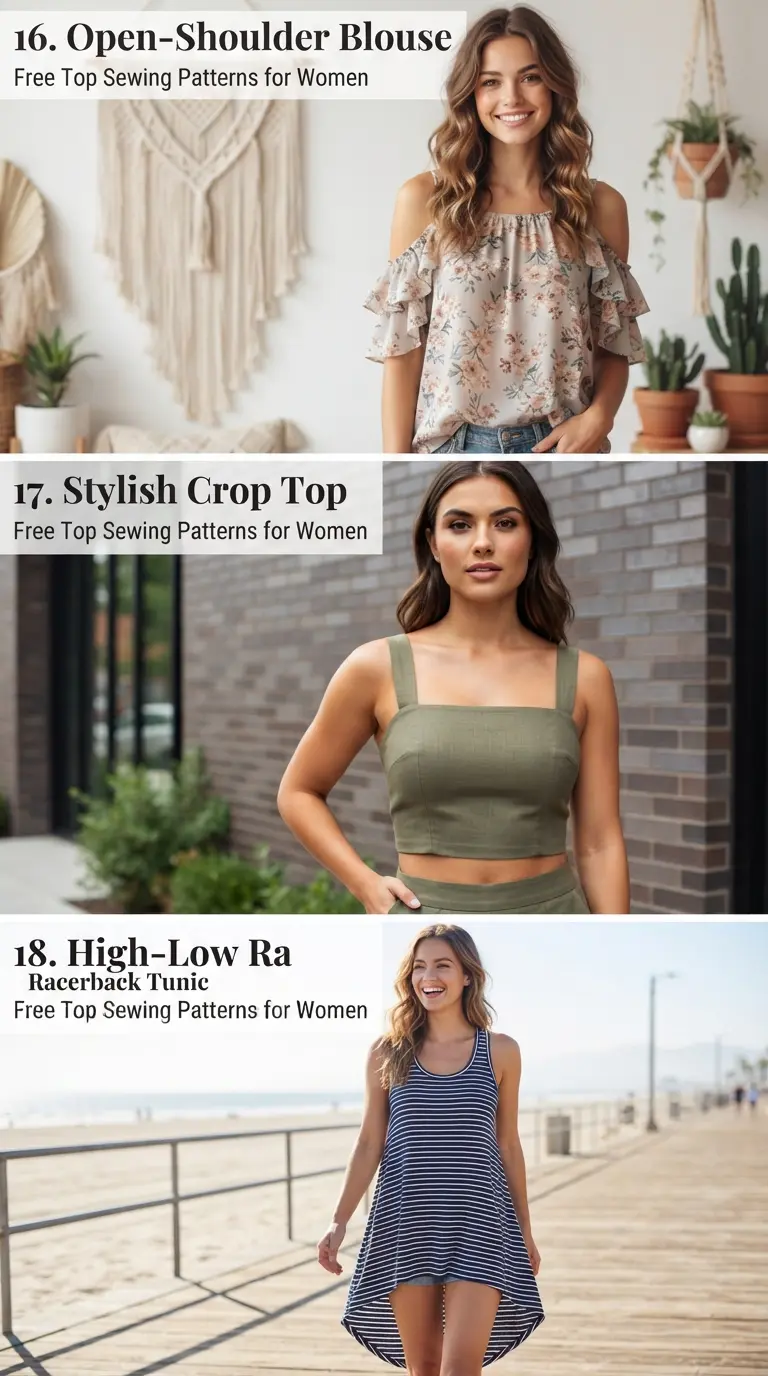
An open-shoulder blouse shows a bit of the shoulder through cutout openings, giving a top a slightly dressier, more modern feel. The rest of the top can stay simple, since the cutout detail does most of the visual work. This makes it an easy way to try a trendier style without a complicated pattern.
Finishing the raw edges around the shoulder openings neatly is the main skill this pattern teaches. A narrow hem or bias binding both work well here. Once you finish those edges cleanly, the rest of the top comes together quickly.
17. Stylish Crop Top
A crop top ends above the natural waistline, making it a popular choice to pair with high-waisted skirts, jeans, or shorts. Because it uses less fabric than a full-length top, it is also a fast, low-cost project. It works well for practicing a new pattern or fabric.
Since a crop top sits higher, fit around the bust and shoulders matters more than length. Try the top on partway through sewing so you can adjust the length before hemming. This pattern is also a great way to use up smaller fabric scraps from other projects.
18. High-Low Racerback Tunic
A high-low hem is shorter in the front and longer in the back, which adds movement and interest to a simple tunic shape. The racerback detail on this pattern crosses the straps in the back, giving it an athletic, sporty feel. Together, these details turn a basic tunic into something more current.
Knit fabric works especially well for this pattern, since it stretches comfortably around the racerback shaping. The high-low hem also needs careful measuring so both the front and back lengths look balanced. This tunic pairs nicely with leggings for a relaxed, casual outfit.
19. Easy Free T-Shirt
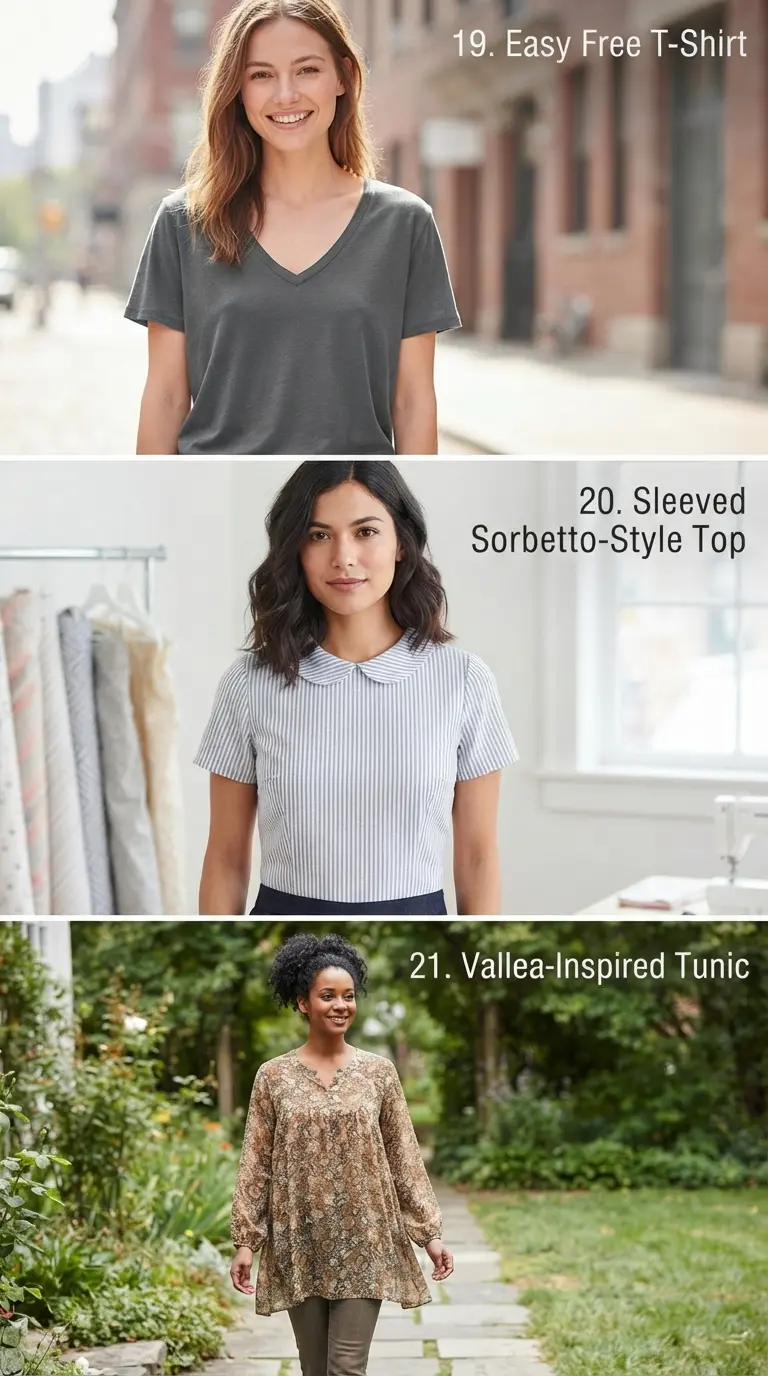
A basic T-shirt pattern is one of the most useful patterns any home sewer can own. It usually has just a front, back, and two sleeves, all sewn with simple straight or stretch stitches. Once you have a T-shirt pattern that fits you well, you can make endless versions.
Working with knit fabric does take a bit of practice, since it stretches differently than woven cotton. A walking foot or a stretch stitch on your machine helps prevent skipped stitches. After a few tries, sewing your own T-shirts becomes fast and satisfying.
20. Sleeved Sorbetto-Style Top
This pattern takes the classic sleeveless Sorbetto shape and adds sleeves for cooler weather or extra coverage. The front pleat detail stays the same, giving the top its signature clean look. Adding sleeves does mean a couple of extra pattern pieces, but the sewing stays approachable.
Set-in sleeves need a bit more care than sleeveless armholes, since you are easing fabric around a curve. Pin generously before sewing to avoid puckering. Once attached, the sleeves make this pattern more wearable across different seasons.
Read: 20 Cute & Easy Pool Hairstyles for Thick Long Hair
21. Vallea-Inspired Tunic
A tunic pattern like this one usually falls below the hip, giving you a comfortable, roomy fit that works well over leggings. It often includes design details like a curved hem, pockets, or a relaxed neckline. This makes it a flexible pattern for both casual and slightly dressed-up looks.
Because tunics are looser, they are also forgiving if your measurements change slightly over time. A soft, mid-weight fabric like linen or a light cotton blend drapes nicely without feeling bulky. This pattern is worth keeping on hand for those days when you want comfort without giving up style.
Choosing the Right Fabric for Your Top
The pattern you pick matters, but fabric choice changes how the finished top looks and feels just as much. Wovens like cotton and linen hold their shape and work well for structured tops. Knits stretch and move, which suits relaxed, casual styles like T-shirts and tunics.
Always check what fabric type the pattern recommends before you buy. A pattern designed for knit fabric will not fit or move the same way in a stiff woven, and the other way around. Testing a small piece of fabric first can save you from a disappointing result later.
Final Thoughts on Sewing Your Own Tops
With so many free sewing patterns for women’s tops out there, you never need to run out of new projects. Start with a simple shape if you are new to sewing, then work your way toward patterns with sleeves, collars, or fitted details. Each top you finish builds skills you will use again.
Keep a small collection of your favorite patterns on hand, since these become the ones you reach for again and again. Mix in new fabrics and small style changes to keep your makes feeling fresh. Sewing your own tops means you always end up with clothes made exactly the way you want them.
Frequently Asked Questions
What is the easiest top pattern for a beginner to sew?
A simple pullover top with no collar, buttons, or zipper is the easiest place to start. Patterns like a basic T-shirt or a boxy summer top only need straight seams. These let you build confidence before trying more detailed patterns.
Do I need a serger to sew knit tops?
No, a regular sewing machine works fine for most knit tops if you use a stretch or zigzag stitch. A serger makes the process faster and gives a more finished edge, but it is not required. Many home sewers make knit tops for years without one.
How much fabric do I need for a basic women’s top?
Most simple tops need between one and one and a half yards of fabric, depending on your size and the pattern style. Sleeves, pleats, or gathered sections may need a little extra. Always check the pattern’s fabric requirements before you shop.
Can I use these patterns for any body size?
Free patterns often come in a range of sizes, but it helps to check the size chart before cutting. Measuring yourself and comparing to the chart gives a more accurate fit than guessing from your usual clothing size. Small adjustments can always be made as you sew.
What fabric is best for a first sewing project?
Cotton is one of the friendliest fabrics for beginners because it does not slip, stretch, or fray easily while you sew. It presses well and holds a crisp seam, which makes mistakes easier to fix. Save stretchy or slippery fabrics for after you feel more confident.
