
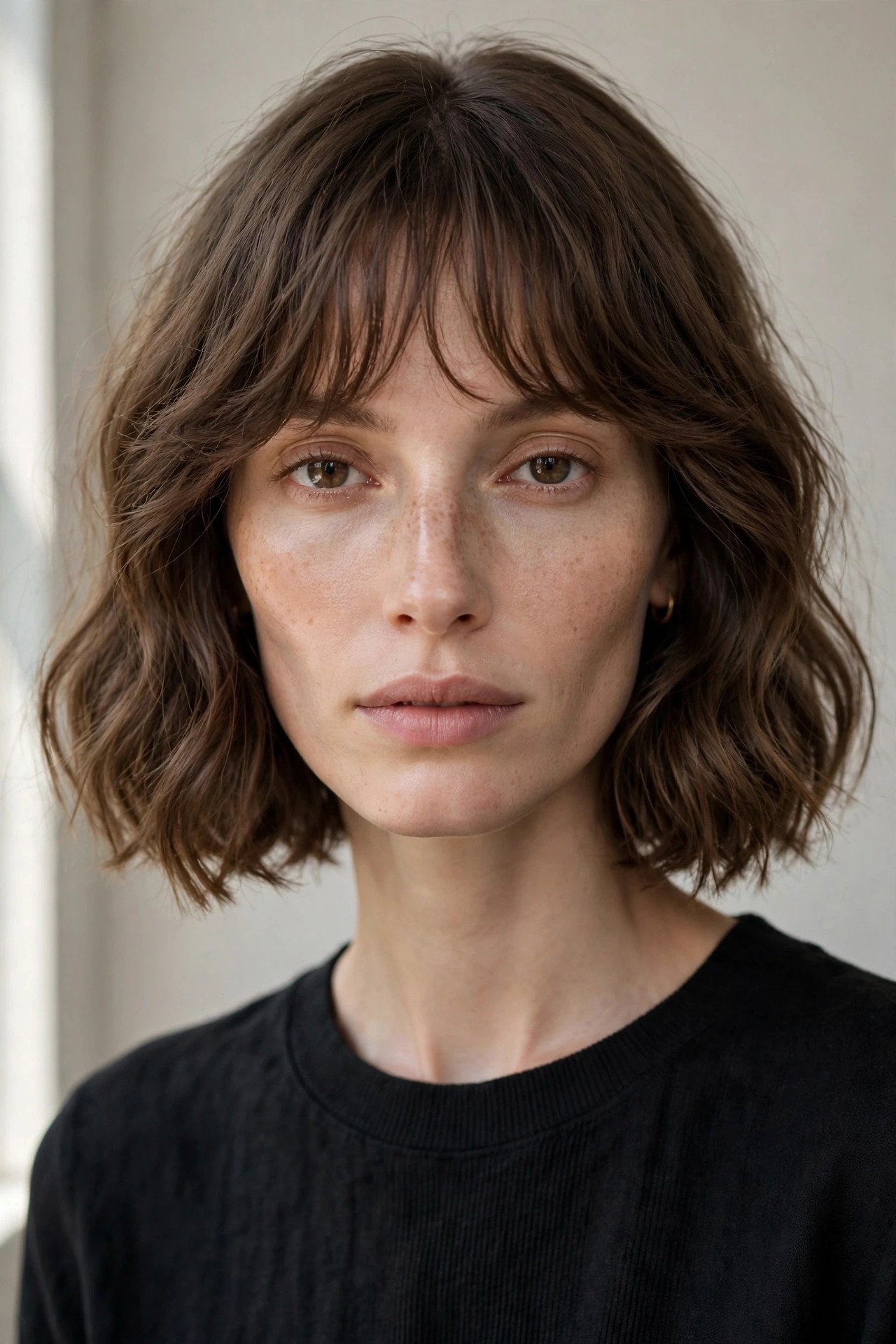
A long face has its own elegance. It often comes with a high forehead, graceful length through the cheeks and a chin that sits a little further from the hairline than average. Yet many women still ask which haircut makes a long face look shorter for women who want a softer, more balanced proportion. The good news is that hair is remarkably good at creating that balance, without anything drastic or difficult to maintain.
The principle is simple to remember. Where a round face benefits from added length, a long face benefits from width, softness and horizontal lines. Volume at the sides, a fringe that shortens the forehead, and lengths that stop at flattering points can all change how proportions read in the mirror. Small changes can make a surprisingly big difference, and you may not need to lose much length at all.
This guide walks through the eight styles that work most reliably, the styling habits that support them, and the shapes to be cautious about. Bring photographs to your stylist, talk about your natural texture, and choose the version that fits the way you actually live and style your hair.
Which Haircut Makes a Long Face Look Shorter for Women? The Key Principles
Stylists think in terms of where the eye travels. On a long face, the eye moves up and down. A balancing haircut encourages the eye to move side to side instead, which immediately makes the face feel shorter and wider in a harmonious way.
Create width at the sides
Waves, curls and layers that kick out around the cheekbones and jaw add the width a long face needs. Keep the top relatively flatter rather than very lifted, because extra height at the crown will only emphasise length. If you love volume, place it at the sides where it does the most flattering work.
Use a fringe to reset proportions
A fringe is the quickest visual shortcut. It covers part of the forehead and creates a strong horizontal line, so the visible length of the face is instantly reduced. Full, blunt, side-swept and curtain styles can all work, depending on your hair type and how much forehead you want to show.
Choose length carefully
Very long, straight hair that falls past the chest can drag the eye downward. Lengths between the chin and the shoulders are often the sweet spot, because they frame the face and add width where it matters. If you keep longer hair, layers and waves become especially important.
Eight Balancing Styles Worth Trying
Each of these cuts approaches balance in a slightly different way, so there is something here for straight, wavy, curly and thick hair alike. You can explore more hairstyle and fashion guides on our site for outfit ideas to pair with your new shape.
1. The chin-length bob
A bob ending around the chin is a classic for long faces. It stops the eye at a wide point, adds fullness at the sides and looks polished with very little effort. A slight wave makes it softer, while a blunt edge gives it a fashion-forward feel. Ask your stylist to keep it full rather than heavily thinned at the ends.
2. The blunt fringe with shoulder-length hair
Pairing a straight-across fringe with hair that brushes the shoulders tackles length twice. The fringe shortens the forehead, and the shoulder-skimming ends add width. This combination suits straight to slightly wavy hair and looks particularly striking with a centre or slightly off-centre fall through the lengths.
3. The wavy lob
A long bob with loose, beachy waves is forgiving, modern and easy to grow out. The waves should be widest around the cheeks, creating that all-important horizontal movement. Use a large-barrel tong or braid damp hair overnight for a softer finish that never looks overdone.
4. The curly shag with fringe
For naturally curly hair, a shag with layers around the face and a curly fringe can be transformative. The layers stop curls forming a long, narrow curtain and encourage fullness at the sides instead. Keep the fringe a little longer than you think, because curls spring up when dry.
5. The side-swept pixie with width
Short hair works when it is not too tight at the sides. A pixie with longer, sweeping pieces and gentle fullness above the ears can balance length beautifully. Avoid very high, quiffed tops, which will add unwanted vertical emphasis.
6. The layered midi cut
Hair ending between the shoulders and the chest suits women who cannot bear to part with length. Face-framing layers starting at the cheekbones, combined with waves or a bouncy blow-dry, break up the vertical line and keep the style lively.
7. The full, rounded bob with bangs
A slightly rounded silhouette, paired with soft bangs, creates width and a gentle frame. This is a lovely option for finer hair, because the blunt perimeter makes ends look thicker. A shine spray or light serum will keep the shape looking sleek.
8. The deep side part with waves
Sometimes the haircut is already right and the parting is the problem. A deep side part creates diagonal interest and asymmetry, which stops the face reading as one long oval. Add waves through the mid-lengths and you have an evening-ready style in minutes.
If you want more visual references, Vogue’s hair coverage regularly features bob and fringe variations worn by women with longer face shapes.
Everyday Styling That Keeps the Balance
A balancing cut can lose its effect if daily styling pulls everything straight and flat. These habits help you keep the proportions your stylist created.
- Scrunch waves or curls at cheek level to maintain side volume throughout the day.
- Blow-dry the fringe first, side to side, so it sits smoothly and keeps its shortening effect.
- Avoid dragging a straightener repeatedly through the sides, which removes width.
- Use texturising spray through the mid-lengths rather than root-lifting products at the crown.
- Tuck hair loosely behind one ear for asymmetry, but let the other side stay full.
Accessories that widen, not lengthen
Shorter, wider earrings, rounded sunglasses and scarves worn with volume at the sides all support your haircut’s goal. Very long drop earrings and tall, sleek ponytails tend to pull proportions downward, so save those for days when you are less concerned about perfect balance and simply love the look.
What to Be Careful With
None of these are rules you must obey, but knowing them helps you understand why a style you admired on someone else may feel different on you.
Very long, poker-straight hair
Length without layers or waves creates one uninterrupted vertical line. If you adore long hair, break it up with face-framing layers, a fringe, or consistent soft waves.
High ponytails and top knots
Pulling hair up and back exposes the full length of the face and adds height on top. A lower, looser ponytail at the nape, with a few strands left free around the face, is a much more balancing choice for everyday wear.
Skinny, centre-parted styles
A centre parting with hair clinging close to the head emphasises symmetry and length. Shifting the parting, adding a fringe or creating side volume are simple corrections you can try before booking a restyle. You can also browse Byrdie’s hair section for styling tutorials that show these small changes step by step.
Conclusion
So, which haircut makes a long face look shorter for women who want balance without sacrificing style? The answer is any cut that adds width at the sides, softens the top, and uses a fringe or a well-chosen length to reset proportions. Chin-length bobs, wavy lobs, layered midi cuts and fringed styles all do this beautifully. Choose the one that suits your texture and routine, and you will enjoy a shape that feels harmonious every time you catch your reflection.
Frequently Asked Questions
Does a fringe really make a long face look shorter?
Yes. A fringe covers part of the forehead and creates a horizontal line, so the eye reads the face as shorter. Full, curtain and side-swept fringes can all achieve this effect.
What is the best hair length for a long face?
Chin to shoulder length is usually the most balancing, because it adds width at the sides. Longer hair can still work with layers, waves and a fringe to break up the length.
Should I avoid long hair completely?
No. Keep long hair if you love it, but add face-framing layers and movement. Avoid wearing it poker straight and flat every day, as that emphasises vertical length.
Is a centre parting bad for a long face?
Not always, especially with a fringe or plenty of side volume. If your hair looks flat and narrow, try a deep side parting to create asymmetry and width.
Can curly hair balance a long face?
Beautifully. Curls naturally create width at the sides. Choose layers that encourage fullness around the cheeks and avoid very long, heavy curls that pull the shape downward.
