
You pull a favourite jumper out of the wardrobe in November and it smells faintly of damp. You wash it, and a few weeks later the smell is back. It is a common winter problem, and it has less to do with your washing powder than with the air in your home. Cold weather, closed windows and wet laundry drying indoors all add moisture, and clothes soak it up. This guide explains why it happens, how to dry and store clothes more safely, and what to do when the problem is bigger than a smell.
Why clothes smell musty in winter
Fabric holds on to moisture. When the air in a room is humid, wardrobes, drawers and shoe racks become the quietest, least ventilated spots in the house. Natural fibres such as cotton and wool are especially good at absorbing damp, so knitwear, coats and bedding often show it first.
A few everyday habits make it worse:
- Putting away clothes that are not fully dry.
- Packing a wardrobe so tightly that air cannot move.
- Placing wardrobes against cold external walls.
- Cooking and showering with the windows shut.
- Drying a full load of washing in a small room.

Drying washing indoors without the damp
Drying clothes indoors is where many homes get into trouble. Each wet load gives off a lot of moisture, and in winter that moisture settles on cold walls and windows. The Royal Borough of Kingston upon Thames, in its damp and mould advice, recommends not drying clothes indoors and not drying them on radiators. It also says a tumble dryer should be vented outside or have its water container emptied regularly.
Practical ways to cope
- Use a dry day. Hang washing outside whenever the weather allows, even for an hour or two.
- Use a vented or condenser tumble dryer if you have one, and empty the water tank after each cycle.
- Dry in a small, closed room only as a last resort, and keep a window slightly open with the door shut so steam does not spread through the house.
- Do smaller loads. A half-empty drum spins out more water and leaves less to evaporate.
- Use the extra spin on your machine for heavy items such as towels and jeans.

Storing clothes so they stay fresh
Once clothes are properly dry, how you store them matters just as much. A little space and airflow go a long way.
Wardrobe habits that help
- Leave a few centimetres between hangers so air can move.
- Keep wardrobes a hand’s width away from external walls where possible.
- Open the doors for a while on dry days to let the inside air out.
- Store shoes somewhere ventilated rather than on the wardrobe floor.
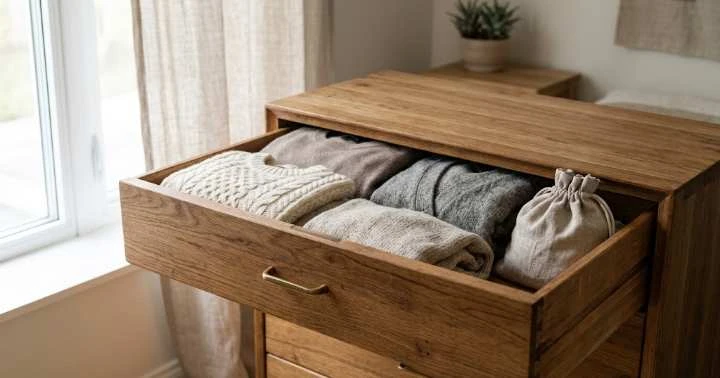
- Fold knitwear loosely instead of squashing it into a tight stack.
Check before you put things away
Hold each item against your cheek or the inside of your wrist. If it feels cool or clammy, it is not dry yet. This simple test avoids a surprising number of musty cupboards.
Signs the problem is the room, not the laundry
If clothes keep smelling damp even when they are fully dry, look at the room itself. Early warning signs include:
- Dark spots on the wall behind or beside the wardrobe.
- Peeling paint or bubbling wallpaper near the floor.
- A musty smell that returns soon after you air the room.
- Misted windows that stay wet well into the morning.
- Skirting boards that look swollen or feel soft.
Most of these point to condensation, which forms when moist air meets a surface that is much colder than the room. Good ventilation helps. Kingston’s guidance also warns against switching off extractor fans, and describes positive input ventilation units that bring filtered outside air into a home and can reduce surface condensation.
When water is the real culprit
Sometimes the moisture is not from the air at all. A slow leak behind a wall, a dripping pipe under the bathroom floor or a sudden burst can soak a wardrobe, ruin a coat collection and leave a smell that never quite goes away. Fashion lovers with a lot invested in their clothes have good reason to act quickly.
If you suspect a leak, take these steps:
- Know where your stopcock is, and check that it turns.
- If water is escaping, turn it off at the stopcock straight away.
- Move clothes and bedding out of the affected area.
- Take photographs for your insurer before you start clearing up.
- Call a qualified plumber rather than patching it yourself.
For a plain-English walk-through of what to do in those first minutes, Olia’s Plumbing & Heating, a Gas Safe registered business in London, has published a guide at https://oliasplumbingandheating.co.uk/mag/burst-pipe-kensington/ that covers shutting off the water and who to call. It sits alongside council guidance such as Kingston’s as a sensible thing to read before an emergency, not during one.
How different fabrics cope with damp
Not every fabric reacts in the same way, so it helps to know what you are storing.
- Cotton absorbs moisture easily and can smell stale if it is put away slightly damp. It is also easy to refresh by washing and drying fully.
- Wool and knitwear hold a lot of water in the fibres. Dry them flat, away from direct heat, and fold them rather than hanging them, so the shape does not drop.
- Leather and suede dislike damp and strong heat. Keep them somewhere cool and airy, and never dry them on a radiator.
- Synthetics dry faster, but they can trap smells, so air them well before storing.
- Coats and tailoring are best kept on broad hangers with space around them, ideally in a breathable garment bag rather than plastic.
Common winter wardrobe mistakes
A few small errors cause most of the trouble, and they are all easy to fix.
Using plastic bags for long storage
Plastic traps any moisture that is already in the fabric. Breathable cotton bags or boxes with some airflow are a safer choice for items you will not wear for months.
Hiding damp with scent
Perfumed sachets and sprays may cover a smell for a day or two, but they do nothing about its cause. If the smell keeps coming back, look for the source of the moisture instead.
Ignoring the back of the wardrobe
The area behind a wardrobe is the first place damp appears, because air hardly moves there. Pull the wardrobe out a little once a month and check the wall with a torch and your hand.
Switching the heating off completely
A cold, unheated room attracts condensation. A steady, moderate background warmth is kinder to both your clothes and your walls than long cold spells followed by short bursts of heat.
A simple fabric-care routine for winter
- Wash on the temperature the care label recommends and do not overload the drum.
- Dry fully before folding or hanging.
- Air items that were worn but not dirty, rather than putting them straight back.
- Open wardrobe doors regularly on dry days.
- Look for early signs of damp on walls and skirting boards each month.
- Keep extractor fans clean and switched on while cooking and showering.
Final thoughts
Fresh-smelling clothes in winter come down to moisture control. Dry laundry properly, give your wardrobe room to breathe and treat persistent damp as a clue about the room, not the washing. If water is getting in from a pipe, deal with that first, because no amount of fabric conditioner can fix a leak.