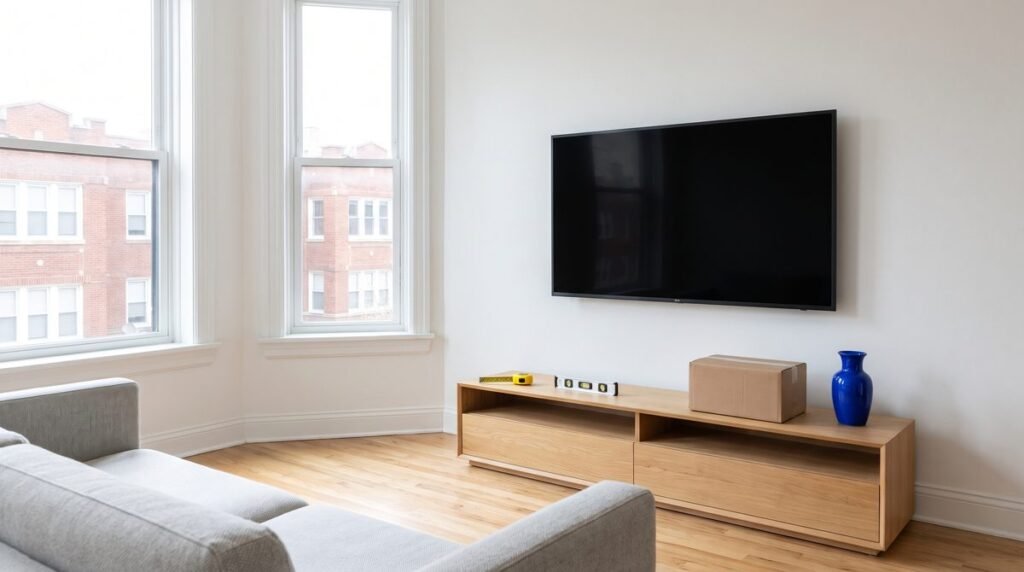
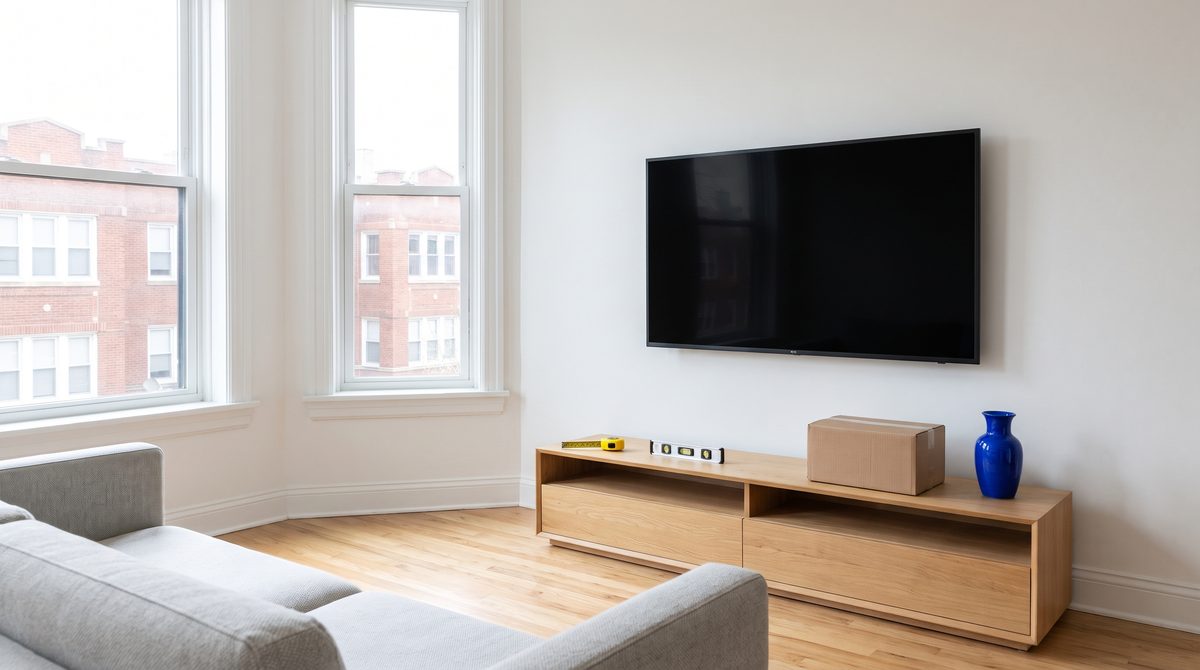
You have the TV, the spot and maybe the mount. Then you ask two installers for a price, and the quotes come back $100 apart. One of them is not wrong. TV mounting is not one fixed job, and the price follows the wall, the mount and the extras, so two fair quotes can look very different.
The short answer: the price follows the work, and the work follows your wall, your mount and the extras. With us, TV mounting in Chicago starts at $69. This guide explains what changes the price, so you can see what your job needs and what a quote should cover.
Key takeaways
- Our prices start at $69, and the final price depends on the TV, the wall and the extras.
- The wall moves the price most: drywall is quickest, while plaster, brick and concrete take longer.
- Ask whether a quote includes the mount, because many prices do not.
- Hidden wires, a soundbar, a fireplace and a second TV are each part of the price.
- A clear photo of the wall is the fastest way to an accurate quote.
How much does TV mounting cost in Chicago?
With us, prices start at $69, and the final price depends on the TV, the wall and the extras. A simple drywall job with a fixed mount and a cord cover is at the low end. Plaster, brick, concrete, a fireplace, a full-motion arm or wires inside the wall each add work, and the price follows. The table below shows the usual job types and what moves the price.
How to tell what your job will need: six quick checks
1. Read the TV size and model
Look at the box or the label on the back of the TV. The size and model tell the installer the weight and the VESA pattern, which decide the mount. A mount that fits a 43-inch TV may not hold a 75-inch one, and the wrong one is the most common reason a job takes longer than expected.
2. Find out what the wall is
Press a pushpin into a spot the TV will hide. Drywall takes it easily, and plaster resists. If it will not go in, you may have brick, tile or concrete, and that changes the fixings and the time. Take a photo of the wall and send it with your TV size when you ask for a price.
3. Look at the mount you have
Check whether you already own a mount, and which kind it is. A fixed mount is the simplest to hang. A tilting mount adds a little adjustment. A full-motion arm needs the strongest fixing, because it pulls on the wall when it is extended. If you do not have a mount yet, we can bring one, and the price depends on the type.
4. Find the outlet and count the cables
Note where the nearest outlet is and how many cables run to the TV. A cord cover on the wall is quick and suits most walls. Hiding the cables inside the wall takes more time, and on brick or concrete the cables may need a surface channel instead. Counting the cables first avoids a surprise on the day.
5. Look above the fireplace and around the spot
A fireplace means checking the surface, the heat and the height. Shelves, built-ins and windows can also limit where a mount can go, and a full-motion arm needs space to swing out. A photo of the whole wall, not just the TV spot, helps the installer plan the job.
6. List the extras and the building rules
Write down a soundbar, a second TV or anything else you want done in the same visit. In a condo, ask the building about work hours, elevator booking and proof of insurance. Some buildings charge a fee or need a certificate before work can start, and that is worth knowing before you book.
Each job type and what raises the price
| Job type | What it needs | What raises the price |
|---|---|---|
| Drywall on wood or metal studs | Bolts into wood studs, or toggles rated for metal studs | A large TV, a full-motion arm |
| Lath and plaster | A stud found with care and slow drilling | Thick plaster, cracks, studs that hide well |
| Brick or stone | Masonry anchors set in the brick, not the mortar | Uneven stone, a high spot |
| Concrete high-rise | Concrete anchors, once the building agrees | Building rules, elevator booking |
| Over a fireplace | A heat check and a tilting or drop-down mount | A stone surface, a motorized mount |
| Hidden wires | A cord cover or an in-wall cable kit | More cables, a long run, a hard wall |
| Soundbar or a second TV | A second bracket, or a second full setup | Booking it apart from the TV mount |
The wall: drywall, plaster, brick or concrete
Drywall on wood studs is the quick end of the scale. The installer finds the studs, bolts the wall plate on and hangs the TV. It is the simplest job, and the one most quotes are based on.
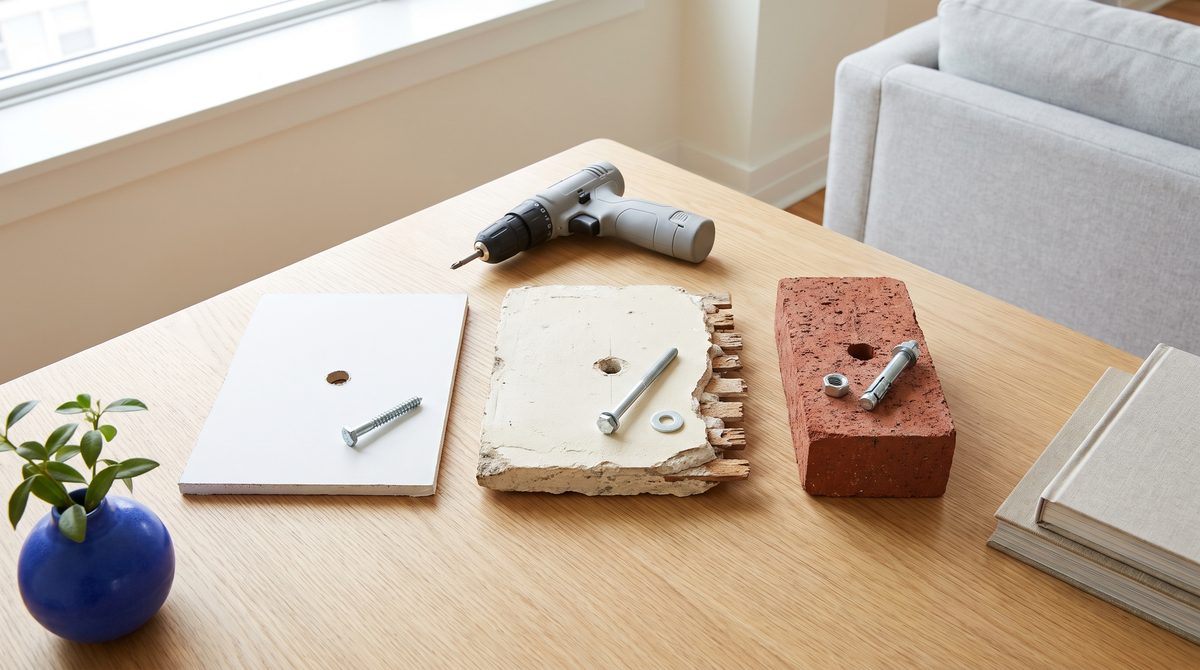
Older Chicago walls take longer. Plaster on wood lath is hard, brittle and hides studs well, so the drilling is slow and careful. Brick needs a hammer drill and anchors set in the brick itself. Fixr’s national cost guide shows how much this matters: it puts drywall installs at $100 to $300 and brick, concrete or stone at $200 to $800. Our guide to what is behind your Chicago wall has five quick tests to tell which wall you have.
Concrete towers add one more step. Some are built with post-tensioned slabs, with steel cables under load inside the concrete, and no one should drill them blind. Ask management for its rules first.
The mount: what you have, and what the TV needs
Many prices cover the labor only, so ask whether the mount is included. Some cost figures include a basic mount, and others assume you bring one. Either way, the mount has to be rated for your TV’s size and weight.
The type of mount changes the work. A fixed mount is a flat plate and the quickest to hang. A tilting mount adds a little adjustment. A full-motion arm needs solid wood or masonry because it pulls hard on the wall when extended, and a motorized drop-down mount takes the most setup. You can use your own mount, or ask us and we can bring one. Our guide on how to choose a TV mount explains each type, so you know what you are paying for.
The wires: cord cover or inside the wall
A paintable cord cover runs from the TV down to the outlet. It is quick, it suits any wall, and it is the usual answer on brick, where cables cannot go inside.
Cables inside the wall look cleaner and take more work. The low-voltage cables there should be rated CL2 or CL3, and a TV’s power cord is not allowed inside the wall at all. If there is no outlet near the TV, adding one is a job for an electrician, so plan it as a separate cost. Our post on hiding TV wires compares the options wall by wall.
The fireplace: heat, height and the mount
A TV over a fireplace costs more because there is more to get right. Most TVs are rated to about 104 F, so the heat above the mantel comes first. Then the height, because a screen up there sits well above eye level.
That is why fireplace jobs often use a tilting or a motorized drop-down mount, on a brick or stone surface. fireplace TV mounting is priced on the surface and the mount type.
Extras: soundbar, more TVs and surprises on the day
A soundbar under the TV needs its own bracket and its own cables. Booking it with the TV mount keeps it one visit. A second TV is a second job, though booking both together saves a second trip.
The last thing that changes a price is the wall you could not see. Any fair quote says the final price could move once the wall is opened, and a good installer tells you that before they start. Our TV mounting service checks the wall before anything is drilled, and if a spot is not a safe fit, we say so and suggest a better one.
Chicago homes and what the job usually needs
Bungalows and brick two-flats. Brick outside walls, often with plaster on lath inside unless the house has been gutted. Expect plaster work and brick fixings.
Greystones and courtyard buildings. Mostly plaster, with radiators, picture rails and fireplaces that limit the spot.
Condos and high-rises. Drywall on metal studs, and concrete walls and columns in towers. Building rules often decide the schedule.
Suburban houses. Drywall on wood studs, the simplest and usually the lowest price on this list. Wires inside the wall are usually straightforward.
A rehabbed vintage unit can be any of these, which is why the pushpin test beats the year on the deed.
Common questions
Does TV mounting include the mount?
It depends on the installer, so ask before you compare quotes. Some prices are labor only, and some include a mount. Either way, check the mount is rated for your TV’s size and weight.
Why does a fireplace cost more?
There is more to check and more to fit. The heat above the mantel decides whether the spot works at all, and a high screen often needs a tilting or drop-down mount. The wall is usually brick or stone, and the mount has to suit it.
Is it cheaper to mount two TVs in one visit?
Ask your installer, since pricing per TV varies. Booking everything together saves a second trip. We charge by the job, not by the hour, and bundling extras with the mount keeps the visit to one trip.
Can the price change on the day?
It can, if the wall turns out different from what was described, or if you add work on site. A wide mount also needs a little more time, and anything above 75 inches can raise the price. A good quote says what could change it.
Not sure what your TV mounting will cost?
Text R&R TV Mounting your TV size, the wall type if you know it, the extras you want, your zip code and a photo of the wall, and we will give you a firm price before we book.