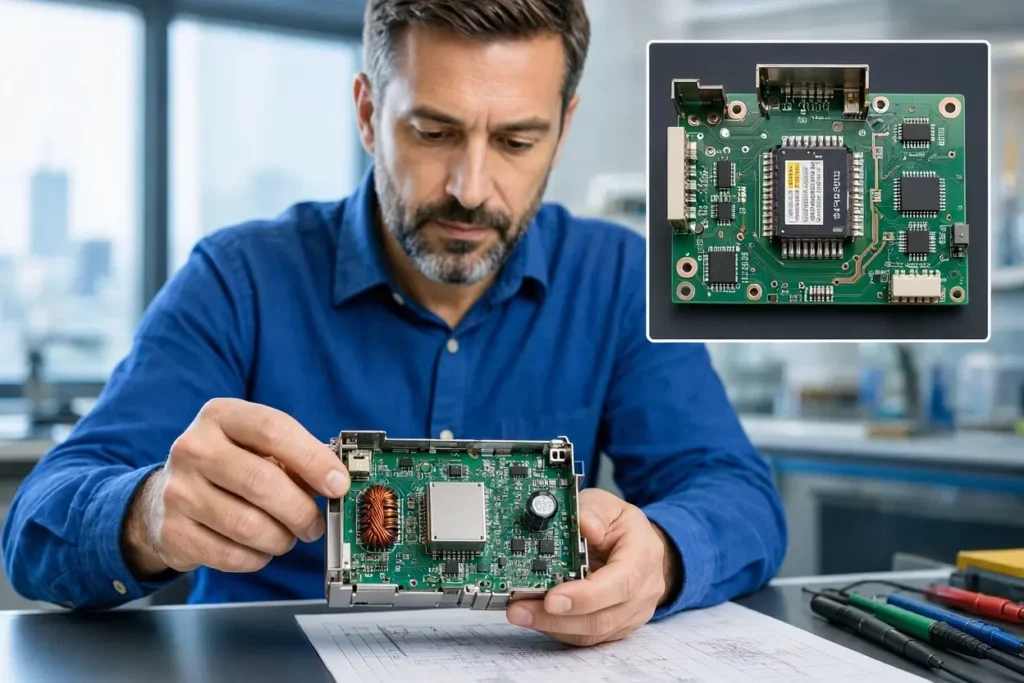
Consider input range, transient behavior, electromagnetic compatibility and thermal derating together. This is a familiar challenge in embedded electronics projects, where decisions made early can restrict operation for years. Failures usually develop at the interface between otherwise competent teams. Reviewing the actual service environment is often more revealing than collecting another impressive efficiency figure.
Examine Input Conditions
Industrial products may encounter voltage dips, surges, unstable supplies and frequent switching. Define the input envelope from the real host equipment and its installation environment. Protective behavior must be evaluated as well as normal conversion efficiency. An impressive bench result at nominal input does not cover the field conditions.
Treat Temperature Seriously
Compact enclosures can trap heat around the power converter. Assess ambient temperature, airflow, nearby heat sources and any derating curve supplied by the manufacturer. Components should be evaluated at the worst credible internal temperature, not just laboratory room temperature. Thermal margin often determines long-term reliability.
For a broader technical starting point, compare an embedded switching power supply with the conditions actually documented in the proposed project. Consider input range, transient behavior, electromagnetic compatibility and thermal derating together.
Check EMC as a System
Switching devices create high-frequency electrical noise that interacts with grounding, filters and cable layouts. Passing a component-level test may not guarantee compliance of the finished product. Engineers should plan conducted and radiated emissions testing with the intended enclosure and wiring. Input and output filtering need to be coordinated.
A nominal wattage rating does not guarantee continuous output inside a warm, tightly packed enclosure.
Evaluate Protection Behavior
Overcurrent, overvoltage and thermal protection should fail in predictable ways and recover according to the application requirement. Repeated fault cycling may stress other equipment. Ask for test conditions and whether user intervention is needed after a fault. Safe isolation and grounding remain design responsibilities at system level.
Verify Efficiency at Real Loads
Efficiency curves can change across input voltage and output load. A product spending much of its life at light load may not benefit from the same design optimized for full output. Thermal losses also affect nearby components. Compare realistic duty cycles and standby behavior rather than a single best-case efficiency number.
The design review for an embedded switching power supply should be supported by evidence tied to the delivered configuration. Request operating curves, qualification evidence and long-term sourcing arrangements.
Production qualification is a system task. Electrical, mechanical, thermal and sourcing choices should be reviewed together before a part number is fixed.
Specify Service Response
Spares, trained technicians, remote diagnostics and response windows should be part of the evaluation. A minor board fault can become a prolonged outage if the required component is unavailable locally. Define whether maintenance work requires loss of redundancy. The contract should distinguish restoration of supply from complete repair of the fault.
Readers comparing specifications can review information about embedded switching power supply as context, then verify site-specific claims with drawings, tests and commercial terms.