
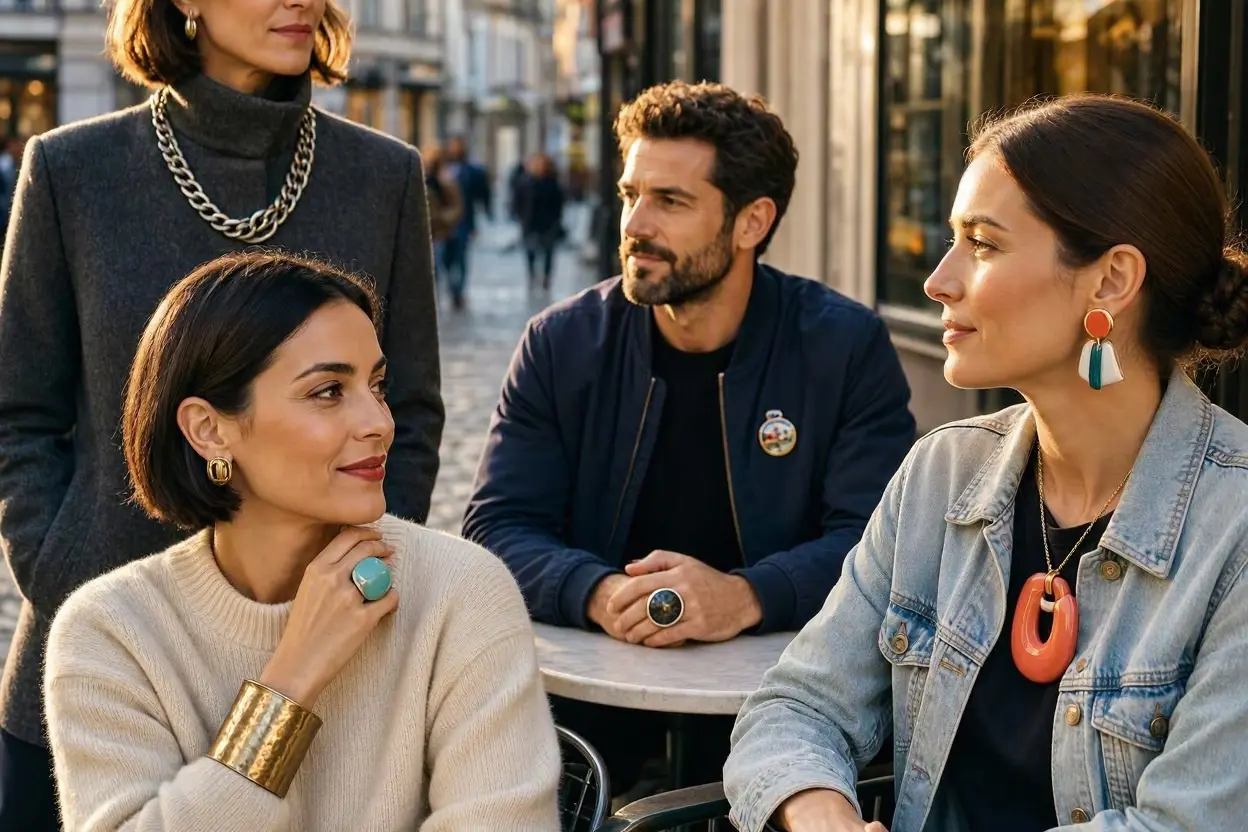
For a long time, the biggest and boldest pieces in a jewellery box came out for one reason: an occasion. A wedding, an anniversary, a black-tie dinner. Everything else stayed in the drawer. That pattern is loosening. The line between everyday jewellery and occasion jewellery is becoming far less rigid, and the change says as much about how people dress as it does about how they shop.
In short, statement pieces are increasingly worn as everyday self-expression rather than saved for milestones. A mix of changing buying habits, wider access to bolder designs, and a more personal idea of what feels appropriate is driving the shift.
From “saving it for good” to wearing it now
The old model assumed scarcity. A significant piece of jewellery was expensive enough that it made sense to wear it rarely, both to protect it and because the spend felt easier to justify if the occasion itself was rare too.
That logic is weakening. Self-purchase has also become more visible in fine jewellery, and it changes behaviour. When someone chooses a piece for themselves, the psychology around when it is “appropriate” to wear it changes too. A piece bought because it was wanted, or to mark a personal milestone, tends to be worn far more often than one bought to sit in a box until the next event on someone else’s calendar.
Fashion culture has pushed in the same direction. Dressing up a plain outfit with one dramatic piece, or wearing something sculptural with denim and a white shirt, is now a familiar styling move rather than a rule-breaking one. Jewellery that once demanded a formal setting is simply being worn with everything else.
Why bolder pieces feel more reachable
Price has always played a part. Larger centre stones, fuller pave settings, and more elaborate designs have traditionally carried a cost that kept them firmly in occasion-only territory for many buyers.
For some buyers, lab-grown diamonds have changed that calculation by making larger or more elaborate diamond designs accessible at a different price point. That matters for this trend because affordability is often what separates “special occasion only” from “regular rotation.” When a bolder piece no longer demands careful rationing, the natural next step is wearing it more often.
What it looks like in practice
A few styling patterns show how the boundary is blurring:
- Layering over saving. Rather than wearing one statement necklace alone for an event, people are stacking it with simpler pieces they wear daily.
- Colour as an everyday choice. Coloured gemstones, long associated with formal or bridal jewellery, are showing up in pieces designed to be worn regularly.
- Mixing registers. A sculptural cocktail ring with a casual outfit, or a tennis bracelet worn at the office, treats “dressy” and “daily” as a spectrum instead of two separate boxes.
What it means for how jewellery is designed
A piece meant for rare wear can prioritise visual impact above everything else. A piece meant to be worn often has to do more. It needs to sit comfortably for long stretches, hold up structurally to daily use, and style easily with a range of outfits rather than one dramatic look.
Designers working in this space are increasingly treating bold design and wearability as the same brief.Evermore Diamonds, a Dubai-based lab-grown diamond jewellery brand, is one example of a label designing statement pieces with regular wear in mind rather than treating boldness as inherently occasion-only.
What to look for when buying
For anyone deciding what to invest in next, a few practical questions help separate a piece that will earn its place from one that will stay in a drawer:
- Is it comfortable enough to wear for a full day? Weight, profile, and how a piece sits against the skin matter more once it leaves the occasion-only category.
- Does it work with what you already wear? A statement piece that only suits one outfit will be worn rarely, whatever it cost.
- Will it hold up to regular wear? Secure settings and sturdy construction are worth checking when a piece is meant for daily rotation.
- Do you love it on its own? Pieces chosen for personal reasons tend to get worn most.
The bottom line
None of this makes jewellery less special. It changes where the specialness comes from. Instead of being defined by the calendar, it is increasingly defined by the person wearing the piece. A bold ring or necklace that someone chose for themselves, wears often, and genuinely loves is arguably doing more of what jewellery was always meant to do than one kept in a box for the three or four days a year an occasion calls for it.
