
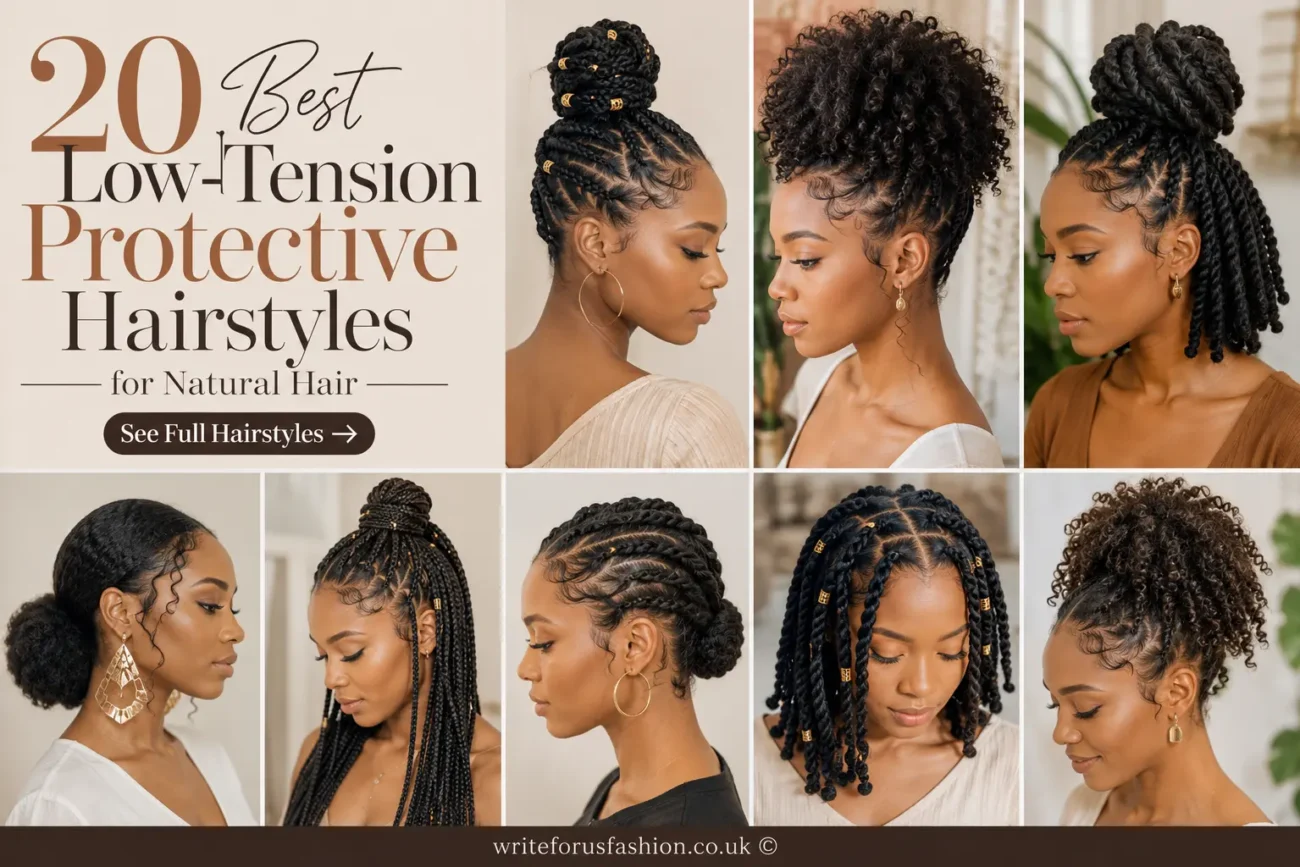
Your hair goes through a lot. Tight braids, heavy extensions, and daily pulling can wear it down over time. That’s why more people are turning to low-tension protective hairstyles for natural hair. These styles protect your strands, keep your edges safe, and still look amazing. In this guide, you’ll find twenty simple, gentle styles you can try at home or ask your stylist for, no matter your hair length or texture.
1. Seamless Knotless Box Braids
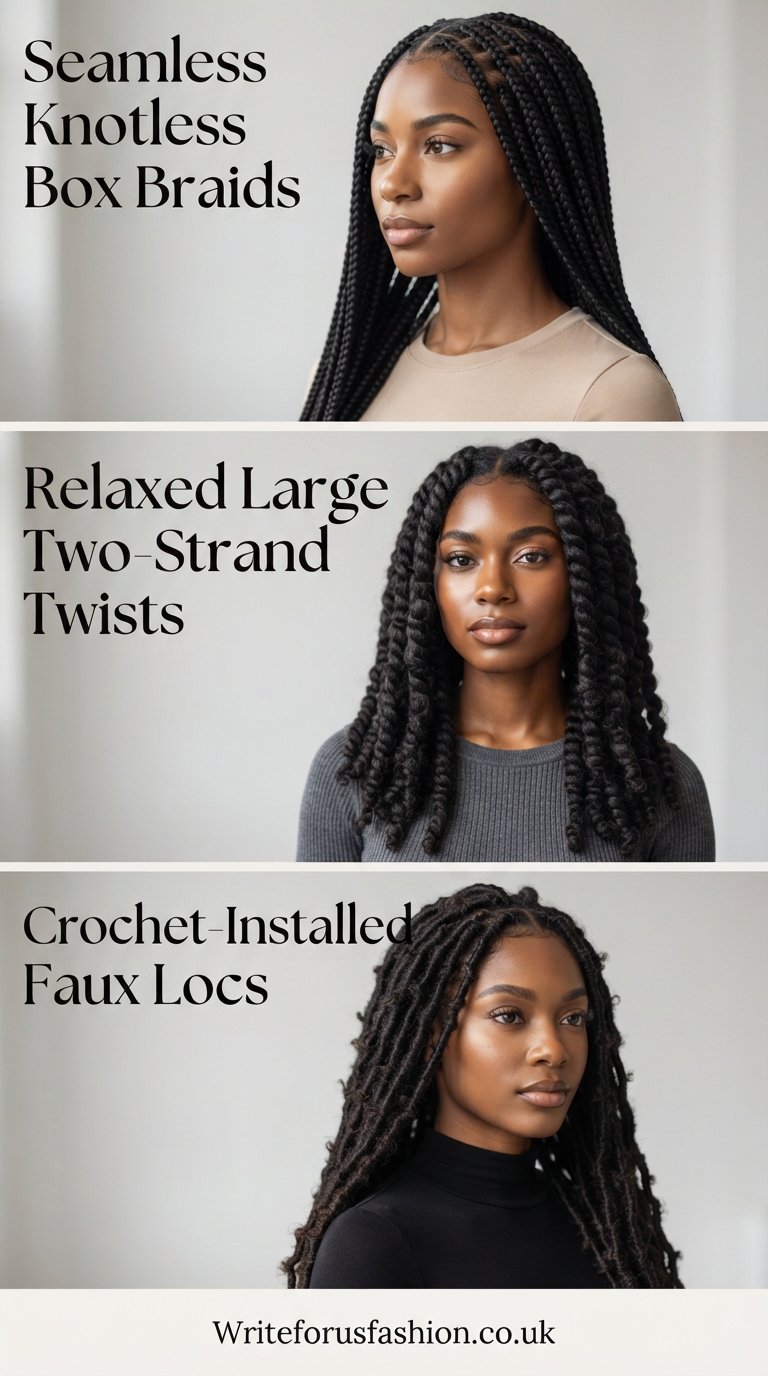
Knotless box braids start with your own hair, so there’s no tight knot pulling at your scalp. Your stylist adds the extension hair little by little as they braid. This makes the style feel lighter from the very first day.
Your scalp gets a break, and your edges stay protected too. Knotless braids also lay flatter and look more natural than regular box braids. They work well for almost any face shape and hair length.
2. Relaxed Large Two-Strand Twists
Large two-strand twists are one of the easiest low-tension styles you can do yourself. You simply split your hair into sections and twist two pieces around each other. Bigger sections mean less pulling and faster styling time.
This style suits people who want a protective look without spending hours in a chair. You can wear the twists loose and full, or pin them up for a neater finish. They also work great as a base for a twist-out later.
Read: 20 Low-Maintenance Layered Haircuts for Mature Women
3. Crochet-Installed Faux Locs
Faux locs made with the crochet method skip the tight braiding that traditional locs need underneath. Your stylist uses a crochet hook to loop pre-made locs through small sections of cornrowed hair. This cuts down on tension and installation time.
Because the base braids are loose and simple, your scalp stays comfortable. Faux locs also come in many sizes, from thin and delicate to thick and bold. This makes it easy to pick a style that matches your personality.
4. Flat-Twisted Low Puff Style
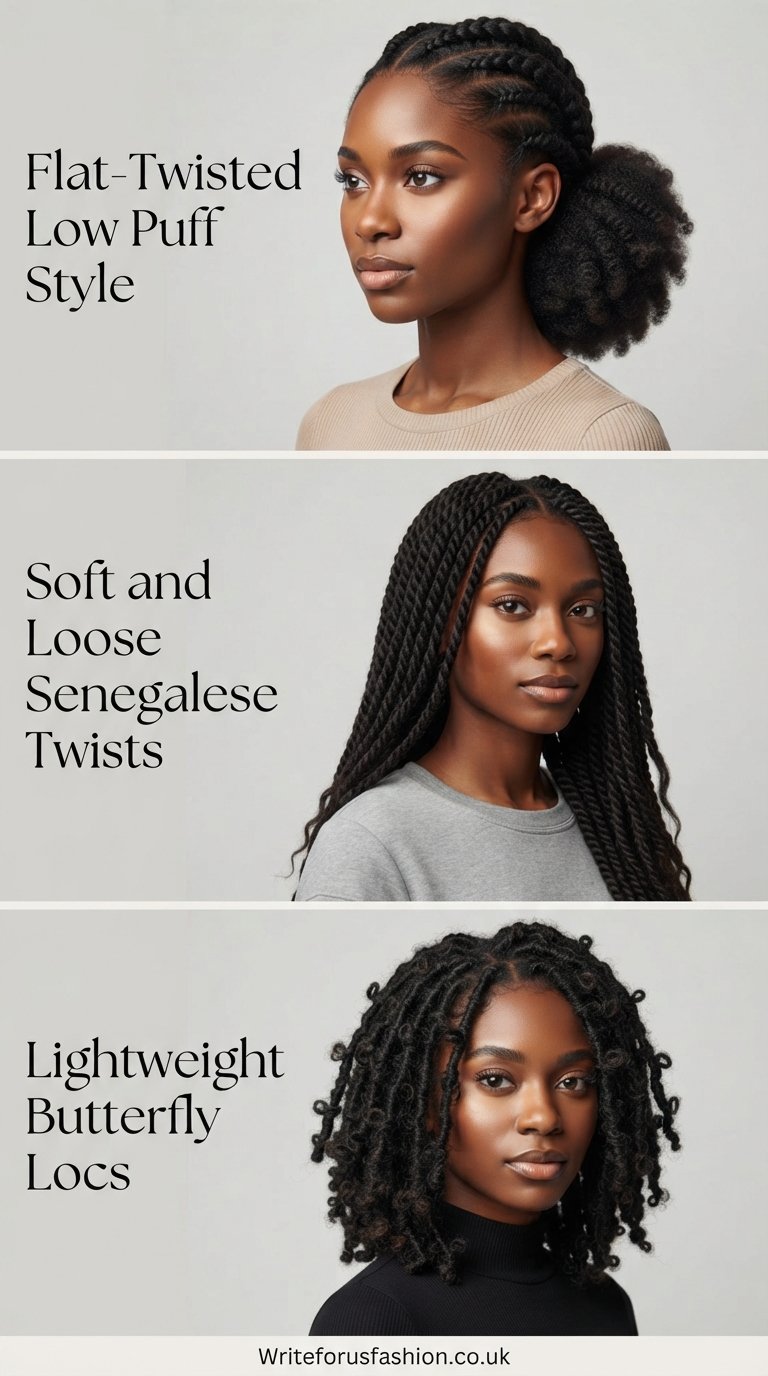
This style combines two gentle techniques in one look. You flat-twist the front and sides of your hair, then gather the rest into a soft puff at the back or nape. The twists keep hair off your face without tight braiding.
A low puff also means less pulling than a high, tight ponytail. This style works well for short and medium-length natural hair. It’s a great pick for busy mornings when you need something fast and low-fuss.
5. Soft and Loose Senegalese Twists
Senegalese twists use a rope-like twisting method with smooth, silky extension hair. When installed loosely, they create a beautiful, low-tension protective style that lasts for weeks. The key is asking your stylist to keep the twists relaxed, not pulled tight.
Loose Senegalese twists move naturally and feel light on your scalp. They also age well, since a little frizz only adds to their soft, natural look. This style suits both thick and fine natural hair types.
6. Lightweight Butterfly Locs
Butterfly locs have a soft, wavy, undone look that comes from wrapping loc extensions loosely around your natural hair. The relaxed wrapping technique means far less tension than tightly wrapped locs. Your scalp stays comfortable even weeks after installation.
This style also uses lighter hair strands, so the finished look feels less heavy on your head. Butterfly locs work well for people who want a boho, textured style without strict, tight sections.
Read: 20 Best Low-Maintenance Shag Hairstyles for Mature Women
7. Easy Pineapple Updo for Natural Hair
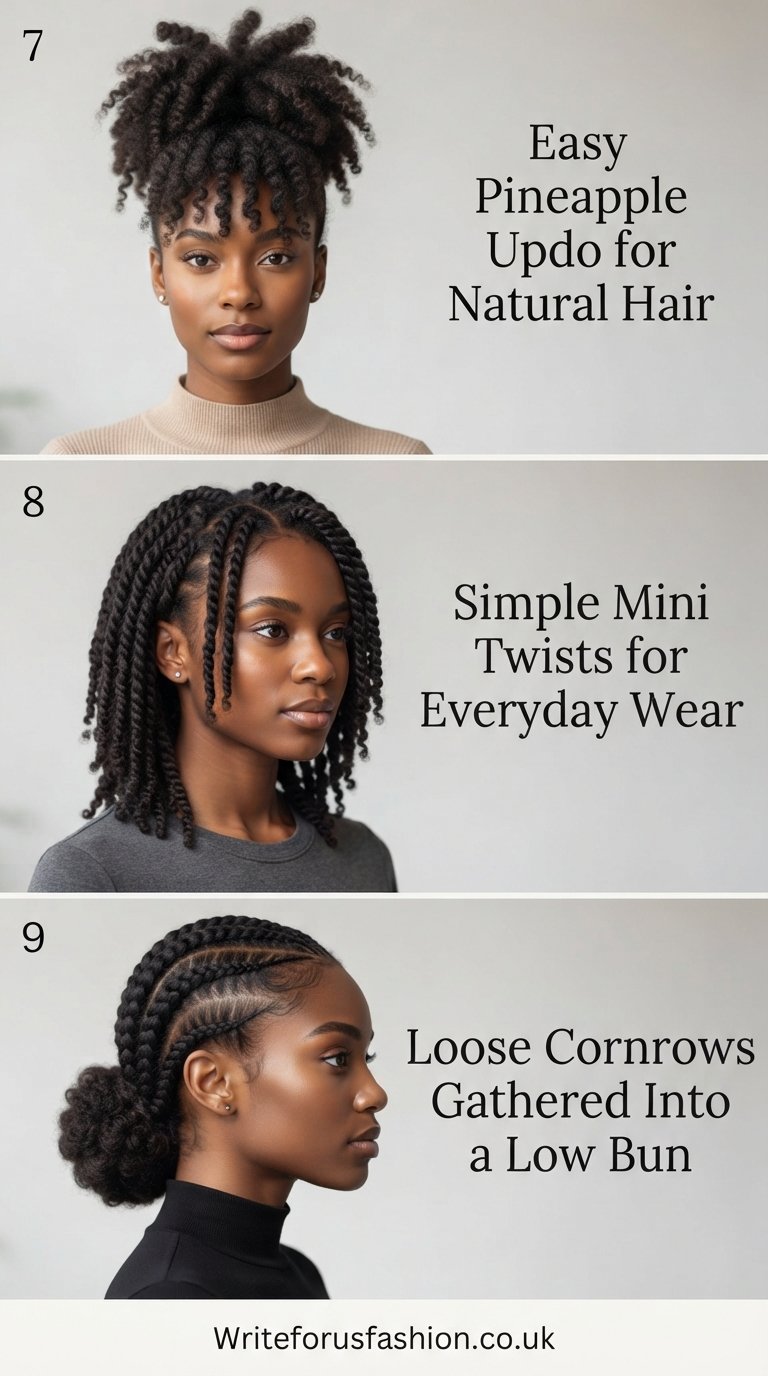
A pineapple updo is a classic no-heat, no-tension style for natural hair. You simply gather your curls loosely at the top of your head and secure them with a soft scrunchie. This keeps curls off your neck without pulling on your edges.
It’s a favorite for sleeping, workouts, or lazy days when you want your curls to stay defined. Since there’s no tight pulling involved, you can wear a pineapple updo often without worrying about hair breakage.
8. Simple Mini Twists for Everyday Wear
Mini twists give you a neat, protective style with a natural, textured finish. While they take longer to install than large twists, using your own hair (or very light extensions) keeps the tension low. Small, even sections also reduce stress on any single spot.
This style works well for people who want a longer-lasting look that still feels light. Mini twists can be worn down, pulled into a bun, or styled into an updo whenever you want a change.
9. Loose Cornrows Gathered Into a Low Bun
Cornrows have a reputation for being tight, but they don’t have to be. Ask your stylist to braid them with a relaxed hand, using medium to large sections instead of small, tightly gripped ones. Then gather the ends into a soft, low bun.
This combination protects your hair while keeping tension off your hairline. A low bun also puts less strain on your roots than a high, tight one. It’s a simple, elegant style for work or everyday wear.
10. Oversized Havana Twists
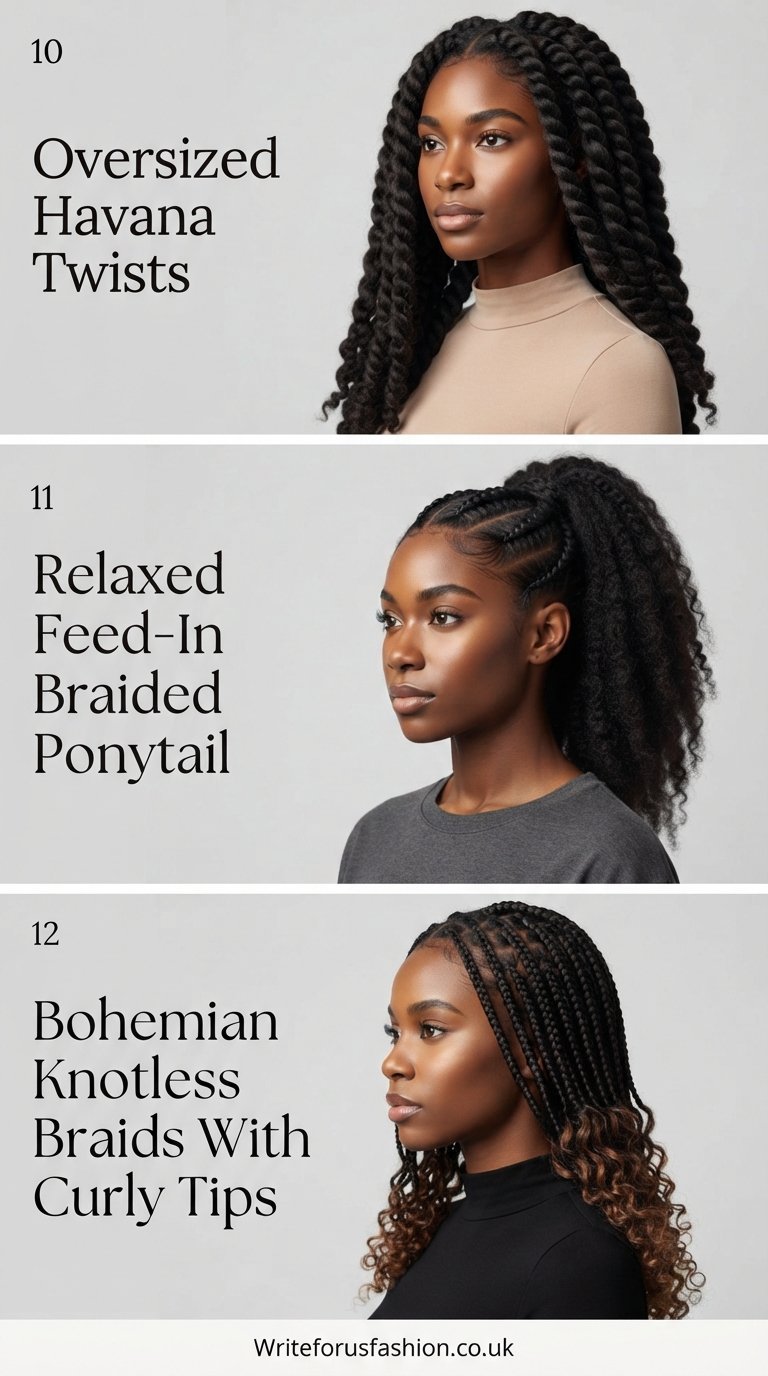
Havana twists use thick, textured extension hair that mimics natural curl patterns. Because the twists are large, your stylist needs fewer sections to cover your whole head. Fewer sections mean less overall pulling on your scalp.
This style also finishes faster than smaller twist styles, which is a bonus if you don’t enjoy long salon visits. Oversized Havana twists look full and bold while staying gentle on your natural hair underneath.
11. Relaxed Feed-In Braided Ponytail
A feed-in braided ponytail blends your natural hair with extensions as your stylist braids toward the back of your head. When done with a light hand, this technique avoids the tight pulling that causes traction alopecia over time.
The finished ponytail looks sleek and polished, perfect for special occasions or a smart, everyday style. Just remind your stylist to keep the braiding relaxed, especially close to your hairline, where hair is most delicate.
12. Bohemian Knotless Braids With Curly Tips
This style takes the gentle base of knotless braids and adds soft, curly ends instead of straight ones. The curly tips give a relaxed, natural finish that pairs well with the low-tension braiding underneath.
Because the braiding starts with your own hair, there’s no knot pulling at the root. This style suits people who want braids that feel effortless and full, rather than sleek and tight. It also holds up well for several weeks.
Read: 20 Best Chic Low-Maintenance Bob Styles for Moms
13. Gentle Twist-Out on Stretched Natural Hair
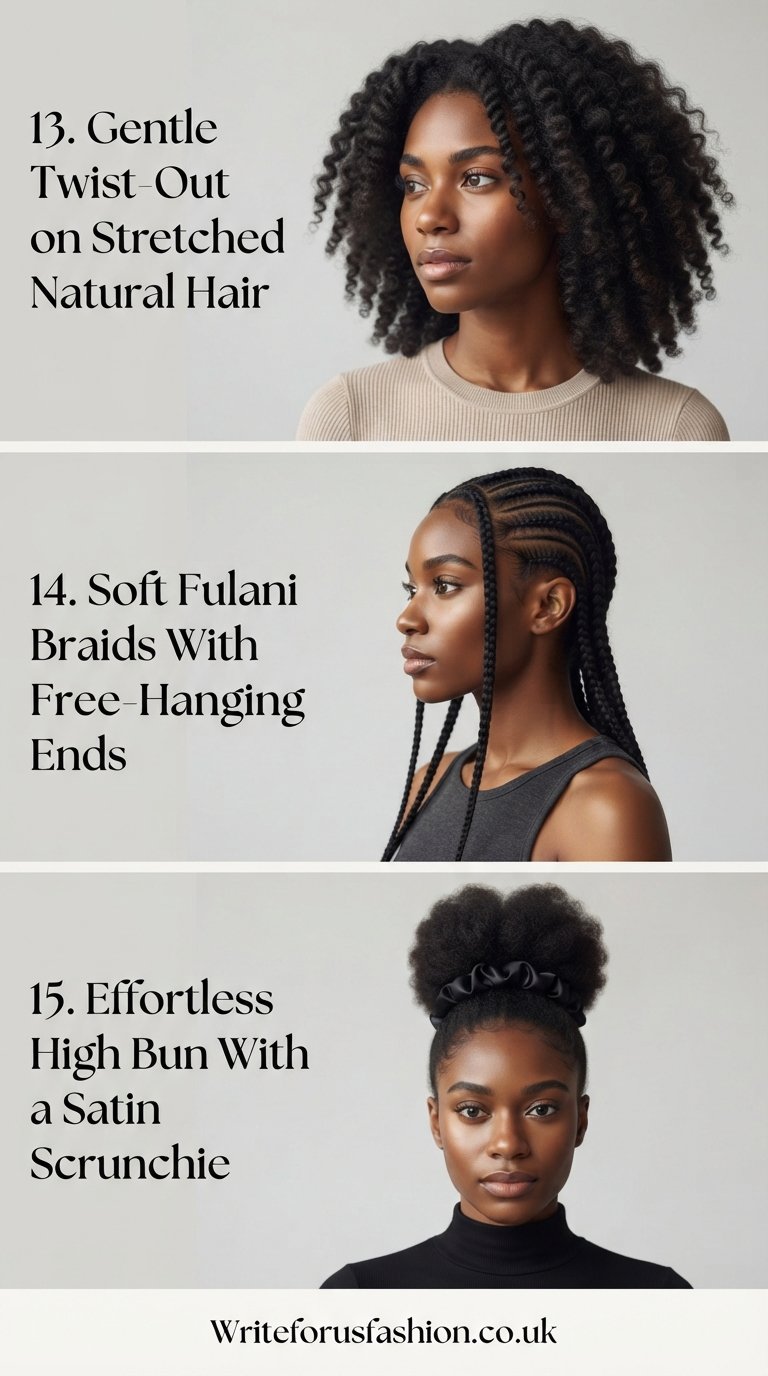
A twist-out is one of the simplest low-tension styles because it uses no extensions at all. You twist damp, stretched hair, let it dry, then unravel the twists for soft, defined curls. There’s no pulling, braiding, or added weight involved.
Stretching your hair first, using a method like banding or a loose braid-out, helps the twist-out last longer and look fuller. This style is ideal for anyone who wants a protective, low-manipulation look using only their own natural curls.
14. Soft Fulani Braids With Free-Hanging Ends
Fulani braids usually feature a few cornrows along the top with braids hanging loose at the sides and back. Keeping the cornrow sections wide and loosely braided lowers the tension on your scalp, especially near your hairline.
The free-hanging braids at the back don’t pull on your roots at all. This mix of structure and softness makes Fulani braids a stylish choice that still respects your hair’s health. Beads or rings can add a fun, personal touch.
15. Effortless High Bun With a Satin Scrunchie
Sometimes the simplest styles are the most protective. A loose, gathered bun made with a soft satin scrunchie avoids the tight elastic pulling that damages hair over time. Satin also reduces friction, which means less breakage.
This style takes less than five minutes and works on wash day, twist-outs, or braided hair. Keep the bun loose rather than slicked back tightly, and your edges will thank you. It’s an easy go-to for busy days.
16. Crochet Goddess Locs for a Low-Tension Look
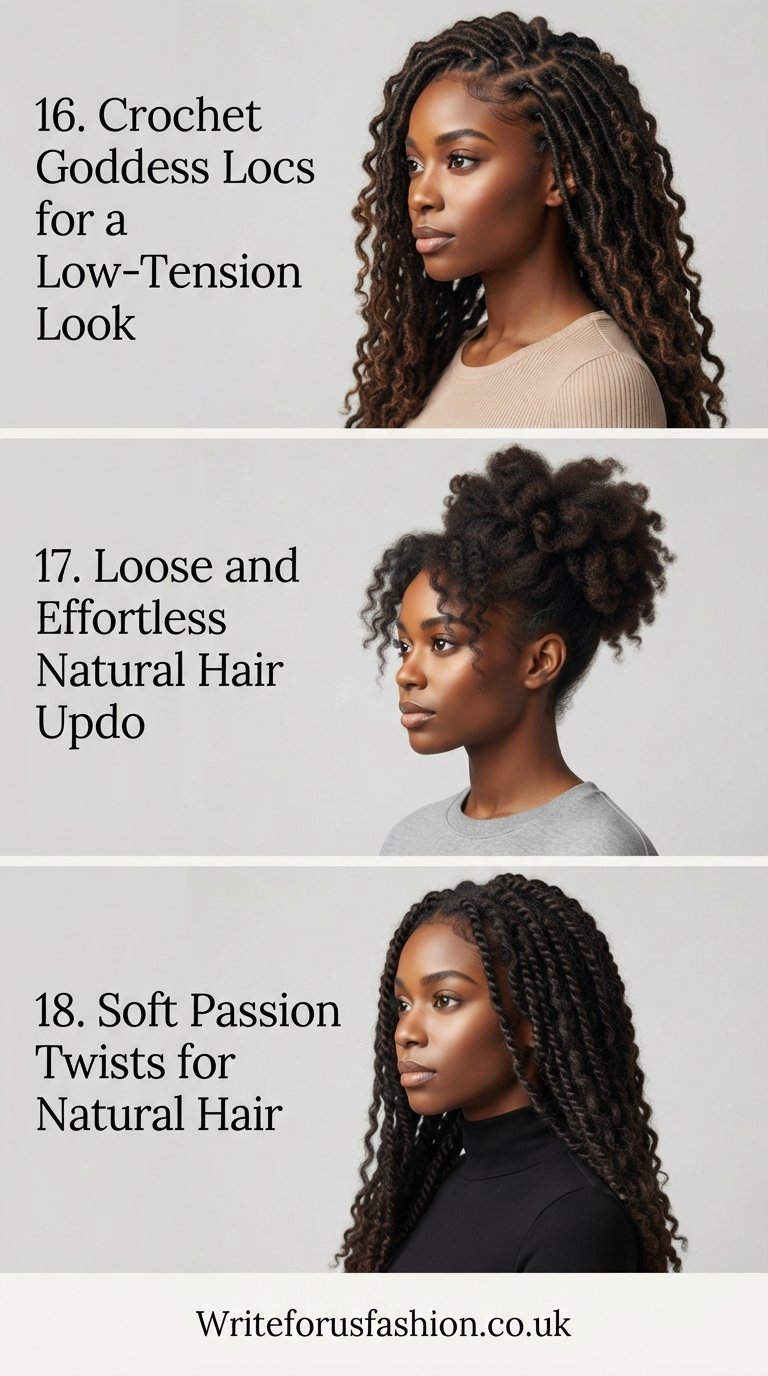
Goddess locs installed with the crochet method combine the soft, wavy texture of butterfly locs with a slightly neater finish. The crochet technique uses gentle looping instead of tight wrapping, which keeps tension low from root to tip.
This style often includes subtle curly pieces mixed into the locs for extra texture. Because the base braids are simple and wide, your scalp stays comfortable throughout the style’s wear time, which can last several weeks.
17. Loose and Effortless Natural Hair Updo
An easy, loose updo works for curly, coily, or wavy natural hair without any braiding or twisting. You simply gather your hair gently, perhaps with a few twists or a loose bun, and pin it up softly. There’s no pulling involved.
This style is perfect for last-minute plans or humid days when you want your hair up and out of the way. Because it uses no tight elastics or sections, it’s one of the gentlest updos for natural hair.
Read: 20 Gorgeous Low-Maintenance Blonde Looks for Mature Women
18. Soft Passion Twists for Natural Hair
Passion twists use wavy, textured extension hair for a bohemian, natural-looking finish. Like other rope-twist styles, the key to keeping this low-tension is asking for looser, thicker sections rather than tight, thin ones.
The wavy texture blends nicely with natural curl patterns, so the twists look like an extension of your own hair. Passion twists also feel lighter than some other twist styles, since the hair used is thinner and softer.
19. Stretched Natural Wash-and-Go Style
A wash-and-go is about as low-tension as it gets, since your curls are left to dry and hang naturally after washing. Stretching your curls slightly with clips or a loose plopping method adds length and reduces shrinkage without any pulling.
This style needs no braiding, twisting, or extensions, which makes it perfect for a wash day when your hair needs a rest. A good leave-in conditioner and curl cream help define your curls and keep them soft all day.
20. Loose Low Braid-Out for Natural Texture
A braid-out gives you soft, wavy texture without any extensions or tight sections. You braid clean, damp hair into a few loose plaits, let them dry, and then unravel them for a rippled, natural look.
Because the braids are large and loosely done, this style puts almost no strain on your scalp. It’s a great low-manipulation option for people who want texture and volume while giving their hair a true break from styling.
Choosing Gentle Styles for Healthier Hair
Low-tension protective hairstyles let you enjoy braids, twists, and updos without putting stress on your scalp or edges. From knotless braids to a simple wash-and-go, there’s a style here for every hair length, texture, and lifestyle. The real secret is asking for looser sections and gentler techniques, no matter which style you choose.
Your hair grows healthiest when it’s not fighting against tight pulling every day. Try a few styles from this list and pay attention to how your scalp feels afterward. Small changes in how a style is installed can make a big difference in how your natural hair looks and feels over time.
Frequently Asked Questions
What makes a hairstyle “low-tension”?
A low-tension hairstyle uses looser sections and a gentler hand while braiding, twisting, or styling. This reduces pulling on your scalp and edges, which lowers your risk of hair breakage and thinning over time.
How long can I keep a low-tension protective style in?
Most protective styles like braids, twists, and locs can stay in for four to eight weeks. The right time depends on how fast your hair grows and how well you care for your scalp during that period.
Can low-tension styles still cause hair damage?
Yes, if they’re installed too tightly, styled too small, or left in too long without proper care. Always ask your stylist for looser sections, and remove any style right away if you feel pain or notice redness.
Are low-tension styles good for thin edges?
Yes, they’re one of the best choices for thin or weak edges because they avoid the tight pulling that causes further damage. Knotless braids, loose twists, and gentle updos are especially good options.
How do I keep my scalp healthy during a protective style?
Keep your scalp clean with a light, oil-based scalp refresher or diluted shampoo between washes. Sleep with a satin bonnet or pillowcase, and avoid picking at your style, since both help prevent buildup and breakage.
