The Best API Search Company’s Homepage: Masterclass in Developer Experience
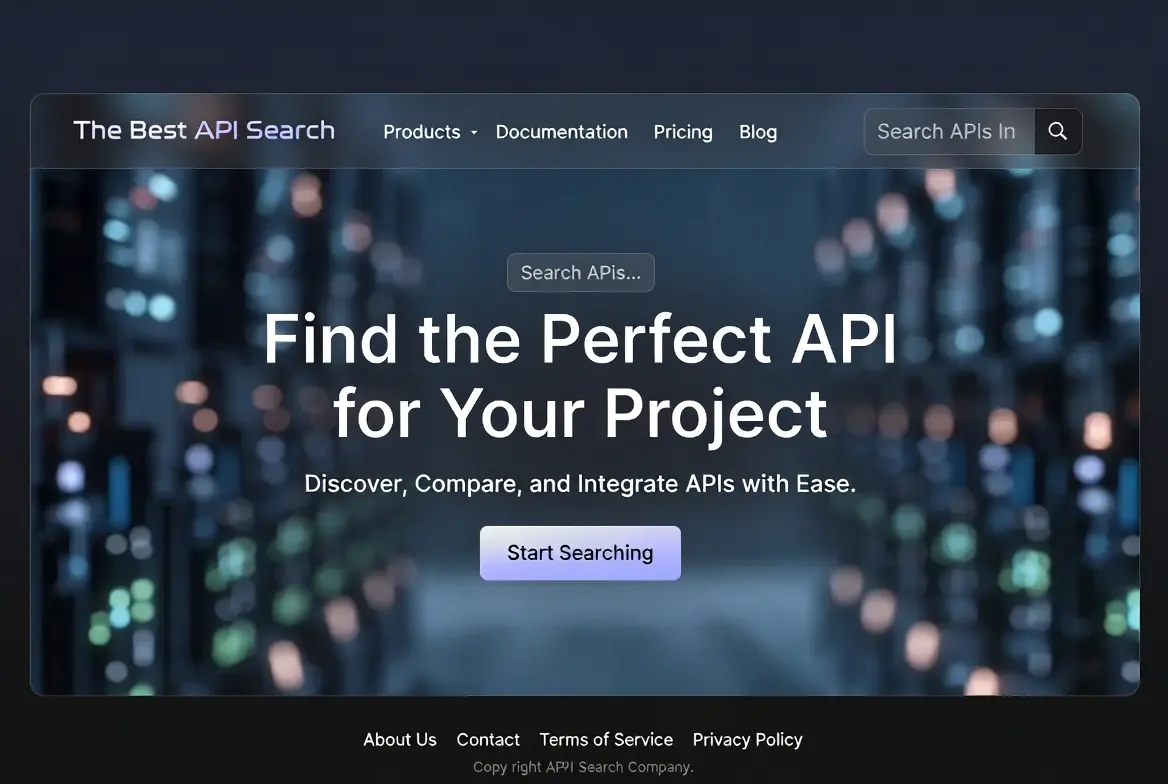
In the software world, the “homepage” of an API search company isn’t just a marketing landing page—it is a functional tool. If you are a developer, an AI architect, or a product manager, you don’t go to these sites to read fluff; you go there to solve a problem. You need to know: Does this API have the data I need? Is it reliable? And can I integrate it before my coffee gets cold?
As we move through 2026, the landscape of API discovery has shifted. We are no longer just looking for “REST APIs”; we are looking for LLM-ready data streams, neural search capabilities, and autonomous agent tools.
This guide breaks down what makes the “best” API search company homepage today, which platforms are leading the pack, and what red flags you should avoid.
What Exactly is an API Search Company?
Before we dive into the “best” examples, let’s clarify what we are looking for. The term usually refers to one of three things:
- API Marketplaces: Platforms like RapidAPI or Postman, where you search for thousands of different third-party APIs.
- Search-as-a-Service APIs: Companies like Algolia or Elastic that provide the “search bar” for other websites.
- Web Search/SERP APIs: Tools like SerpApi, Exa, or Brave Search API that allow your code to “search the web” just like a human would.
Regardless of the type, the homepage is the gatekeeper. A bad homepage means high friction, lost hours, and a frustrated engineering team.
5 Hallmarks of a World-Class API Homepage in 2026
The best companies have moved beyond static documentation. Here is what the gold standard looks like this year:
1. The “Interactive Playground” (Live Testing)
Gone are the days of reading a 50-page PDF before seeing a JSON response. The best homepages, such as SerpApi or ScrapingBee, feature a terminal or a “Try it Now” console directly on the hero section. You enter a query, hit “Run,” and see the live data immediately.
2. “LLM-Ready” Documentation
In 2026, many API consumers aren’t humans—they are AI agents. Top homepages now provide llms.txt files or specially formatted Markdown that allows ChatGPT, Claude, or internal agents to “read” the API capabilities and write the integration code for you instantly.
3. Transparent Performance Metrics
Trust is the currency of the API economy. A top-tier homepage doesn’t hide its status page in the footer. It displays real-time latency (e.g., “Average response: 180ms”) and uptime percentages (99.99%) prominently. If a company isn’t proud of its speed, it shouldn’t be your search provider.
4. Zero-Friction Onboarding
If I have to “Contact Sales” just to see a code snippet, I’m leaving. The best homepages offer a “Copy-Paste” quickstart in multiple languages (Python, Node.js, Go, Rust) before you even create an account.
5. Clear Pricing Psychology
Developers hate hidden costs. The best homepages feature a “Free Tier” or a “Pay-as-you-go” calculator right on the main page. Transparency here signals that the company is confident in its value.
Top Contenders: Who Has the Best Homepage Today?
| Company | Category | Why Their Homepage Wins | Best For |
| Exa (formerly Metaphor) | AI/Neural Search | Clean, minimalist, and focuses on “meaning-based” search results. | AI Agents & RAG |
| Algolia | Site Search | Incredible visual demos that show “Search-as-you-type” in real-time. | E-commerce & SaaS |
| SerpApi | Google/Search Results | The most intuitive “Playground” in the industry; no account needed to test. | SEO & Data Mining |
| RapidAPI | Marketplace | Massive variety and a unified “API Hub” feel that simplifies discovery. | General Integration |
| Brave Search API | Independent Index | Focuses on privacy and “independent” data, appealing to the web3/privacy crowd. | Unbiased Data |
The “Search API” Evolution: Keyword vs. Neural
If you are looking for a search API company, you need to understand the 2026 divide.
The “Old” Way: Keyword Matching
Traditional search APIs look for exact words. If you search for “fast red cars,” it looks for those specific strings. While reliable, it often misses the intent.
The “New” Way: Neural/Semantic Search
Companies like Exa and Tavily are winning because their homepages showcase Neural Search. They use embeddings to understand that “high-performance ruby-colored vehicles” means the same thing as “fast red cars.”
Pro Tip: If an API search company’s homepage doesn’t mention “embeddings,” “vectors,” or “semantic search” in 2026, they might be falling behind the technological curve.
How to Audit an API Homepage (In 30 Seconds)
When you land on a new API site, run this quick mental checklist:
- Can I see a code snippet in under 5 seconds? (If yes, +1)
- Is there a “Try it now” button that actually works? (If yes, +1)
- Is the documentation searchable? (If it’s just a long scrolling page, -1)
- Do they show a “Powered by” section with recognizable logos? (Social proof matters!)
- Is there a clear “Free Tier”? (Crucial for testing without a corporate credit card.)
Common Red Flags on API Homepages
Be wary of companies that exhibit these “old school” behaviors:
- The “Wall of Text”: If the homepage looks like a legal document, the API is probably just as difficult to use.
- Generic Stock Photos: If I see a picture of people shaking hands instead of a code editor, it tells me the company is more focused on “Enterprise Sales” than “Developer Success.”
- Outdated Libraries: If their “Quickstart” uses
varinstead ofconst/letin JavaScript, or doesn’t mention Python 3.12+, their backend is likely neglected. - No Community Signals: A lack of a GitHub link or a Discord/Slack community suggests you’ll be on your own when things break at 2:00 AM.
Final Thoughts
The “best” API search company homepage is the one that gets out of your way. In 2026, developers value speed, transparency, and AI-compatibility above all else. Whether you are building the next great LLM application or simply adding a search bar to your blog, look for platforms that let you test their power before they ask for your email address.
The winners of this era—like Algolia, Exa, and SerpApi—understand that their homepage isn’t a billboard; it’s the first line of code in your next project. Read this most valuable and interesting facts blogs only on writeforusfashion.
FAQ
1. What is the fastest search API available in 2026?
Generally, Algolia remains the leader for “search-as-you-type” latency (often under 50ms), while Exa is optimized for high-speed neural retrieval for AI models.
2. Can I use these APIs for free?
Most top-tier companies offer a “Free Tier” or “Developer Sandbox.” For example, RapidAPI and SerpApi offer a limited number of free monthly requests to help you get started.
3. How do I know if an API is “AI-Ready”?
Look for “JSON-first” responses, “Semantic Search” features, and documentation that includes an llms.txt file. This ensures the data is structured perfectly for Large Language Models.
4. Why should I use a Search API instead of scraping Google myself?
Scraping Google is against their Terms of Service and requires managing complex proxy networks and CAPTCHAs. Companies like SerpApi handle all the legal and technical “heavy lifting,” giving you a clean JSON response instead.
5. What is the difference between an API Marketplace and a Search API?
An API Marketplace (like RapidAPI) is a shopping mall for all kinds of APIs (weather, SMS, search). A Search API (like Algolia) is a specific tool used to build search functionality.
6. Are there privacy-focused search APIs?
Yes. Brave Search API and DuckDuckGo (via various wrappers) are popular for developers who want to avoid the tracking associated with traditional big-tech search engines.
7. Do I need to know a specific coding language?
Most API homepages provide “SDKs” (Software Development Kits) for all major languages. If you know Python, JavaScript, Ruby, or Go, you can integrate almost any API on this list.
Leave a Reply