
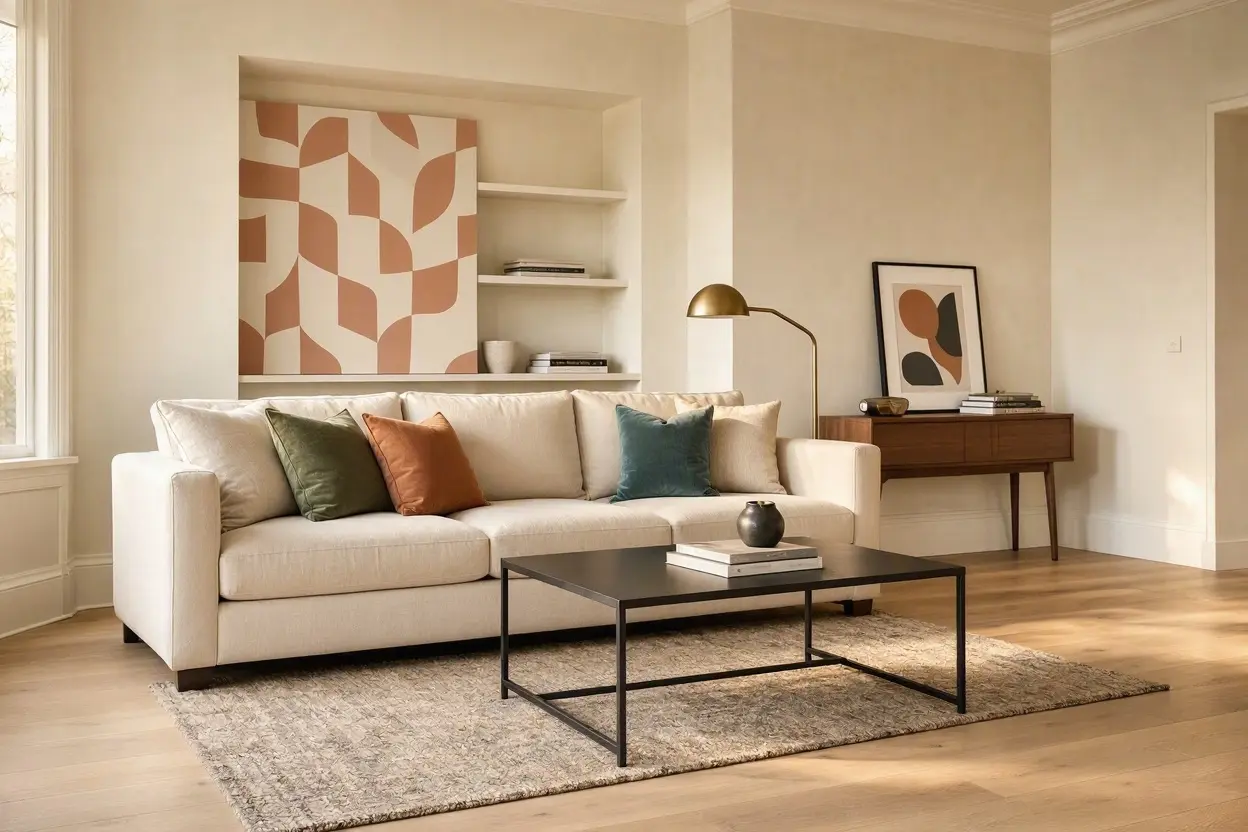
Interior design trends can make remodeling exciting.
They give homeowners new ideas for:
- color,
- texture,
- lighting,
- cabinetry,
- furniture,
- materials.
But there is an important difference between enjoying a trend and permanently building it into a house.
A sofa can be replaced.
A paint color can be changed.
A full-height stone backsplash, custom cabinetry, or unusual flooring may remain for many years.
That is why successful remodeling requires more than asking what is popular right now.
The better question is:
Which trends are flexible enough to enjoy today without creating an expensive redesign tomorrow?
Design fairs and magazines are useful sources of inspiration, but homeowners still need to decide which ideas translate well into permanent construction. Looking at current interior design trends can help identify broader movements such as organic forms, natural materials and handcrafted details without treating every trend as something that needs to be built permanently into the house.
The goal is not to avoid trends.
It is to use them selectively.
Why Interior Trends Age Differently From Fashion Trends
Fashion changes quickly because clothing is relatively easy to replace.
Homes work differently.
A remodeling decision may affect:
- cabinetry,
- flooring,
- plumbing,
- lighting,
- built-in furniture.
These elements can be expensive and disruptive to change.
A strong remodel therefore combines:
- long-lasting architectural decisions,
- flexible decorative choices.
The permanent parts of the room should usually have a longer design life than the accessories placed inside them.
Start With the Parts of the Home That Are Expensive to Change
Before choosing finishes, separate decisions into two groups.
Hard to Replace
Examples include:
- cabinets,
- countertops,
- flooring,
- built-ins,
- tile.
Easier to Replace
Examples include:
- paint,
- light fixtures,
- hardware,
- furniture,
- textiles.
The more difficult something is to replace, the more carefully it should be evaluated against short-lived trends.
This does not mean permanent materials must be boring.
It means they should still work when surrounding decorative styles change.
1. Use Trendy Colors Where Repainting Is Easy
Color is one of the safest ways to experiment.
Walls can be repainted without rebuilding the room.
That makes paint a good place to try:
- deeper tones,
- earthy shades,
- dramatic accent colors.
The same philosophy can apply to:
- furniture,
- art,
- accessories.
If a homeowner later changes direction, the room can evolve without major demolition.
Using trend-driven color on custom cabinetry is a bigger commitment.
That decision deserves more thought.
2. Be More Careful With Cabinets and Built-Ins
Cabinetry is expensive and highly visible.
Highly specific:
- door profiles,
- colors,
- decorative details
can strongly define the age of a kitchen.
A safer approach is often to choose cabinetry that works with several design styles.
Personality can then be added through:
- hardware,
- lighting,
- wall color,
- decor.
This gives the room room to evolve.
3. Natural Materials Usually Age Better Than Artificial Trends
Natural materials tend to develop character rather than simply look old.
Examples include:
- wood,
- stone,
- metal.
Their variation often makes them more adaptable to changing styles.
That does not mean every natural material is automatically timeless.
The way it is used still matters.
A highly complicated installation pattern can date more quickly than a simpler application of the same material.
4. Statement Tile Can Work Without Taking Over the Room
Decorative tile is one of the easiest ways to give a kitchen or bathroom personality.
But it can also dominate the design.
A useful strategy is to place stronger patterns in areas that are relatively contained.
For example:
- small backsplash areas,
- niches,
- powder rooms.
Using a very specific trend across every wall and floor creates a much larger commitment.
The more permanent the application, the more carefully the pattern should be considered.
5. Curves and Organic Forms Need the Right Architecture
Curved forms and softer geometry have become increasingly visible in residential interior demolition.
They can work beautifully through:
- furniture,
- arched openings,
- rounded islands,
- curved millwork.
But not every house supports them equally well.
A curved architectural feature should feel connected to:
- room proportions,
- circulation,
- existing architecture.
Adding curves simply because they are fashionable can make the feature feel artificial.
The strongest use of any trend is one that appears to belong in the house.
6. Mixing Metals Works Better With a Clear Hierarchy
Using more than one metal finish can create a layered interior.
Problems begin when every fixture uses a different finish without a clear relationship.
A better approach is to establish:
- one dominant metal,
- one supporting finish.
For example, cabinet hardware might establish the primary tone while lighting provides contrast.
This creates variety without making the room feel accidental.
7. Lighting Is One of the Safest Places to Add Personality
Lighting can dramatically change a space.
It also offers more flexibility than many permanent finishes.
Pendant lights, sconces, and decorative fixtures can introduce:
- color,
- sculptural form,
- new materials.
If tastes change later, fixtures can usually be replaced without altering:
- cabinetry,
- flooring,
- countertops.
That makes lighting one of the better places to be more adventurous.
8. Avoid Designing Every Room Around the Same Trend
A trend becomes exhausting when it is repeated everywhere.
If the same:
- tile,
- color,
- hardware,
- decorative form
appears in every room, the house can begin to feel like a showroom from one specific year.
Variation gives the home more depth.
Rooms should feel related without being identical.
A consistent material language is useful.
Exact repetition is not always necessary.
9. Trendy Does Not Have to Mean Expensive
Homeowners sometimes assume that following a design trend requires expensive permanent construction.
Often it does not.
A room can feel current through:
- paint,
- lighting,
- furniture,
- textiles.
That means the budget can be concentrated on durable improvements while style is introduced through easier-to-change elements.
This is especially useful when a homeowner enjoys experimenting with design.
10. Think About Maintenance Before Choosing a Finish
A material can photograph beautifully and still be frustrating to live with.
Before selecting a trendy finish, ask:
- Does it show fingerprints?
- Does it scratch easily?
- Is it difficult to clean?
- Will it need frequent sealing?
The longer an element is expected to remain in the house, the more important durability and replacement difficulty become. Comparing material and finish options before construction helps separate surfaces that can be updated relatively easily from cabinetry, flooring, stone and other decisions that homeowners may live with for decades.
A remodel should look good in real life, not only in photographs.
11. Avoid Overcommitting to One Moment in Design
The most dated interiors are often not the ones that followed trends.
They are the ones that followed too many trends at once.
A room might combine:
- one fashionable cabinet color,
- one highly specific tile,
- one dramatic metal finish,
- one unusual lighting style.
Each feature may work individually.
Together, they can lock the room into a narrow visual era.
Editing is important.
One or two trend-driven elements may be enough.
12. Let Architecture Provide the Long-Term Foundation
Interior styling changes.
Architecture changes more slowly.
Good proportions, useful storage, comfortable circulation, and natural light remain valuable regardless of trend cycles.
That means the most permanent remodeling decisions should begin with:
- layout,
- scale,
- function.
Once those are right, decorative trends can be layered on top.
A beautiful material cannot rescue a room with a poor layout.
13. Consider the Existing House Before Chasing a New Style
Not every home needs to be transformed into the same contemporary aesthetic.
A successful remodel can modernize a house while respecting its original character.
Older homes may benefit from preserving:
- millwork,
- proportions,
- architectural details.
New elements can then be introduced in a way that feels intentional.
This often produces a more individual interior than copying a complete design trend from another property.
14. Use Trends as Inspiration, Not Instructions
Design inspiration is useful because it helps homeowners discover what they respond to.
The mistake is treating one photograph as a complete specification.
A room shown online may have different:
- dimensions,
- lighting,
- architecture,
- lifestyle requirements.
Instead of copying the room, identify what makes it appealing.
Maybe it is:
- warm wood,
- softer lighting,
- minimal visual clutter.
Those ideas can then be translated into a design appropriate for the actual house.
15. Think About Resale Without Designing Only for Buyers
Homeowners sometimes become so concerned about future resale that they remove all personality from the remodel.
That is unnecessary.
A house should still reflect the people living in it.
The key is to separate personal expression from difficult-to-reverse construction.
Bold artwork is personal.
An unusual sofa is personal.
A highly specialized permanent layout can be harder for future owners to adapt.
There is room for individuality without making every expensive decision highly specific.
How to Separate Permanent Decisions From Replaceable Ones
A useful test is to ask:
How difficult would this be to change in five years?
If the answer involves:
- demolition,
- new cabinets,
- plumbing,
- major flooring work,
the decision deserves a longer-term perspective.
If the answer involves:
- repainting,
- changing hardware,
- replacing a fixture,
there is more freedom to follow current design.
This simple distinction can prevent homeowners from treating every finish with the same level of commitment.
What Makes a Remodel Feel Current Without Feeling Temporary
A home can feel modern without chasing every new style.
Usually that comes from combining:
- good proportions,
- durable materials,
- thoughtful lighting,
- a limited number of current design ideas.
Trends are most successful when they refresh the room rather than define every part of it.
A homeowner should be able to change:
- furniture,
- paint,
- decorative objects
five years later and still have the underlying remodel feel relevant.
That is the balance worth aiming for.
A good interior should not look as though it was designed to avoid change.
It should be designed so change is easy.
