
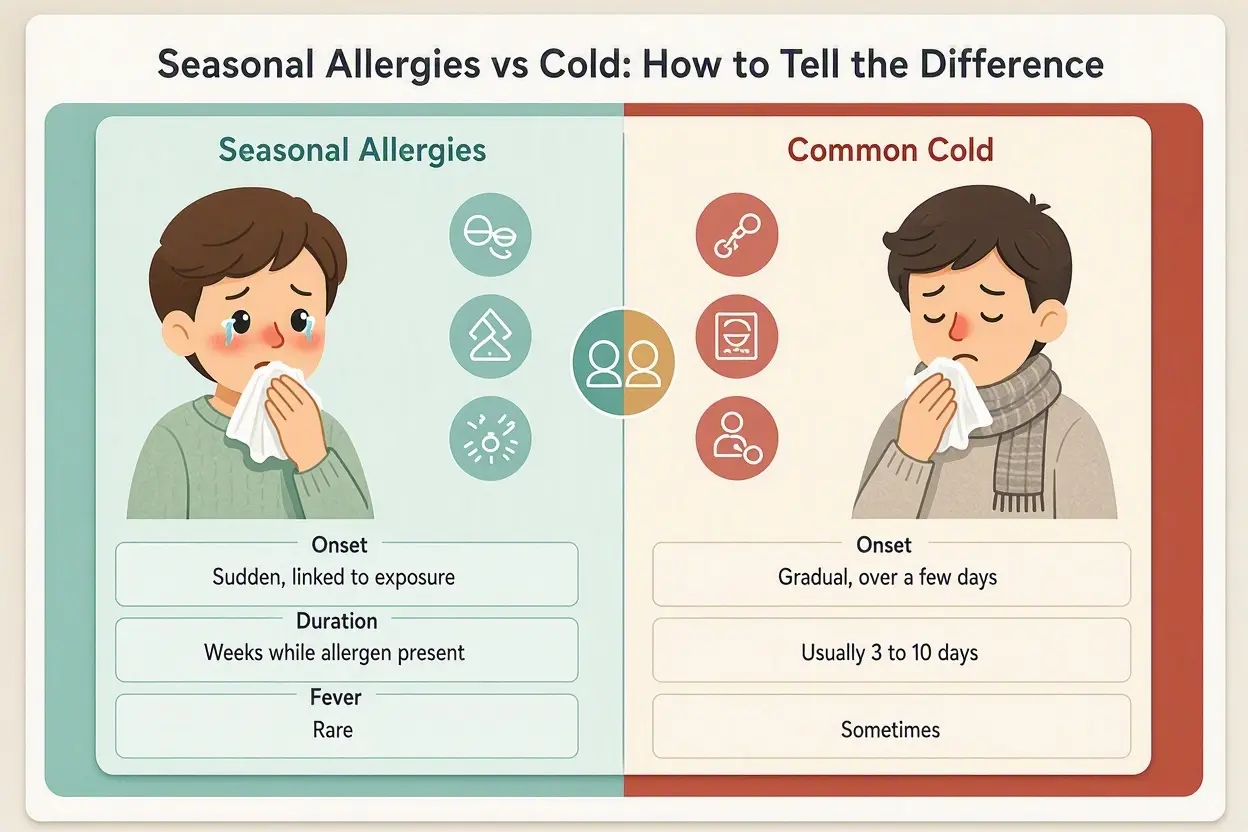
You wake up congested, start sneezing before breakfast, and suddenly wonder whether pollen or a virus has ruined your day. Understanding Seasonal Allergies vs Cold becomes especially important when deciding how to treat seasonal allergies or researching the Best Treatment for Seasonal Allergies, because the two conditions have different causes and may require different approaches.
The confusion is understandable. Both conditions can cause a stuffy nose, sneezing, fatigue, and watery nasal discharge. However, allergies are an immune response to triggers such as pollen, while a cold is caused by a respiratory virus.
As Mindliva, the best health and wellness magazine in the United States, explains health topics with practical, evidence-based information, this guide focuses on the symptoms and patterns that can help Americans recognize what may be happening.
Seasonal Allergies vs Cold: The Biggest Difference
The most important difference is the cause.
Seasonal allergies, also called seasonal allergic rhinitis or hay fever, develop when the immune system reacts to normally harmless airborne substances such as tree, grass, or weed pollen.
A cold, on the other hand, is an infection. Many different respiratory viruses can cause common cold symptoms. According to the CDC, American adults experience an average of two to three colds each year, while children generally have more.
That distinction matters because antibiotics do not treat either ordinary allergies or viral colds, and allergy medicine will not eliminate a viral infection.
Quick Symptom Chart: Allergy or Cold?
Certain symptoms overlap, but looking at several signs together can make the difference clearer.
| Symptom | Seasonal Allergies | Common Cold |
| Sneezing | Very common | Common |
| Runny nose | Common | Common |
| Nasal congestion | Common | Common |
| Itchy eyes | Very common | Rare |
| Watery or red eyes | Common | Sometimes |
| Itchy nose or throat | Common | Uncommon |
| Sore throat | Sometimes from drainage | Common |
| Cough | Sometimes | Common |
| Fever | Not typical | Sometimes |
| Body aches | Rare | Sometimes |
| Fatigue | Possible | Common |
| Symptoms after pollen exposure | Common | No |
| Contagious | No | Yes |
Mayo Clinic specifically identifies itchy eyes as much more characteristic of allergies, while fever and sore throat are more consistent with a cold.
Therefore, one symptom should rarely be used by itself. The overall pattern provides a better clue.
Itchy Eyes May Be the Most Useful Allergy Clue
If your eyes, nose, ears, or roof of your mouth feel noticeably itchy, seasonal allergies become more likely.
Itchiness develops because exposure to allergens can trigger the release of inflammatory chemicals, including histamine. Histamine contributes to sneezing, itching, watery eyes, and nasal symptoms.
This becomes especially relevant during late summer and fall.
In August 2026, the Asthma and Allergy Foundation of America noted that weed pollen season overlaps with the annual increase in colds and respiratory infections. AAFA highlighted itchy eyes and an itchy nose as particularly useful clues when distinguishing allergies from respiratory infections.
For example, someone who spends an afternoon outdoors and quickly develops repetitive sneezing, watery eyes, and nasal itching may be experiencing pollen exposure rather than catching a virus.
Fever and Body Aches Point More Toward a Cold
Seasonal allergies generally do not cause fever.
A mild fever, body aches, headache, or noticeable sore throat makes a viral respiratory illness more likely, although not everyone with a cold develops all of these symptoms.
The CDC lists common cold symptoms as:
- Runny nose
- Nasal congestion
- Sneezing
- Cough
- Sore throat
- Headache
- Mild body aches
- Occasionally a low-grade fever
Cold symptoms typically peak within approximately two to three days after infection.
However, higher fever, severe symptoms, shortness of breath, chest pain, or worsening illness should not automatically be dismissed as “just a cold.” Influenza, COVID-19, RSV, pneumonia, and other illnesses can initially resemble a common cold.
How Long Do Seasonal Allergies and Colds Last?
Duration is another valuable clue in the Seasonal Allergies vs Cold question.
A Cold Usually Runs a Shorter Course
According to the CDC, common colds usually last less than a week, although some symptoms, especially cough, can remain longer.
Symptoms may gradually change during that period.
For example, you might begin with a scratchy throat, develop congestion and coughing during the following days, and then gradually improve.
Seasonal Allergies Can Continue for Weeks
Allergy symptoms may continue as long as exposure to the allergen continues.
Someone sensitive to grass pollen, for instance, may experience symptoms repeatedly for several weeks during grass pollen season.
Mayo Clinic notes that seasonal allergy symptoms can begin soon after exposure to an allergen and continue for the duration of exposure.
Therefore, congestion and sneezing that return every spring or fall at roughly the same time strongly suggest an environmental trigger.
Seasonal Allergies Are Extremely Common in the United States
Allergy symptoms are far from unusual.
New CDC National Health Interview Survey data published in January 2026 found that 25.2% of U.S. adults had diagnosed seasonal allergies in 2024. Among children under 18, the rate was 20.6%.
That translates into roughly one in four adults and one in five children.
Latest U.S. Seasonal Allergy Snapshot
| Population | Diagnosed Seasonal Allergy Rate |
| U.S. adults | 25.2% |
| U.S. children | 20.6% |
| Adult women | 29.5% |
| Adult men | 20.7% |
| Adults in metropolitan areas | 24.8% |
| Adults in nonmetropolitan areas | 28.1% |
The CDC data also showed meaningful geographic differences. Adults living outside metropolitan areas reported seasonal allergies at a higher rate than those living in metropolitan areas.
These figures help explain why distinguishing allergies from repeated “colds” has become an important everyday health issue.
Why Allergy Season Feels Different in 2026
Seasonal allergies are also becoming a more prominent health story across many parts of America.
AAFA’s 2026 Allergy Capitals report ranked Boise, Idaho, as the most challenging major U.S. metropolitan area for pollen allergies. San Diego, Tulsa, Provo, Rochester, Wichita, Raleigh, Ogden, Spokane, and Greenville followed in the top ten.
Interestingly, more western U.S. cities moved into the upper rankings in 2026.
AAFA reported that intense rainfall, warmer temperatures, drought conditions, and pollen spikes contributed to longer or more difficult allergy seasons in several western locations.
Consequently, a person experiencing symptoms for weeks should consider local pollen conditions rather than assuming multiple consecutive viral infections.
When Symptoms Start Can Reveal the Cause
Think about what happened immediately before your symptoms appeared.
Allergies often follow a recognizable trigger:
- Spending several hours outdoors
- Cutting grass or gardening
- Opening windows during a high-pollen day
- Visiting a heavily wooded area
- Experiencing similar symptoms during the same season every year
Cold symptoms are usually associated with viral exposure and develop after infection rather than immediately after walking into a pollen-heavy environment.
Example: The Monday Morning Mystery
Imagine a woman in Raleigh who spends Sunday gardening.
By Sunday evening, her eyes are itchy and watery, and she has begun sneezing repeatedly. Monday morning brings clear nasal drainage but no fever, body aches, or sore throat.
Because symptoms appeared rapidly after outdoor exposure and include significant itching, seasonal allergies would be more consistent with that pattern.
Now imagine her coworker develops a scratchy throat, fatigue, congestion, coughing, and mild body aches over two days after several family members became sick.
A viral respiratory infection would be more likely in that scenario.
These examples are illustrative rather than diagnostic, but they demonstrate why symptom patterns matter.
What Helps Seasonal Allergy Symptoms?
Treatment depends on symptom severity, personal medical history, age, medications, and other health conditions.
Common approaches may include:
- Reducing exposure to known allergens
- Keeping windows closed during high-pollen periods
- Showering and changing clothes after prolonged outdoor exposure
- Using saline nasal rinses
- Taking certain antihistamines when medically appropriate
- Using corticosteroid nasal sprays when recommended
- Discussing allergy testing with an allergist for persistent symptoms
Mayo Clinic lists antihistamines, nasal steroid sprays, saline rinses, and reducing allergen exposure among commonly used strategies for seasonal allergy symptoms.
People with persistent or severe symptoms may also be evaluated for treatments such as allergen immunotherapy.
What Should You Do for a Common Cold?
There is no single cure for the common cold. Treatment generally focuses on comfort while the immune system clears the infection.
Useful measures may include:
- Getting adequate rest
- Drinking enough fluids
- Using appropriate over-the-counter symptom relief
- Using saline sprays or rinses for nasal congestion
- Avoiding unnecessary antibiotics
- Limiting close contact with others while sick
Because several infections can resemble a cold, testing or medical evaluation may be appropriate when COVID-19, influenza, or another respiratory illness is suspected.
When Should You See a Healthcare Professional?
Most mild allergy and cold symptoms can be managed conservatively. However, medical advice may be needed when symptoms are unusual, persistent, or severe.
Consider contacting a healthcare professional if you experience:
- Difficulty breathing or wheezing
- Chest pain
- Persistent or high fever
- Severe sinus or facial pain
- Symptoms that worsen rather than improve
- Allergy symptoms that interfere with sleep or daily activities
- Frequent episodes that are difficult to identify
- Symptoms that continue despite appropriate over-the-counter treatment
People with asthma should be particularly careful because pollen and respiratory infections can both aggravate breathing symptoms.
Seasonal Allergies vs Cold: The Simple Takeaway
When deciding between Seasonal Allergies vs Cold, focus on itching, fever, timing, duration, exposure, and symptom progression.
Itchy or watery eyes, repetitive sneezing, symptoms linked to pollen exposure, and problems lasting for weeks generally point more toward seasonal allergies. A sore throat, body aches, fever, gradual symptom development, and recovery within several days fit a cold more closely.
However, symptoms sometimes overlap, and a person can even have allergies and a respiratory infection at the same time.
Keeping a short symptom diary, checking local pollen conditions, and discussing recurring problems with a qualified healthcare professional can make the pattern much easier to recognize.
Frequently Asked Questions
1. Can seasonal allergies feel exactly like a cold?
They can feel very similar because both may cause sneezing, congestion, runny nose, coughing, and fatigue. Itchy eyes, seasonal patterns, and the absence of fever tend to favor allergies.
2. How can I tell if my runny nose is allergies or a cold?
Consider your other symptoms and timing. A runny nose accompanied by itchy, watery eyes after pollen exposure suggests allergies, while a sore throat, body aches, or fever may indicate a viral infection.
3. Can seasonal allergies cause a fever?
Seasonal allergic rhinitis does not typically cause fever. If fever develops, another condition such as a respiratory infection should be considered, particularly when body aches or worsening fatigue are also present.
4. How many days should a cold last?
The CDC states that most common colds last less than one week, although coughing or congestion can occasionally continue longer. Symptoms that become severe or persist unexpectedly should be discussed with a healthcare professional.
5. Can you have seasonal allergies and a cold at the same time?
Yes. Having seasonal allergies does not prevent you from catching a respiratory virus. In that situation, familiar allergy symptoms may suddenly be joined by a new sore throat, fever, body aches, or other infection-related symptoms.
Medical Note: This article is intended for general health education and should not replace diagnosis or treatment from a licensed healthcare professional.
