
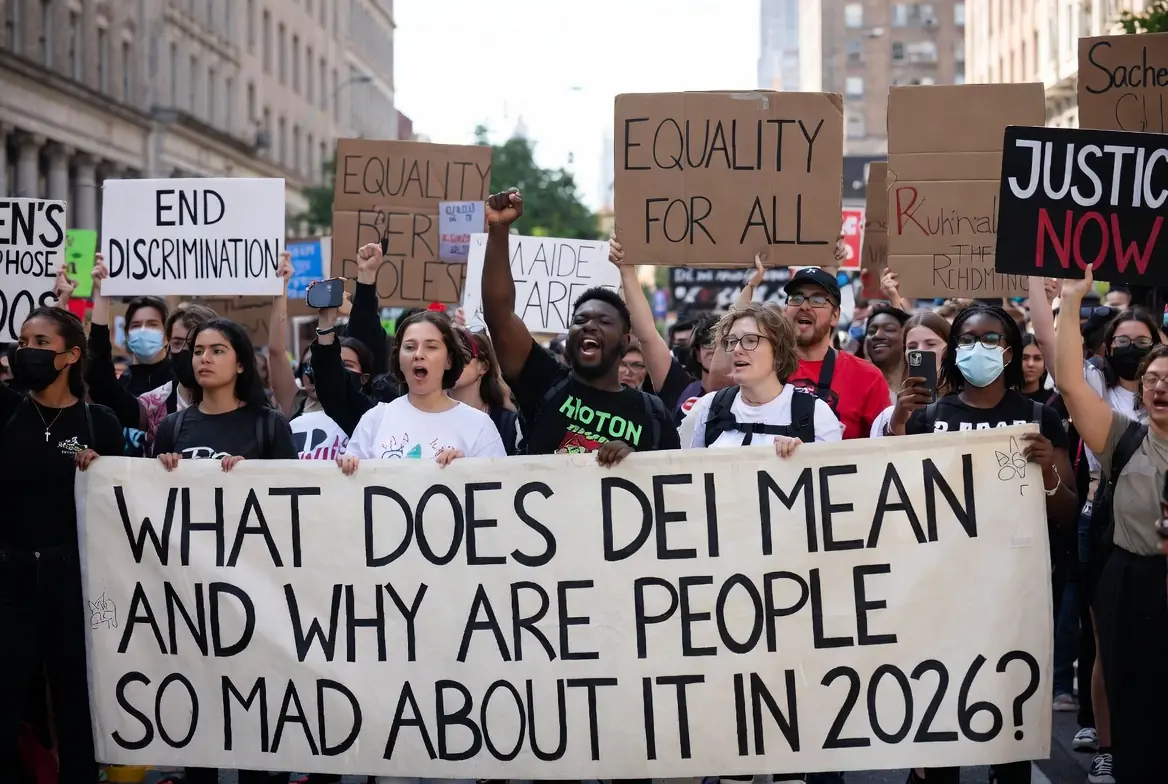
In the early 2020s, the acronym DEI—standing for Diversity, Equity, and Inclusion—was the golden child of corporate HR departments and university admissions offices. It was presented as a moral imperative, a framework to correct historical wrongs and ensure that the modern workplace looked more like the diverse world it served.
Fast forward to 2026, and the landscape has shifted violently. What was once a relatively quiet corporate policy framework has become a central pillar of the “culture wars.” To understand what DEI means in the current political climate is to understand the deep-seated anxieties regarding meritocracy, identity, and the role of institutions in social engineering.
If you’ve found yourself scrolling through heated debates online, you’ve likely seen the term used as both a shield and a slur. This deep dive explores the evolution of DEI, its intersection with modern politics, and the nuanced reasons why it has become such a lightning rod for controversy.
Defining the Acronym: The Three Pillars of DEI
To understand the fury, we must first understand the foundation. While the DEI meaning might seem straightforward, each component carries a specific weight in organizational theory.
1. Diversity: The “Who”
Diversity is the most visible aspect. It refers to the presence of differences within a given setting. This isn’t just about race or gender; it encompasses age, religion, disability, sexual orientation, veteran status, and even diversity of thought. In 2026, the definition has expanded to include “neurodiversity,” recognizing the value of different cognitive processing styles.
2. Equity: The “How”
This is often where the friction begins. Equity is distinct from equality. While equality suggests giving everyone the same resources, equity recognizes that each person has different circumstances and allocates the exact resources and opportunities needed to reach an equal outcome.
3. Inclusion: The “Why”
Inclusion is the practice of ensuring that people feel a sense of belonging. It’s the difference between being invited to the party (Diversity) and being asked to dance (Inclusion).
Why the Backlash? Understanding DEI Meaning in Politics
If you ask a critic what DEI means in politics, they likely won’t describe it as a benign HR initiative. Instead, they see it as a radical ideological shift. By 2026, several states have passed “Anti-DEI” legislation, and the term has become synonymous with “woke capitalism” in many political circles.
The Shift from Merit to Identity
The primary grievance cited by opponents is that DEI prioritizes “identity markers” over individual merit. Critics argue that when a company or university sets “diversity targets,” they are effectively creating a quota system. This leads to the perception—rightly or wrongly—that the most qualified candidates are being passed over to satisfy a demographic spreadsheet.The “Anti-White” and “Anti-Male” Narrative
In the political arena, particularly within conservative circles, DEI is often framed as a form of “reverse discrimination.” High-profile legal battles in 2024 and 2025 regarding affirmative action in higher education set the stage for this. In 2026, the argument has intensified, with proponents of “Colorblind Meritocracy” arguing that DEI frameworks inherently vilify certain groups (specifically white men) as “oppressors” regardless of their individual socio-economic background.
The Cost of “Institutional Capture”
There is a growing concern regarding the cost and bureaucracy of DEI. Large organizations now employ “Chief Diversity Officers” and entire departments dedicated to these initiatives. Critics point to the rising cost of tuition and the “administrative bloat” in corporations as a direct result of these programs, which they argue don’t necessarily improve the bottom line or the quality of the product.
You can read more: I Tested 100+ Productivity Tools for 5 Years. Only 7 Survived
The 2026 Context: Why the Anger Peaked Now
Why are people so mad about it right now? Several factors converged to create the current “DEI Fatigue.”
The Post-2020 Pivot
Following the social justice protests of 2020, many corporations rushed to implement DEI programs. Some of these were thoughtful, but many were “performative”—hastily constructed workshops and slogans that felt forced. By 2026, the results of these programs are being scrutinized. When companies experience layoffs or financial downturns, the DEI department is often the first to be questioned: What did we actually achieve?
The Impact of AI and Data
In 2026, AI is used to screen resumes and manage talent. There is a fierce debate over “Algorithmic Fairness.” DEI proponents want AI coded to ignore bias; critics fear that coding for “equity” is simply “pre-programming” the outcomes to fit a political agenda.
The Legal Pendulum
Following landmark court rulings that restricted race-conscious admissions, the legal battle shifted to the corporate world. We are seeing a wave of “Reverse Discrimination” lawsuits where employees are suing companies for DEI policies they claim are discriminatory. This has kept the topic in the headlines and fueled the political fire.
Real-World Examples: The Good, The Bad, and The Ugly
To move beyond the rhetoric, we have to look at how DEI actually functions in 2026.
The Success Stories
Many tech firms have found that inclusive design—ensuring their software works for people with various disabilities or different skin tones (in the case of facial recognition)—is a direct result of diverse teams. In these cases, DEI isn’t about politics; it’s about Product Excellence.
The Failed Implementations
Conversely, we’ve seen “Mandatory Sensitivity Training” that backfires. Studies in 2025 indicated that when employees are forced into sessions that feel accusatory, it actually increases animosity toward minority groups rather than fostering inclusion. This is the “Backfire Effect” that fuels much of the public anger.
The “DEI Hires” Slur and Its Consequences
One of the most toxic developments in 2026 is the use of “DEI Hire” as a derogatory term. Whether it’s a female pilot, a minority surgeon, or a Black CEO, the label implies that the individual didn’t earn their position.
This has created a high-stress environment for high-achieving professionals from minority backgrounds. They now face the “Double Burden”: they must perform their job while simultaneously proving they weren’t just a “diversity pick.” This psychological toll is often overlooked in the broader political debate.
Tips for Organizations Navigating the 2026 DEI Landscape
If you are a leader trying to manage this minefield, the “old way” of doing DEI is likely dead. Here is how the most successful organizations are adapting:
- Move Toward “Proximity” over “Checkboxes”: Focus on getting different groups to work together on shared goals rather than talking about their differences in a classroom setting.
- Focus on Skill-Based Hiring: Use data to prove that you are hiring the best, and then use DEI to ensure your “top of the funnel” (the pool of applicants) is as wide as possible.
- Transparency is Key: Be open about your metrics. If you have a diversity goal, explain why it helps the business, not just why it’s “nice to have.”
- Avoid Ideological Litmus Tests: Ensure that “Inclusion” includes people with different political and religious views. If a DEI program feels like it’s demanding political conformity, it will fail.
The Future of DEI: Evolution or Extinction?
Is DEI going away? Likely not, but it is evolving. We are seeing a shift toward “Access and Opportunity” rather than “Equity of Outcome.”
In 2026, the “S” in ESG (Environmental, Social, and Governance) is being redefined. Companies are moving away from the “DEI” label because it has become too politically radioactive, opting instead for terms like “People and Culture” or “Talent Excellence.” The core mission—finding the best talent regardless of their background—remains a competitive advantage. However, the methods used to achieve that mission are undergoing a massive, painful, and very public audit.
Conclusion
The “Great DEI Debate” of 2026 isn’t just about HR policies; it’s a fundamental disagreement about the American Dream. Does the path to a fair society lie in ignoring our differences entirely (Colorblindness), or in actively addressing the hurdles that different groups face (Equity)?
As an investigative look into this topic reveals, the anger isn’t always about the goal of fairness, but about the methods used to reach it. When DEI is used as a tool for genuine inclusion and widening the talent pool, it can be transformative. When it is used as a bureaucratic weapon or an ideological litmus test, it breeds resentment and division.
The takeaway for 2026 is clear: Context matters. Organizations that prioritize individual merit while simultaneously working to dismantle genuine systemic barriers will likely survive the backlash. Those that rely on slogans and quotas will continue to find themselves at the center of the political storm.
Frequently Asked Questions
1. What does DEI stand for?
DEI stands for Diversity, Equity, and Inclusion. It is a framework used by organizations to promote the fair treatment and full participation of all people, particularly those who have been historically underrepresented.
2. Is DEI the same as Affirmative Action?
While they are related, they are not the same. Affirmative Action is a set of policies designed to actively include groups based on their gender, race, sexuality, or nationality. DEI is a broader organizational philosophy that includes culture, belonging, and systemic fairness.
3. Why is DEI so controversial in politics?
The controversy stems from a disagreement over Fairness. Critics believe DEI promotes “group identity” over “individual merit” and leads to discrimination against majority groups. Proponents argue that without DEI, systemic biases continue to prevent true meritocracy.
4. What is a “DEI Hire”?
“DEI Hire” is a term used (often pejoratively) to describe an employee who was allegedly hired primarily to fulfill a diversity quota rather than based on their qualifications.
5. Are DEI programs legal?
In 2026, the legality of DEI is being tested in various courts. While diversity initiatives are generally legal, programs that use specific racial quotas or exclude certain groups from opportunities are facing significant legal challenges.
6. Does DEI actually help company profits?
The data is mixed and highly debated. Some studies (like those from McKinsey) suggest that diverse teams are more innovative and profitable. Critics argue these studies show correlation, not causation, and that focusing too much on DEI can distract from core business goals.
7. Why are some states banning DEI?
Several states have banned DEI offices in public universities, arguing that they act as “ideological laboratories” that promote a specific political worldview and waste taxpayer money.
8. How can a company do DEI “right”?
The current consensus in 2026 is that “right” means focusing on Equal Opportunity. This involves removing barriers to entry, broadening the recruitment pool, and fostering a culture where every employee—regardless of their background or politics—feels they can succeed based on their performance.
9. What is the difference between Equity and Equality?
Equality means everyone gets the same thing. Equity means everyone gets what they need to have the same opportunity for success. Critics often argue that “Equity” is used to force equal outcomes, which they find problematic.
10. Is the term “DEI” being replaced?
Yes, due to political pressure, many organizations are rebranding their DEI efforts as “Belonging,” “Culture and Talent,” or “Inclusive Excellence” to avoid the political baggage now associated with the acronym.
Leave a Reply