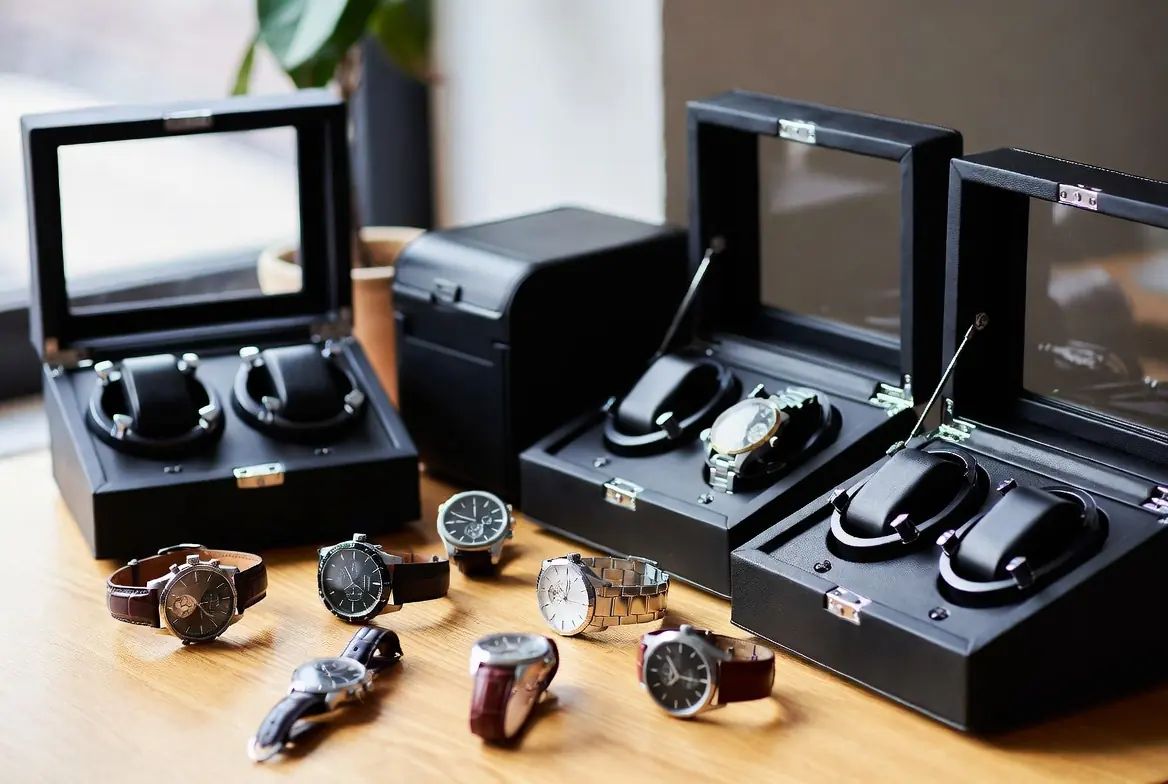
Short answer: No, automatic watches do not strictly need a watch winder. But in some cases, a watch winder can be useful.
How Automatic Watches Work
Automatic watches use your natural wrist movement to stay powered. Inside the watch, a small rotor spins as you move, winding the mainspring. If you wear the watch daily or every few days, it will keep running without any extra help.
When you stop wearing an automatic watch, it will usually stop after 38–72 hours, depending on the power reserve. This is completely normal and does not damage the watch.
When a Watch Winder Is NOT Necessary
You do not need a watch winder if:
- You wear the same automatic watch every day
- You rotate watches but don’t mind resetting the time
- Your watch only has basic functions (time and date)
- You enjoy winding and setting your watch manually
For most people, simply wearing the watch or winding it by hand is enough.
When a Watch Winder Can Be Helpful
A watch winder makes sense if:
- You own multiple automatic watches and rotate them often
- Your watch has complications like perpetual calendar, moon phase, or annual calendar
- You want your watch ready to wear at all times
- You dislike resetting time, date, and complications
For example, setting a perpetual calendar watch incorrectly can be frustrating and time-consuming. A winder helps avoid that.
Does a Watch Winder Harm the Watch?
A good-quality watch winder does not damage an automatic watch when used correctly. Modern automatic watches have slipping clutches that prevent over-winding. However, cheap or constantly running winders may cause unnecessary wear over many years.
Final Words
Automatic watches do not require a watch winder to stay healthy. A watch winder is a convenience tool, not a necessity. If you value ease, readiness, and complication care, a winder is useful. If not, your wrist works just fine.
Read Relevant Post: What is the Purpose of a Watch Winder?
