
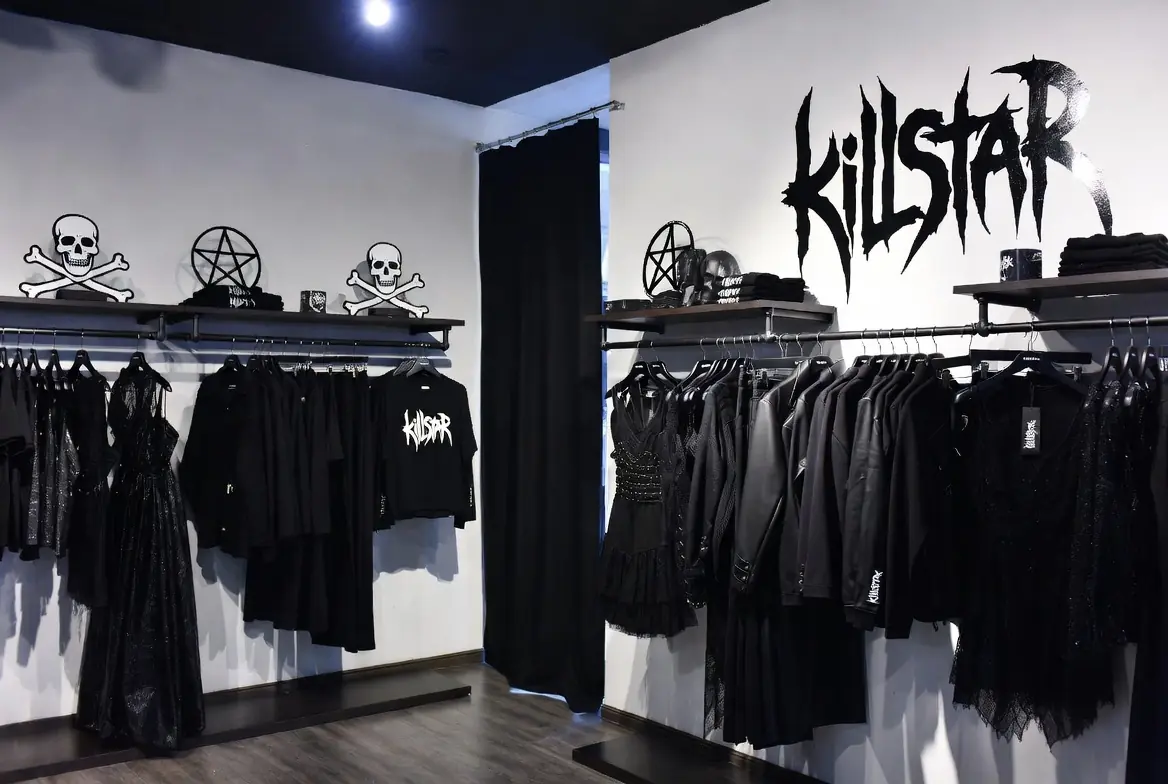
Killstar is widely classified as a fast fashion brand within the alternative and gothic fashion sectors. While it markets itself as a premium, “dark” lifestyle brand with a focus on original design, its business model mirrors the high-volume, trend-driven production cycles characteristic of fast fashion. In 2026, Killstar operates as a budget-to-mid-range alternative brand that prioritizes rapid inventory turnover and global distribution over the slow, small-batch craftsmanship traditionally associated with gothic subcultures.
Despite its “edgy” aesthetic and niche appeal, Killstar’s ethical and sustainability standing remains poor, with major industry watchdogs frequently rating the brand as one to avoid. The brand relies heavily on synthetic, fossil-fuel-based materials (like polyester and “vegan” polyurethane leather) and lacks the supply chain transparency required to be considered a truly ethical or sustainable choice.
Quick-Answer Summary: The Killstar Reality Check
- Brand Type: Fast fashion / Alternative lifestyle retailer.
- Ethical Level: Low. Significant lack of transparency regarding factory labor conditions and wages.
- Sustainability Level: Low. High usage of non-biodegradable synthetics and a “take-make-waste” business model.
- Quality Level: Variable. Some items are durable staples; others have been criticized for thin fabrics and inconsistent sizing.
- Price Category: Mid-range ($40–$120 average for garments; higher for boots).
- Best For: Shoppers looking for specific gothic aesthetics who are on a budget and cannot afford high-end independent designer pieces.
Who Owns Killstar and How Did the Brand Begin?
Killstar was founded in 2010 by Tequila Rose (who continues to serve as Creative Director) and is currently headquartered in Glasgow, Scotland. The brand operates under the umbrella of Draco Distribution, which handles its global logistics across subsidiaries in the UK, USA, and Germany.
The origin story of Killstar is rooted in the desire to make “rare, hard-to-source” alternative fashion more accessible. In its early days, Killstar was a disruptive force, offering occult-inspired streetwear and occultist imagery that was previously only found in tiny, specialized boutiques. This “accessible darkness” allowed the brand to scale rapidly from a small UK startup to a global powerhouse with a massive presence on social media and a dominant share of the alternative e-commerce market.
How Has Killstar Evolved and Grown Over Time?
The evolution of Killstar is a tale of massive commercial success often at the cost of its underground credibility. Between 2015 and 2020, the brand exploded into the mainstream through high-profile collaborations with icons like Elvira and Marilyn Manson, as well as more recent ventures into major IPs like Corpse Bride and Motionless In White.
However, by 2026, a clear shift has occurred. Long-time followers have noted that the brand has moved away from its stark, traditional gothic roots toward a more “sanitized” or “marketable” version of alternative fashion. This shift includes a heavy focus on trending aesthetics like cottage-core, “witchy” lifestyles, and loungewear. While this has helped Killstar grow into a $10M+ annual revenue company, it has led to accusations that the brand is now “fast fashion for goths,” prioritizing profit and mass appeal over the authentic subcultural values it once championed.
Is Killstar Fast Fashion Brand or Something Else?
When we look under the hood of Killstar’s operations, it ticks almost every box of the fast fashion definition:
- Massive Inventory: The website features thousands of SKUs across women’s, men’s, lifestyle, and home categories.
- High Turnover: New “edits” and collections drop with startling frequency, encouraging a cycle of constant consumption.
- Pricing Strategy: While more expensive than Shein or Boohoo, Killstar relies on aggressive sales, “clearance” cycles, and promo codes—all hallmarks of the fast fashion “buy now” pressure.
- Production Speed: The brand mirrors mainstream trends (like velvet flares or platform boots) but adds a black-and-silver color palette to make them “alternative.”
While Killstar fans argue the brand provides a unique service by making alt-fashion available in plus sizes (up to 4XL), the sheer scale and speed of their production place them firmly in the “fast” category.
How Ethical and Sustainable Is Killstar Really?
The most critical investigative finding regarding Killstar is the opacity of its supply chain. As of 2026, Killstar provides no public list of its tier-1 or tier-2 factories. While the brand’s website contains a “Sustainability” page that mentions joining the UK Fashion and Textile Association (UKFT) and switching to recycled poly bags, these are often viewed as entry-level industry standards rather than deep ethical commitments.
- Labor: There is no evidence of third-party audits (like SA8000 or BSCI) that guarantee fair wages or safe working conditions.
- Materials: Killstar frequently uses “Vegan Leather.” While this avoids animal harm, it is almost exclusively polyurethane (PU) or PVC—plastics that do not biodegrade and shed microplastics during use.
- Greenwashing Concerns: Critics point to the brand’s “Kreeptures” (plush toys) and “lifestyle” items as evidence of overproduction. The brand has been rated “We Avoid” by sustainability aggregators like Good On You for years, citing a total lack of transparency regarding climate impact and water use.
What Products Does Killstar Sell and What Makes It Unique?
Killstar is a one-stop-shop for the “dark aesthetic.” Their catalog is incredibly broad:
- Fashion: Velvet dresses, harness-detailed tops, pentagram-adorned knitwear, and oversized hoodies.
- Footwear: Massive platforms, buckled boots, and creepers that have become staple items for the “Nu-Goth” look.
- Homeware: This is where Killstar shines uniquely. They sell everything from coffin-shaped shelves and occult bedding to “Baphomet” tea sets.
- Collaborations: Their licensed collections are a major draw, allowing fans to wear official gear from their favorite cult films or bands.
How Good Is the Quality and Is the Price Justified?
The consensus on Killstar’s quality in 2026 is “hit or miss.” Many customers swear by their graphic tees and heavy-duty boots, which can last years if cared for properly. However, investigative reviews frequently highlight:
- Fabric Thinness: Some dresses and leggings are described as see-through or “feeling like cheap polyester.”
- Hardware Issues: Zippers and decorative buckles on more affordable pieces are known to break or snag.
- Sizing Inconsistency: A “Large” in a velvet dress may fit differently than a “Large” in a cotton top, leading to high return rates.
Is it worth it? At full price, many critics say no. However, during their frequent 50% to 70% off sales, the value-for-money ratio becomes much more attractive for budget-conscious goths.
Where Are Killstar Products Made and How Does the Supply Chain Work?
Killstar designs its products in the United Kingdom, but manufacturing is largely outsourced to Asia, specifically China. The company states that all factories are approved in person and are “not sweatshops,” but without independent certification or a public supplier map, these claims remain unverified.
The logistics are centralized through Glasgow (UK) and a distribution hub in the USA, which allows for global shipping. However, the reliance on long-distance air and sea freight from Asian factories to Western warehouses adds a significant carbon footprint to every garment.
People also read: Is Garage Fast Fashion? 2026 Ethical & Quality Brand Review
How Fast Is Shipping and What Is the Real Customer Experience?
Shipping is generally a strong point for Killstar. Orders from the UK and US hubs typically arrive within 3–7 business days. However, the “Real Customer Experience” in 2026 is marred by one major sticking point: Returns.
Unlike many modern retailers, Killstar often requires customers to pay for their own return shipping, which can be prohibitively expensive for international buyers. This creates a “buyer beware” environment where many customers feel stuck with items that don’t fit.
What Do Real Customers Say About Killstar?
The public reputation of Killstar is currently split:
- The Praise: “Amazing designs you can’t find anywhere else,” “Inclusive sizing for plus-size goths,” and “Best home decor in the game.”
- The Complaints: “The quality has plummeted since 2020,” “They keep stealing art from small indie designers” (a recurring controversy), and “Terrible customer service when an item arrives damaged.”
What Are the Real Pros and Cons of Shopping From Killstar?
Pros:
- Aesthetic Availability: They make it easy to buy a “full look” in one place.
- Size Inclusivity: One of the few alt-brands with a consistent and diverse plus-size range.
- Creative Homeware: Truly unique items for those who want their house to look like a haunted mansion.
Cons:
- Ethical Concerns: Lack of transparency and high environmental impact.
- Fast Fashion Cycle: Encourages “hauls” and disposable fashion culture.
- Design Controversies: Multiple allegations of using “inspired” art without credited creators.
What Brands Compete With Killstar and Are There Better Alternatives?
If you want the look but want to avoid the “Fast Fashion” label, here is how the competition stacks up:
- The Direct Rivals (Fast Fashion): Dolls Kill (highly controversial), Disturbia (UK-based, similar pricing), and BlackCraft Cult.
- The Ethical Alternatives: Foxblood (Los Angeles-based, focus on quality and small-run production), Noctex (deadstock fabrics, more sustainable), and Mary Wyatt London (high-quality, ethical manufacturing).
Who Should Actually Buy From Killstar?
Killstar is best suited for the entry-level gothic enthusiast or the budget-conscious alternative shopper. If you need a specific “look” for a concert or a piece of coffin-shaped home decor that you can’t find elsewhere, Killstar is the most accessible route. However, for those who prioritize “buy less, buy better,” Killstar may not satisfy a desire for heirloom-quality garments.
Final words: Is Killstar Worth Buying in 2026?
Classification: Fast Fashion. Trust Level: Moderate-to-Low. Killstar remains a powerhouse because it is convenient and stylish. However, in 2026, it can no longer hide behind its “alternative” label to avoid the criticisms leveled at fast fashion giants like Zara or H&M. If you choose to shop at Killstar, do so during sales, check the fabric compositions (aim for cotton over 100% polyester), and consider buying their items secondhand on sites like Vinted or Depop to reduce your environmental impact.
Quick Facts: Killstar
| Category | Information |
| Founded | 2010 |
| Headquarters | Glasgow, Scotland |
| Manufacturing | Primarily China |
| Size Range | XS to 4XL |
| Sustainability Rating | 1/5 (We Avoid) |
| Core Materials | Polyester, PU Leather, Cotton |
Frequently Asked Questions
Is Killstar an ethical brand?
No, Killstar is not considered ethical by industry standards. It provides very little information about factory conditions, worker wages, or safety audits in its supply chain.
Is Killstar sustainable?
No. The brand uses high amounts of synthetic fabrics and lacks a circular recycling program. While they use recycled packaging, their overall business model relies on mass production.
Where is Killstar made?
Most Killstar clothing is manufactured in China and other parts of Asia, despite being designed in the UK.
Is Killstar owned by a bigger corporation?
It is owned by Draco Distribution, a private company founded by the brand’s original creators. It is not owned by a giant conglomerate like Inditex or H&M.
Why is Killstar so expensive if it’s fast fashion?
Killstar charges a premium for its niche designs and branding. You are paying for the “alternative” aesthetic and the cost of licensing collaborations.
Does Killstar use real leather?
Generally, no. Killstar is a “Vegan Friendly” brand and uses synthetic alternatives for its boots and bags.
Is Killstar quality better than Shein?
Yes, generally Killstar’s construction and fabric weight are superior to ultra-fast fashion like Shein, but it still falls below luxury or slow-fashion standards.
How do Killstar sizes run?
They often run small or inconsistent. It is highly recommended to check the specific size chart for every individual item.
What is Killstar’s return policy?
Customers are typically responsible for return shipping costs, and items must be returned within a specific window (usually 14-30 days) in original packaging.
Does Killstar steal designs?
There have been several public allegations from independent artists claiming Killstar has used their artwork without permission or compensation.
Is Killstar closing down?
As of 2026, there are no signs of Killstar closing; the brand remains highly profitable and continues to expand its lifestyle lines.
Is Killstar plus-size friendly?
Yes, Killstar is well-regarded for offering a wide range of sizes up to 4XL, which is rare in the alternative fashion world.
Are there brands like Killstar that are more ethical?
Yes. Brands like Foxblood, Mary Wyatt London, and Tunnel Vision prioritize ethical manufacturing and higher-quality materials.
Does Killstar have physical stores?
Killstar is primarily an e-commerce brand, though its products are sold in various independent boutique shops globally.
Why do people boycott Killstar?
Reasons for boycotts usually include their fast-fashion business model, lack of labor transparency, and past design theft controversies.
What is the best thing to buy from Killstar?
Their graphic tees (usually high-quality cotton) and their unique homeware/decor items are generally considered their best products.
Leave a Reply