
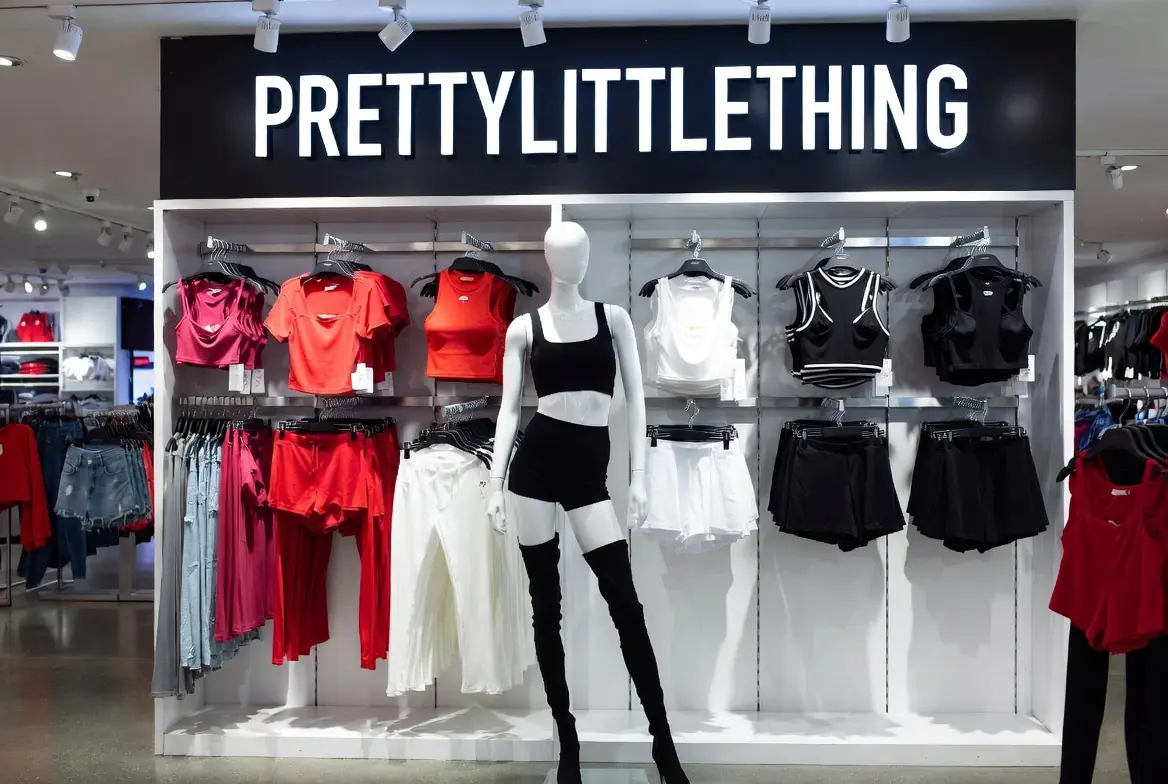
Pretty Little Thing (PLT) is the quintessential ultra-fast fashion brand. It is not luxury, premium, or slow fashion; it occupies the highest-velocity tier of the budget fashion sector. From an investigative standpoint, PLT is neither ethical nor sustainable by industry standards. While it offers trend-driven styles at incredibly low prices, these prices are made possible through a high-volume, low-margin business model that relies on rapid production cycles, synthetic materials, and a supply chain that has frequently faced scrutiny regarding labor rights and environmental impact.
The Quick Facts on PrettyLittleThing
PrettyLittleThing is a global ultra-fast fashion retailer owned by the Boohoo Group. On the ethical spectrum, it consistently ranks poorly due to a lack of transparency and high waste production. The quality level is generally low to moderate—designed for “Instagrammability” rather than longevity—and the price category is firmly “budget,” with frequent deep-discounting strategies. This brand is best suited for Gen Z and Millennial shoppers who prioritize staying on-trend for social events and festivals without making a significant financial investment in individual pieces.
Quick Facts: The PLT Dossier
| Feature | Details |
| Brand Type | Ultra-Fast Fashion |
| Parent Company | Boohoo Group PLC |
| Headquarters | Manchester, United Kingdom |
| Sustainability Rating | Very Poor / Low Transparency |
| Price Range | $5 – $100 (Average $25) |
| Manufacturing | UK, China, India, Pakistan, Turkey |
| Target Audience | Women aged 16–30 |
Who Owns PrettyLittleThing and How Did the Brand Begin?
The story of PrettyLittleThing is a masterclass in modern digital branding, born from the heart of Manchester’s historic textile district. The brand was co-founded in 2012 by brothers Umar and Adam Kamani. If those names sound familiar, it’s because their father, Mahmud Kamani, is the billionaire co-founder of the Boohoo Group. Initially, PLT started as a small accessories website, but the founders quickly realized that the real goldmine lay in apparel that mimicked celebrity “looks for less.”
In 2017, the Boohoo Group acquired a 66% stake in the company, eventually buying the remaining shares in 2020. This consolidation solidified PLT’s place within a retail empire built on the “test and repeat” model. Operating out of its Manchester headquarters, the brand leveraged the city’s legacy of garment manufacturing alongside a hyper-modern approach to influencer marketing. From its inception, the goal was never to create heritage pieces; it was to dominate the social media feed.
How Has PrettyLittleThing Evolved and Grown Over Time?
The evolution of PLT from a niche accessory site to a multi-billion dollar juggernaut is nothing short of meteoric. The brand’s first major milestone was the 2016 collaboration with Kylie Jenner, which catapulted the brand into the US market. By aligning themselves with the most influential faces on the planet—including Molly-Mae Hague, Doja Cat, and Teyana Taylor—PLT transitioned from a clothing store to a lifestyle “it-girl” brand.
Over the last decade, PLT expanded its sizing to include “Plus,” “Petite,” “Tall,” and “Shape” ranges, positioning itself as an inclusive brand in terms of body type, even if its environmental practices remained exclusive of sustainability. In 2026, we see a brand that has moved beyond just clothes; it now sells beauty, home decor, and even has a resale marketplace, PLT Marketplace, which critics argue is a “greenwashing” attempt to distract from its massive production volumes. Despite economic shifts, PLT has maintained its growth by pivoting faster than traditional retailers to TikTok trends and “core” aesthetics (like Barbiecore or Mermaidcore).
Is Pretty Little Thing Fast Fashion Brand or Something Else?
When we analyze PLT’s business mechanics, it doesn’t just fit the definition of fast fashion—it defines ultra-fast fashion. While traditional fast fashion brands like Zara might take three to four weeks to bring a design from the mood board to the store shelf, PLT can do it in as little as 10 to 14 days. This is achieved through a “micro-inventory” strategy: they launch hundreds of new styles daily in small quantities, monitor which ones “go viral” on social media, and then mass-produce the winners.
The pricing strategy is the second smoking gun. When a brand frequently hosts “100% off” sales (as they famously did for Black Friday) or sells bikinis for less than the price of a cup of coffee, the math of slow fashion simply doesn’t apply. The inventory turnover is dizzying. In any given week, thousands of new SKUs are added to the site. This level of churn is the hallmark of a system designed for “disposable” clothing—items intended to be worn once for a photo and then replaced.
How Ethical and Sustainable Is PrettyLittleThing Really?
This is where the investigative lens reveals a darker picture. Despite the launch of their “Recycled” collection and the PLT Marketplace, the core of the business remains fundamentally at odds with sustainability. The vast majority of PLT’s garments are made from synthetic fibers like polyester, elastane, and nylon. These materials are derived from fossil fuels and take hundreds of years to decompose, shedding microplastics into the water supply with every wash.
Labor ethics have also been a point of significant controversy. The Boohoo Group, PLT’s parent, was at the center of a 2020 scandal involving garment factories in Leicester, UK, where workers were reportedly paid significantly below the minimum wage in poor conditions. While the group has since launched “Agenda for Change” to clean up its supply chain, independent watchdogs like Good On You still rate the brand “Very Poor.” They cite a lack of evidence that the brand ensures a living wage across its entire global supply chain and a lack of transparency regarding its carbon footprint.
What Products Does PrettyLittleThing Sell and What Makes It Unique?
PrettyLittleThing specializes in “occasion wear”—the kind of outfits you buy for a 21st birthday, a summer music festival, or a “Baddie” aesthetic. Their product range is vast, covering everything from bodycon mini dresses and “second skin” jumpsuits to oversized tracksuits and high-octane swimwear.
What makes PLT unique in a crowded market is its “Shape” range. While many brands simply scale up their patterns for plus-size shoppers, PLT’s Shape line is specifically designed for an hourglass silhouette, catering to women with small waists and wider hips. This specific focus on “Instagram-body” aesthetics has garnered them a fiercely loyal following that feels underserved by traditional high-street retailers.
How Good Is the Quality and Is the Price Justified?
In the world of investigative fashion analysis, you get what you pay for. With PLT, the price is low because the construction is basic. You will often find unlined dresses, raw hems, and thin fabrics. Is the quality “good”? Generally, no. Many items are prone to shrinking, pilling, or stitching issues after a few washes.
However, is the price justified? For the target demographic, the answer is often yes. If a shopper needs a specific, trendy outfit for a one-time event and only has $30 to spend, PLT fulfills that utility perfectly. The value proposition isn’t “cost per wear” over five years; it’s “aesthetic impact per dollar” for a single night out. If you are looking for investment pieces or “quiet luxury,” PLT will inevitably disappoint.
Where Are PrettyLittleThing Products Made and How Does the Supply Chain Work?
PLT’s supply chain is a complex web of global outsourcing. While a portion of their “fast-turnaround” items are manufactured in the United Kingdom (specifically Leicester), the bulk of their volume comes from China, India, Pakistan, and Turkey.
The supply chain works on a “demand-pull” system. Instead of predicting what will sell six months in advance, PLT uses real-time data. Their suppliers are integrated into their digital systems, allowing for rapid-fire orders. This speed, however, often puts immense pressure on factory owners, which can lead to unauthorized subcontracting—a major red flag for labor rights advocates. Without a fully transparent list of every Tier 1, 2, and 3 factory, verifying the safety and fairness of these workplaces remains a challenge for outside auditors.
How Fast Is Shipping and What Is the Real Customer Experience?
Shipping is one area where PLT excels, provided you are in a major market like the UK or the US. Their “Royalty” program (a small annual fee for unlimited next-day delivery) has been a cornerstone of their customer retention strategy. In 2026, they have streamlined their logistics to compete with the likes of Amazon and Shein.
The customer experience, however, is a mixed bag. While the website and app are incredibly user-friendly, the return process has become a pain point. Following industry trends, PLT has moved away from free returns in many regions, charging a fee that is deducted from the refund. Furthermore, the discrepancy between the “model photos” (which are heavily styled and often pinned) and the item that arrives in the mail is a frequent source of “expectation vs. reality” complaints on social media.
What Do Real Customers Say About PrettyLittleThing?
The public reputation of PLT is polarized. On platforms like Trustpilot and TikTok, you will see two distinct camps:
- The Fans: They praise the brand for its inclusivity, the “confidence boost” the clothes provide, and the ability to look like a celebrity on a shoe-string budget. They love the frequent sales and the “PLT Royalty” perks.
- The Critics: Their complaints usually center on inconsistent sizing (one size 10 fits like a 6, another like a 14), “see-through” fabrics, and difficulties reaching human customer service agents when an order goes missing.
The consensus? PLT is great for “disposable” fashion but a gamble for anything you plan on keeping in your wardrobe for more than a season.
What Are the Real Pros and Cons of Shopping From PrettyLittleThing?
The Pros:
Shopping at PLT offers unparalleled variety. If a trend starts on TikTok on Tuesday, PLT has a version of it by the following Friday. Their sizing inclusivity—specifically for petite and tall women—is genuinely better than many mid-range brands. Additionally, for those on a strict budget, the accessibility of their price point is a major draw.
The Cons:
The environmental cost is the biggest drawback; every purchase contributes to the global textile waste crisis. There is also the “false economy” aspect: buying five $20 dresses that fall apart after three washes is more expensive in the long run than buying one $80 dress that lasts years. Finally, the ethical concerns regarding the treatment of workers in the supply chain remain a significant deterrent for conscious consumers.
What Brands Compete With PrettyLittleThing and Are There Better Alternatives?
In the ultra-fast fashion arena, PLT’s primary competitors are Shein, Fashion Nova, and Boohoo.
- Shein is often cheaper but has even longer shipping times and less “brand personality” in the UK/EU.
- Fashion Nova is the US-based king of the “Instagram-curve” aesthetic.
Are there better alternatives? If you want the same look but with a cleaner conscience, the best alternative is thrifting. Because PLT produces so much, platforms like Depop, Vinted, and Poshmark are flooded with NWT (New With Tags) PLT items for pennies.
For those looking to move away from fast fashion entirely, brands like Lucy & Yak or Big Bud Press offer ethical production, though at a significantly higher price point and a different aesthetic.
Who Should Actually Buy From PrettyLittleThing?
PrettyLittleThing is designed for the trend-driven, budget-conscious consumer who views fashion as a form of social currency. If you are a student on a budget, a content creator needing variety for your “OOTD” posts, or someone looking for a specific outfit for a themed party, PLT serves that need. It is not for the “slow fashion” enthusiast, the corporate professional seeking high-quality staples, or the eco-warrior. It is a brand for the now, not the forever.
Final Things: Is Pretty Little Thing Worth Buying in 2026?
As an industry analyst, my verdict is nuanced. PrettyLittleThing is a 100% ultra-fast fashion brand. From a financial and “clout” perspective, it remains “worth it” for its specific target audience who value price and speed over all else. However, from a sustainability, ethical, and quality-investment perspective, it is not worth it.
In 2026, the fashion world is bifurcating: consumers are either leaning into the extreme speed of PLT or rejecting it for circular fashion. If you choose to shop here, do so with your eyes open—knowing that you are participating in a high-speed, high-waste cycle. If you must buy, try to ensure the item is something you will wear more than once, or look for the brand on the secondary resale market first.
FAQ: Everything You Need to Know About PLT
1. Is PrettyLittleThing still considered fast fashion in 2026?
Yes, it is considered “ultra-fast fashion” due to the speed of its production cycles and the volume of new items added daily.
2. Who is the current owner of PLT?
It is 100% owned by the Boohoo Group PLC.
3. Does PLT use sweatshops?
While the brand denies the use of “sweatshops,” its parent company has been investigated for labor violations in the past. They are currently working on improving supply chain transparency.
4. Why is PrettyLittleThing so cheap?
They use low-cost synthetic materials, mass-production techniques, and a low-margin, high-volume sales model.
5. Is the PLT Marketplace actually sustainable?
While it encourages reselling, critics argue it’s a minor fix for a brand that still produces millions of new items every year.
6. Does PLT clothing run small?
Generally, yes. Many customers recommend sizing up, especially in the “non-stretch” woven fabrics.
7. Where is PLT based?
Their headquarters are in Manchester, UK.
8. Is PrettyLittleThing ethical for workers?
The brand ranks poorly on most ethical indexes due to a lack of guaranteed living wages across its global supply chain.
9. How long does PLT shipping take?
In the UK, next-day delivery is common. In the US, it typically takes 5–10 business days.
10. What is the PLT Shape range?
It is a specific collection designed for women with an hourglass figure (proportionalively larger hips/bust compared to the waist).
11. Does PLT use real leather or fur?
The brand has a policy against using real fur, but most of their “leather” items are actually polyurethane (PU) or “faux leather.”
12. Can I recycle my old PLT clothes?
Yes, PLT often has “take-back” schemes or you can sell them on their Marketplace app.
13. Why did PLT stop being 100% free returns?
Like H&M and Zara, PLT introduced return fees to offset the massive logistical costs and environmental impact of the high return rates in fast fashion.
14. Is PrettyLittleThing better than Shein?
In terms of branding and specific sizing (Petite/Tall), many prefer PLT. In terms of price and sheer volume, Shein often wins. Neither is considered “ethical.”
15. Is PLT going out of business?
No, despite the rise of conscious consumerism, PLT remains one of the most profitable and dominant forces in digital fashion as of 2026.
Leave a Reply