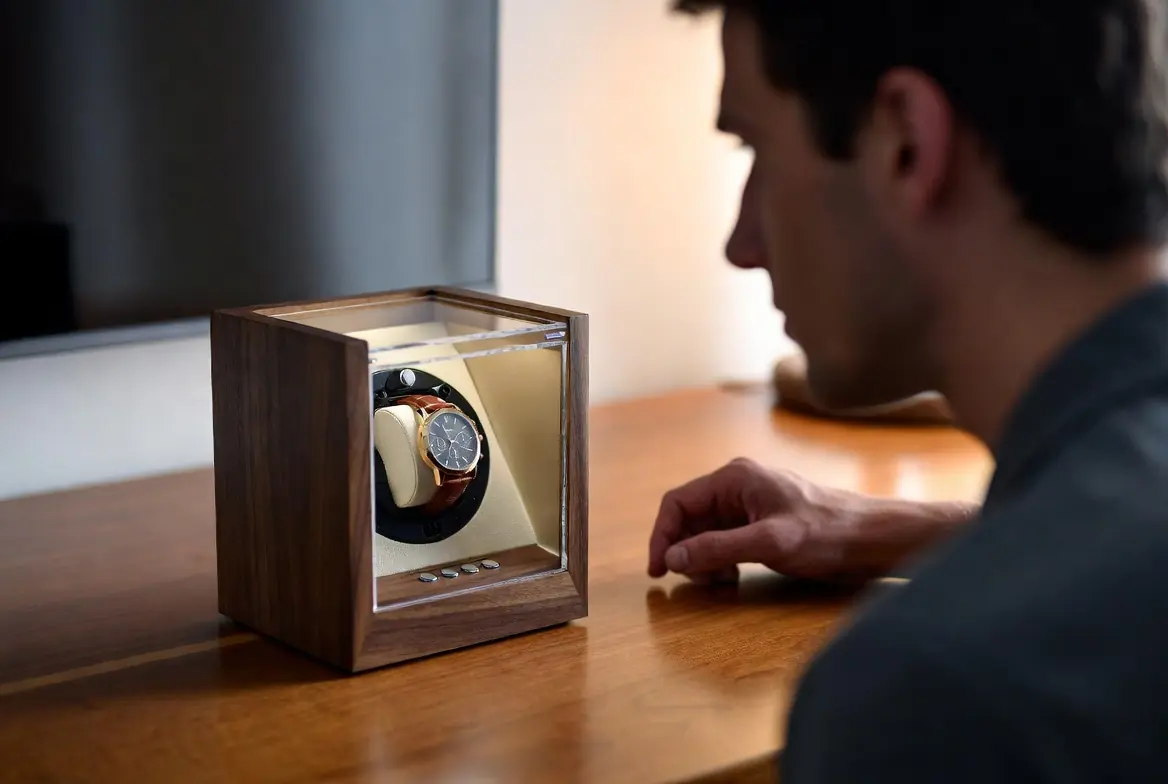
A watch winder is a device that keeps a watch moving when you are not wearing it. It is not useful for every watch. Only certain types of watches actually need a watch winder. Below is a clear and simple breakdown.
Automatic (Self-Winding) Watches
Automatic watches are the main type that need a watch winder. These watches use the natural movement of your wrist to stay powered. When you stop wearing them, they slowly lose power and stop.
A watch winder keeps the watch moving, so it stays wound and keeps accurate time. This is especially helpful if:
- You own multiple automatic watches
- You wear the watch occasionally, not daily
- The watch has complex features like date, moon phase, or perpetual calendar
Example: Rolex, Omega, TAG Heuer, and Seiko automatic watches benefit from a watch winder.
Automatic Watches with Complications
Some automatic watches include advanced complications such as:
- Perpetual calendars
- Annual calendars
- Moon phase displays
Resetting these features can take time and effort. A watch winder prevents the watch from stopping, so all settings remain correct.
Luxury or High-Value Automatic Watches
Luxury automatic watches often use delicate mechanical parts. Regular movement helps keep internal oils evenly spread. A watch winder supports smooth operation when the watch is not in use.
Watches That Do NOT Need a Watch Winder
- Quartz watches: These run on batteries and do not need movement.
- Manual winding watches: You must wind these by hand. A winder does not help.
- Smartwatches: These charge electronically and do not use mechanical movement.
Final Answer
Only automatic mechanical watches need a watch winder. Quartz, manual, and smartwatches do not benefit from one. If you own an automatic watch and do not wear it daily, a watch winder is a practical and time-saving accessory.
Read Last Post: Automatic Watch Winders: The Quiet Luxury Essential Every Stylish Watch Owner Should Know
