
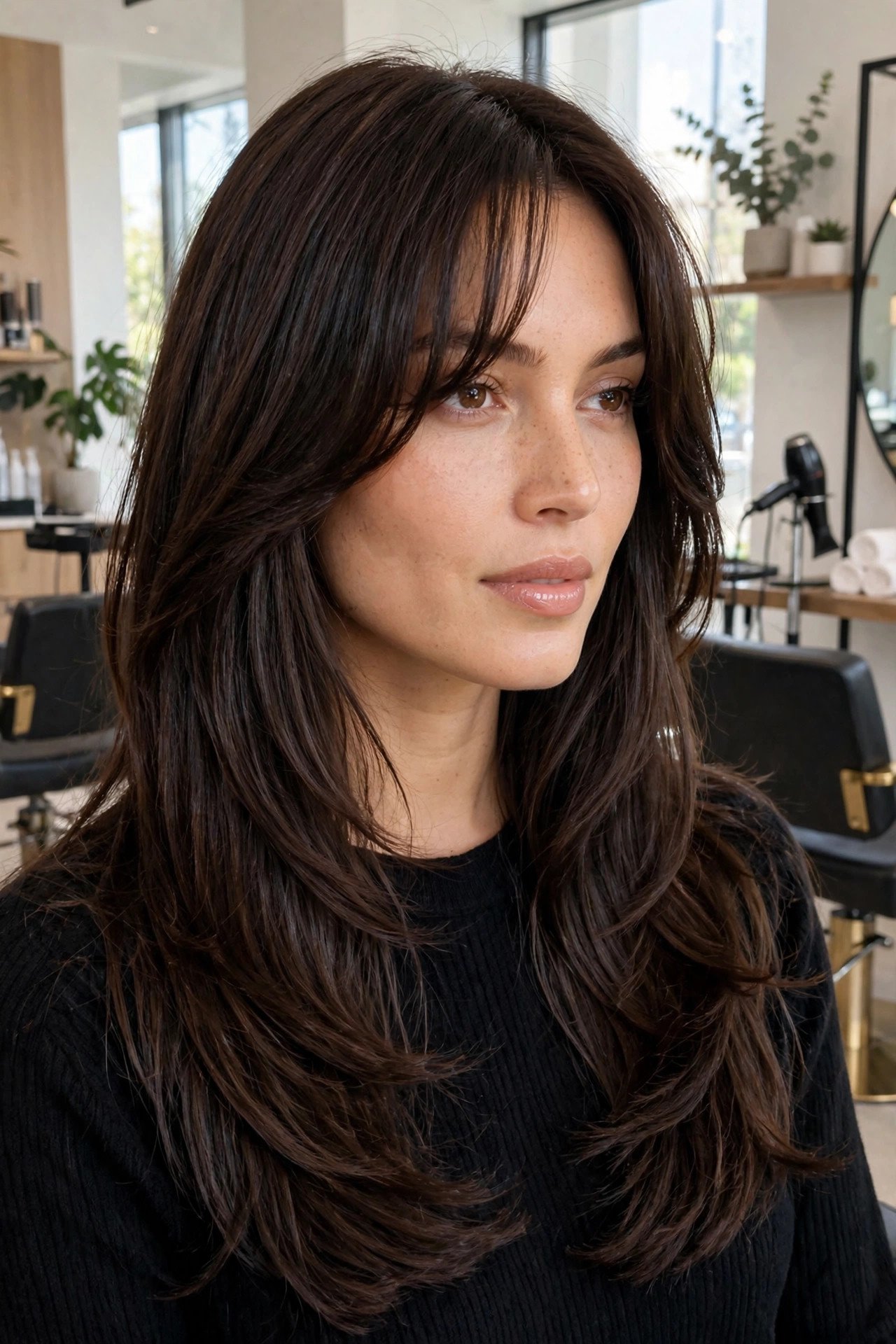
An oval face is often called the most versatile face shape of all, and thick hair is the kind of hair many women wish for. Put the two together and you have wonderful raw material, but also a very real daily challenge: volume that overwhelms, ends that puff out, and styles that feel heavy by lunchtime. If you are asking what haircut suits an oval face with thick hair, you are really asking how to keep the fullness you love while removing the bulk you do not.
Because an oval face is balanced, it does not need a cut to correct its proportions. Your haircut can focus on managing thickness, showing off shine, and expressing your style. Short, medium and long cuts can all work, provided weight is distributed intelligently.
This guide explains how skilled stylists remove bulk without ruining shape, the eight styles that make thick hair easier and more elegant, and the home care that keeps heavy hair smooth, glossy and comfortable between salon visits.
What Haircut Suits an Oval Face With Thick Hair? Managing Weight First
With thick hair, technique matters as much as the chosen style. Two women can ask for the same bob and leave with completely different results, depending on how the stylist handles density. Understanding a few professional terms will help you have a better conversation in the salon.
Layers versus thinning
Layers remove weight by creating different lengths that allow hair to move and sit closer to the head. Thinning or texturising, done with scissors or a razor, removes bulk from inside the hair. Both are useful, but over-thinning can leave ends looking wispy and frizzy. Ask your stylist to remove weight mainly from the mid-lengths and interior, keeping the perimeter strong and healthy looking.
Keep balance around the face
An oval face suits most partings and fringe styles, so choose based on your hairline and lifestyle. Thick hair with a fringe needs commitment, because it can feel heavy on the forehead and may need daily smoothing. Face-framing layers are often a lower-maintenance way to soften the front while reducing weight around the cheeks.
Length can help control volume
Very short cuts on thick hair can spring outward if they are not expertly shaped, while a little extra length uses the hair’s own weight to keep it calmer. That does not rule out short styles. It simply means the shaping, undercut or graduation must be planned carefully by someone experienced with dense hair.
Eight Styles That Remove Bulk Beautifully
Each style below controls thickness in a different way. Some rely on layers, some on graduation, and some on clever internal shaping that is almost invisible until you feel how much lighter your hair becomes.
1. Long layers with face framing
The classic choice for thick hair. Keeping the length while adding long layers removes weight, encourages movement and prevents the dreaded triangle shape where ends puff out widest. Face-framing pieces starting at the cheekbones or jaw soften the front and make thick hair feel styled even on a simple wash-and-go day.
2. The layered lob
A long bob at collarbone length is polished, modern and surprisingly manageable with thick hair when internal layers are included. The length helps hair lie flatter, and the blunt-ish outline keeps it looking intentional. It is an excellent first step if you are cutting long, heavy hair shorter.
3. The graduated bob
Shorter at the back and longer at the front, a graduated bob stacks weight in a controlled way at the nape and removes bulk where thick hair often feels hottest and heaviest. On an oval face, this neat, sculpted shape looks elegant and keeps its form well between trims.
4. The textured pixie with an undercut
For a bold change, a pixie with a discreet undercut removes a surprising amount of hair while leaving soft length on top to style. It suits oval faces particularly well because no correction is needed. Be ready for more frequent trims, usually every four to six weeks, to keep the shape crisp.
5. The modern shag
Shag cuts were practically invented for thick hair. Abundant layers, feathered ends and a relaxed fringe turn density into texture instead of bulk. The style looks best a little undone, which makes it perfect for women who prefer washing, applying product and leaving hair to do its own thing.
6. The blunt cut with internal layering
If you love a clean, straight-across finish, you do not have to give it up. Internal layers hidden beneath the surface remove weight while the outer line stays sharp and glossy. This is a sophisticated option for straight, thick hair and shows off good condition beautifully.
7. Shoulder-length waves with V-cut layers
A gentle V shape at the back, where hair is slightly longer in the centre, allows thick hair to fall naturally without a bulky shelf of length. Combined with waves, it gives movement and softness at a very wearable, feminine length.
8. The long, layered cut with curtain bangs
Curtain bangs split the weight at the front and blend into long layers, so thick hair frames the face instead of falling as a heavy curtain. This romantic style suits oval faces of all ages and grows out softly. You can find more thick-hair styling inspiration in Allure’s hair section, where stylists often demonstrate layering on dense hair.
Caring for Thick Hair So It Behaves
The best cut will still frustrate you if home care works against it. Thick hair needs moisture, gentle handling and products chosen for weight and smoothness rather than volume.
- Use a moisturising shampoo and conditioner, concentrating conditioner on the mid-lengths and ends.
- Apply a heat protectant before blow-drying or straightening, because thick hair often needs longer with hot tools.
- Dry hair in sections. Trying to dry it all at once takes longer and leaves the underneath damp and frizzy.
- Choose a smoothing serum or cream sparingly, so hair stays glossy without feeling coated.
- Book trims every six to eight weeks to keep layers fresh and prevent ends becoming heavy and split.
Small styling choices that make a big difference
A large round brush will smooth thick hair more efficiently than a small one, and finishing a blow-dry with cool air helps set the shape. On second-day hair, a low ponytail or a loose plait keeps volume looking intentional. When you are putting together an outfit, completing a look with a handmade accessory can be just as satisfying as taming your hair, and our beginner-friendly guide to sewing your own tote bag is an enjoyable project for a quiet afternoon. Avoid piling thick hair into very high, tight styles for long periods, as the weight can cause headaches and tension at the scalp.
Mistakes That Make Thick Hair Look Bulkier
A few common habits can undo a stylist’s careful work. Knowing them helps you protect the lighter, more manageable shape you left the salon with.
One-length cuts with no internal shaping
On thick hair, a completely one-length cut often forms a triangle, narrow at the top and very wide at the ends. Even invisible internal layering can prevent this while keeping the length you love.
Over-thinning and razor damage
Too much thinning, especially on the ends, creates frizz and flyaways that actually look bulkier. Insist on gradual weight removal and check the ends look full and healthy before you leave. Comparing techniques in Byrdie’s hair advice and tutorials can help you understand what to ask for at your appointment.
Skipping trims for too long
Thick hair hides split ends for a while, then suddenly feels dry, tangled and unmanageable. Regular small trims are far kinder than waiting until a large amount must be cut away.
Conclusion
So, what haircut suits an oval face with thick hair best? Almost any length can, as long as layers or internal shaping remove bulk while keeping the ends strong. Long layers, lobs, graduated bobs, shags and even a pixie with an undercut all turn density into an advantage. Talk openly with your stylist about weight, maintenance and your daily routine, look after the condition at home, and your thick hair can become the feature everyone envies for the right reasons.
Frequently Asked Questions
Are layers essential for thick hair on an oval face?
Usually, yes. Layers or internal shaping remove bulk and stop hair forming a heavy triangle. They can be subtle and hidden if you prefer a blunt outward appearance.
Can I have a bob if my hair is very thick?
Definitely. A graduated or layered lob works especially well. Ask for internal weight removal so the bob sits smoothly and does not puff out at the ends.
Should thick hair be thinned with thinning scissors?
Sometimes, but carefully and mainly through the mid-lengths. Over-thinning the ends causes frizz and wispy edges, so gradual point-cutting by an experienced stylist is often safer.
How often does thick hair need trimming?
Every six to eight weeks keeps layers and ends in good shape. Very short or undercut styles may need attention every four to six weeks to stay neat.
What fringe suits an oval face with thick hair?
Curtain bangs or longer, side-swept fringes tend to be easiest because they blend heavy front sections into layers. A full fringe can work but needs daily styling commitment.
