
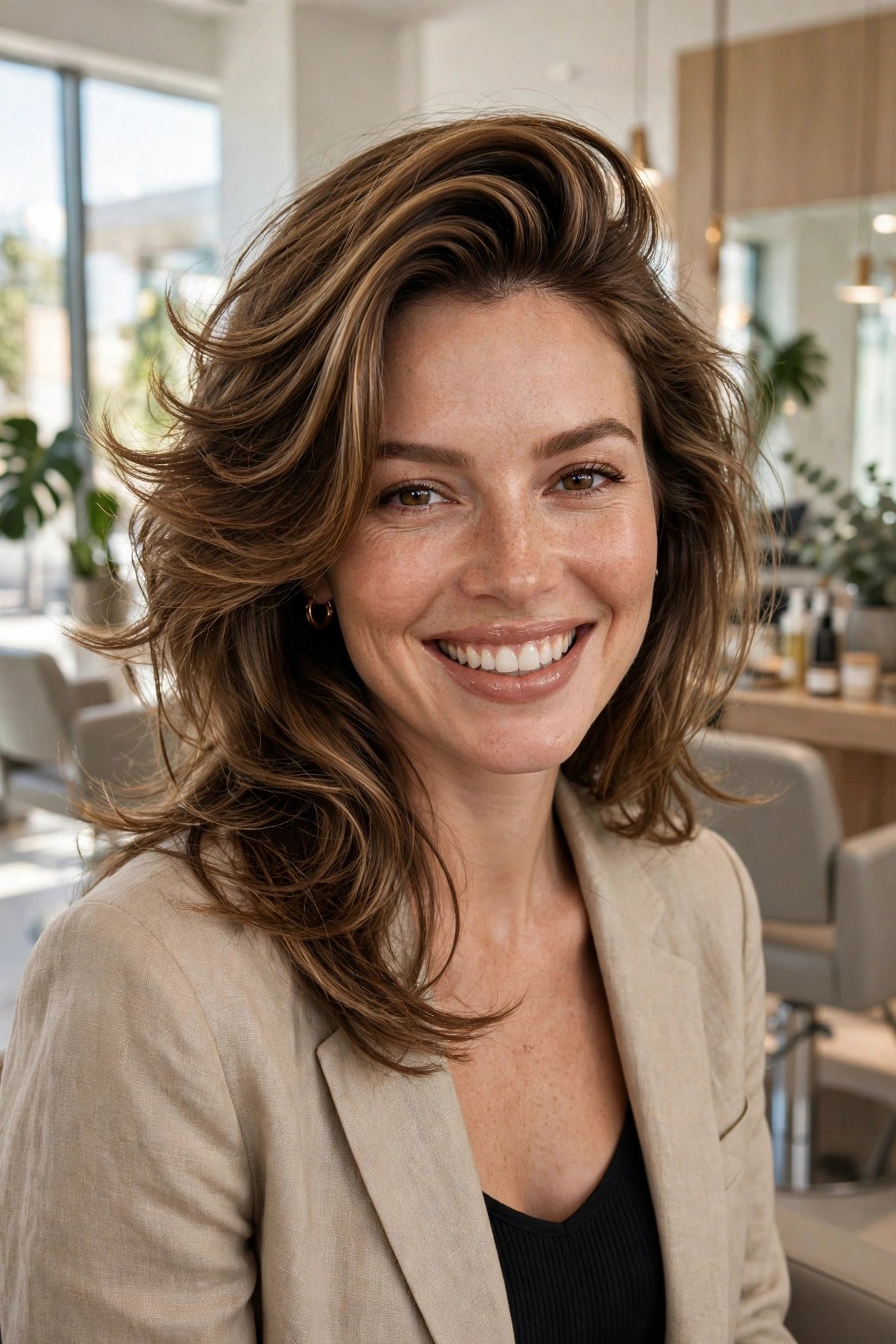
If you have ever looked in the mirror and felt that your forehead looks a little short compared with the rest of your face, you are not alone. A small forehead is a beautiful, youthful feature, but when the proportions feel slightly off, the right haircut can make all the difference. So, what hairstyle makes a small forehead look more balanced? The answer is not about hiding your forehead at all. It is about creating the gentle illusion of height, space, and harmony so your whole face feels open and proportionate.
The good news is that a smaller forehead gives you a lot of freedom. You can wear volume on top, sweep hair away from your face, and experiment with lengths that women who want to cover their foreheads often avoid. With a few clever styling choices around height, parting, and fringe shape, you can visually lengthen your forehead in minutes, without any complicated routine.
In this guide, we will walk through the most flattering cuts, the styling tricks that really work, and the common mistakes that can make a small forehead look even smaller. Whether your hair is straight, wavy, curly, short, or long, you will find an idea here that suits your texture and your lifestyle.
What Hairstyle Makes a Small Forehead Look More Balanced? The Core Principles
Before choosing a cut, it helps to understand why some styles work so well. Balance is all about proportion. Stylists often think of the face in thirds: hairline to brows, brows to nose, and nose to chin. When the top third is naturally shorter, the goal is to add visual height above it or to avoid anything that compresses it further.
Three simple principles guide almost every flattering choice. First, lift at the roots. Volume on top stretches the face upward. Second, keep the hairline visible. Styles that sweep back or to the side keep the forehead open instead of cutting across it. Third, avoid heavy, straight-across weight directly over the brow, because that shortens the area even more. Publications like Allure’s hair section regularly highlight these same proportion tricks when stylists talk about face-framing cuts.
Why Volume on Top Matters Most
Height at the crown is your best friend. Even an extra centimetre of lift can change how balanced your face looks. A soft quiff, gentle backcombing at the roots, or a blow-dry that lifts hair up and back will instantly make a small forehead appear longer. Flat, centre-slicked styles that hug the scalp do the opposite, so texture and movement are key.
The Role of Your Parting
A deep side part or a slightly off-centre part creates a diagonal line that draws the eye upward and outward. A harsh centre part can emphasise width rather than height, especially on a straighter hairline. If you love a middle part, try adding volume at the roots and soft face-framing layers so it does not flatten your proportions.
Best Cuts That Add Height and Openness
Now for the cuts themselves. The most balanced looks share one thing in common: they keep the front open and add interest either above the hairline or around the sides and ends.
The Swept-Back Long Layered Cut
Long layers swept away from the face keep your hairline open and create elegant movement. Blow-dry the front upward and back for instant balance.
The Voluminous Lob
A shoulder-skimming lob with a side part and root lift looks polished and modern. Keep ends neat, with soft internal layers for movement.
The Textured Pixie With Height
Leave textured length on top to sweep up or aside, keeping sides neat. This height instantly lengthens the look of a smaller forehead.
Curtain Layers Without a Curtain Fringe
Many women with a small forehead ask about curtain bangs, but full curtain bangs that start low on the forehead can overwhelm it. A better option is long curtain layers that part in the middle or to the side and fall from cheekbone level.
- Choose layers that begin at cheekbone level or lower
- Keep the hairline and brow area open and visible
- Add root volume with a light mousse before blow-drying
- Finish with movement through the mid-lengths and ends
Fringes: What Works and What to Avoid
Fringes are where most mistakes happen. The wrong fringe can halve the look of an already small forehead, while the right one can actually make it look longer and more elegant.
Fringes That Flatter a Small Forehead
Choose a light, wispy, side-swept fringe that leaves part of the forehead visible. Its diagonal line flatters without shortening your proportions.
Fringes to Approach With Caution
Colour can help too. Subtle highlights around the hairline, sometimes called hairline lights, add dimension and stop a fringe from looking heavy. For more inspiration on modern fringe shapes, browsing recent styling features can help you arrive at the salon with clear reference photos.
Styling Tricks to Visually Lengthen Your Forehead
You do not always need a new cut. Small styling changes can shift your proportions straight away, whether you are getting ready for work or for an evening out.
- Lift your roots: Apply volumising spray to damp roots, then blow-dry the front section upward with a round brush.
- Sweep, do not press: Use your fingers to push the front back or to the side rather than combing it flat and forward.
- Add side volume: Curl or wave the mid-lengths outward so the eye travels across and up, not just down.
- Try a high ponytail or top knot: Pulling hair up adds vertical length and shows your hairline beautifully.
- Use accessories wisely: A slim headband placed a little further back can open up the face, while a band worn low on the forehead will shorten it.
Updos deserve a special mention. A high bun, a French twist, or a ponytail with a little height at the front will almost always flatter a small forehead.
Your everyday outfit can support the effect as well. An open neckline and a polished hairstyle draw attention to your overall silhouette, and finishing your look with our beginner-friendly guide to sewing your own tote bag is a lovely way to add a handmade accessory that feels personal without distracting from your hair.
Best Products for Root Lift Without Stickiness
Use lightweight mousse or root spray only at the roots, plus flexible hairspray to finish. Avoid heavy oils near the hairline.
Matching Your Style to Your Hair Type and Face Shape
A small forehead rarely appears on its own; it is part of your overall face shape. Choosing a style that suits both will give you the most natural result.
For Round and Heart-Shaped Faces
Extra crown height lengthens a round face, while soft side volume balances a heart shape. An asymmetrical part flatters both beautifully.
For Straight, Wavy, and Curly Hair
Whatever your type, bring photos to your appointment. Show your stylist what you like about the height, parting, and openness of a style, not just the overall cut.
Conclusion
A small forehead does not need hiding. It needs height, openness, and soft movement around it. Swept-back layers, a voluminous lob, a textured pixie with lift, and a gentle side part are all reliable ways to create balance. Keep fringes light and diagonal if you wear one, lift your roots when you style, and let your hairline show. With those simple choices, your forehead will look proportionate, your features will stand out, and your hairstyle will feel effortlessly polished every day.
Frequently Asked Questions
Should I avoid a fringe completely if my forehead is small?
No, you do not need to avoid it completely. A light, wispy, side-swept fringe that leaves part of your forehead visible can look lovely. The styles to avoid are thick, blunt, straight-across fringes and very short baby bangs, as they visually shorten the forehead.
Does a side part really make a small forehead look bigger?
Yes, a deep or soft side part creates a diagonal line that draws the eye upward and makes the forehead area look longer. Combined with a little root lift on the larger side of the part, it is one of the quickest balancing tricks.
Is short hair or long hair better for a small forehead?
Both can work beautifully. Short hair works when there is height and texture on top, while long hair works when it is layered and swept away from the face. What matters more than length is volume at the roots and keeping the front open.
Can a high ponytail help balance my proportions?
Absolutely. A high ponytail or bun adds vertical length, shows your hairline, and lifts your whole look. Add a little volume at the front before tying it up and soften the sides with loose tendrils for the most flattering finish.
What should I ask my stylist for at my first appointment?
Ask for layers that keep the hairline open, height at the crown, and no heavy blunt fringe. Bring reference photos that show the lifted front and side part you like, and explain that your goal is to visually lengthen your forehead and balance your face.
