
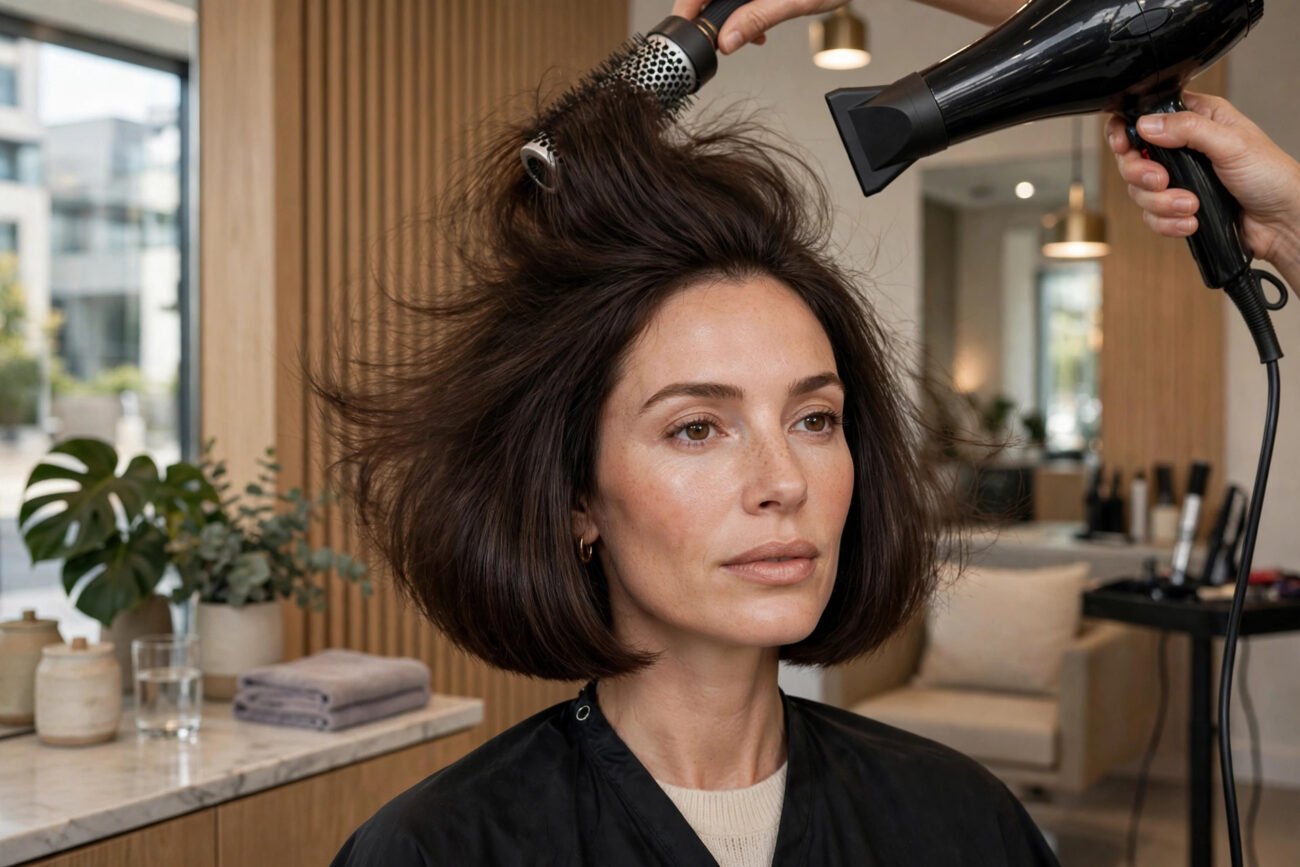
If your hair falls flat by lunchtime, separates into fine strands, or refuses to hold a style, you already know the daily frustration of thin, fine hair. The encouraging truth is that the right cut can transform how full your hair looks, often more dramatically than any product. So, what haircut is best for thin fine hair to add volume? It is one that keeps ends strong, uses layers strategically, and reduces weight so every strand can lift and move.
Fine hair describes the thickness of each individual strand, while thin hair describes how much hair you have overall. Many women have both, but the styling solutions overlap: shorter, well-shaped lengths, blunt or carefully placed layers, and shapes that create the illusion of density at the ends and lift at the roots.
This guide explains the cuts that genuinely add volume, the layering mistakes that do the opposite, and the styling routine that helps fine hair look its fullest every day. With the right combination, you can stop fighting your hair type and start enjoying its softness, shine, and versatility.
What Haircut Is Best for Thin Fine Hair to Add Volume? The Key Rules
Before choosing a specific style, learn the three rules stylists return to again and again for fine hair. First, protect your ends. Fine hair looks fullest when the ends form a strong, even line; wispy, over-thinned ends make it look sparse. Second, lift the weight. Shorter hair weighs less, so it lifts more easily at the roots. Third, layer with intention: a few well-placed layers create movement, but too many remove the very density you want to show. Advice in Byrdie’s hair coverage echoes this balance, with stylists consistently warning against heavy razor layering on fine hair.
Blunt Ends Versus Layers: Finding Your Balance
Keep a blunt baseline for visible thickness, then add only subtle top layers for lift. Avoid dramatic layering that thins fragile ends.
Why Length Matters So Much for Fine Hair
Shorter hair weighs less and lifts more easily at the roots. Keeping length at or above the shoulders is a simple fullness boost.
The Best Volume-Boosting Haircuts for Thin Fine Hair
Here are the cuts that consistently deliver fullness, from shortest to longest, so you can choose based on the length you are comfortable wearing.
The Blunt Bob
Chin-length blunt ends with minimal layering create a strong silhouette that looks twice as thick. A side part adds extra root lift.
The Layered Lob
A long bob grazing the collarbone, with light layers only through the top and front, offers length without the drag. The blunt ends maintain fullness, while the subtle layers prevent the shape from looking heavy or triangular. This is an excellent choice if you are growing out a bob or are nervous about going shorter.
The Textured Pixie
A pixie with longer, textured pieces on top makes fine hair look abundant because short strands stand up rather than lying flat. Keep the sides soft rather than shaved if you want a feminine finish, and style by working a small amount of volumising product through the top with your fingers. The less hair weighs, the more lift you get.
The French Bob With a Light Fringe
A jaw-length French bob with a soft, light fringe adds both fullness and character. The fringe uses hair that might otherwise separate at the front, while the blunt bob length reinforces density. This style works best on straight to wavy hair and needs a tidy every six weeks or so to hold its shape.
Short Layers With a Side-Swept Fringe
For women who want movement above all, short crown layers combined with a long side-swept fringe create height and sweep. Because the layers are concentrated where lift is needed, the ends stay comparatively strong. This cut pairs well with highlights, which add visual dimension and make hair appear fuller still.
Long Hair, Done the Fine-Hair Way
If you keep length, use a blunt baseline, minimal front layers, and trims every eight weeks. Expect less volume than a bob offers.
- Best overall for fullness: blunt bob at chin to collarbone length
- Best for lift: textured pixie or short crown layers
- Best compromise length: layered lob with blunt ends
- Best with a fringe: French bob or side-swept styles with light texture
Styling Thin Fine Hair for Maximum Volume
A great cut needs a matching routine. Fine hair responds best to light products and techniques that build lift without residue, and your overall look benefits too; a fuller hairstyle with our beginner-friendly guide to sewing your own tote bag as inspiration for a handmade accessory gives you a finished outfit that feels confident from head to toe.
- Use a volumising shampoo and condition only the mid-lengths and ends, never the roots.
- Apply mousse or root-lift spray to damp hair, focusing at the crown and parting.
- Blow-dry upside down or against the direction of growth until the roots are fully dry and lifted.
- Use a medium round brush for bobs, lifting each section up rather than pulling it down.
- Finish with a light texturising spray instead of heavy hairspray or oil.
- On day two, refresh roots with dry shampoo and re-lift with a quick blast of warm air.
Colour Tricks That Make Fine Hair Look Thicker
Colour creates dimension, and dimension creates the illusion of depth. Subtle highlights, lowlights, or a shadow root prevent fine hair from looking flat and one-dimensional. Slightly deeper tones at the roots also make regrowth softer and hair appear denser at the scalp. Avoid over-lightening the ends, as damage thins fine strands further; ask your colourist for gentle techniques and bond-building treatments.
Tools and Habits to Avoid
Avoid heavy oils, over-layering, razor-thinned ends, and daily very hot straightening. Skipping trims also lets split ends thin your baseline.
Choosing Your Cut With Your Stylist: Questions to Ask
A good consultation makes all the difference for fine hair, because small decisions have big visual effects. Bring photos of the blunt ends, length, and lift you admire, and photos of what you want to avoid, such as very wispy ends. Then use the questions below to guide the conversation.
- Will this cut keep my ends looking thick and even?
- Where exactly will the layers sit, and how much length will they remove?
- What length will give me the most lift for my hair density?
- Which products should I use, and which should I stop using?
- How often should I trim to maintain fullness at the ends?
Be honest about styling time too. A blunt bob that you blow-dry for five minutes will look fuller than an elaborate layered style you never style at all.
When Thin Hair Needs More Than a Haircut
Sometimes thinning has causes beyond hair type, including stress, nutritional gaps, hormonal changes, or certain medications. A haircut will improve appearance, but sudden shedding, patchiness, or a rapidly widening part deserves a conversation with your doctor.
Conclusion
The best haircut for thin fine hair to add volume keeps your ends blunt and strong, your length at or above the shoulders, and your layers few, short, and purposeful. A blunt bob, layered lob, textured pixie, or French bob can each deliver that fullness in a different way, so choose the silhouette you will genuinely enjoy styling. Pair it with light root-lifting products, upward blow-drying, and dimensional colour, and your fine hair will look noticeably thicker, healthier, and more confident every day.
Frequently Asked Questions
Are layers good or bad for thin fine hair?
A few light, well-placed layers are good because they create lift and movement, especially at the crown and front. Heavy layering throughout is bad for fine hair because it removes density and leaves the ends looking thin and wispy. Ask for subtle internal layers over dramatic ones.
What is the best length for fine hair to look thicker?
Chin to collarbone length usually looks thickest, because shorter hair weighs less and lifts more, while blunt ends stay strong. Very long fine hair tends to separate and look sparse at the ends. A bob or lob is the most reliable choice for visible fullness.
Can I have a fringe with thin fine hair?
Yes, a light or side-swept fringe can look lovely and add interest at the front. Keep it soft rather than thick and blunt, as a heavy fringe borrows too much hair from the rest of your style. A French bob with a wispy fringe is a particularly flattering combination.
How often should fine hair be trimmed?
Every six to eight weeks is ideal. Fine hair splits and thins at the ends quickly, and regular small trims remove damage before it travels upward. Keeping the baseline fresh and blunt is one of the simplest ways to maintain the appearance of thickness.
Which products add volume without weighing fine hair down?
Choose volumising shampoo, a lightweight mousse or root-lift spray applied at the roots, and a light texturising spray to finish. Use conditioner only on the ends, and avoid heavy oils and thick serums near the roots, as they flatten fine hair quickly.
