
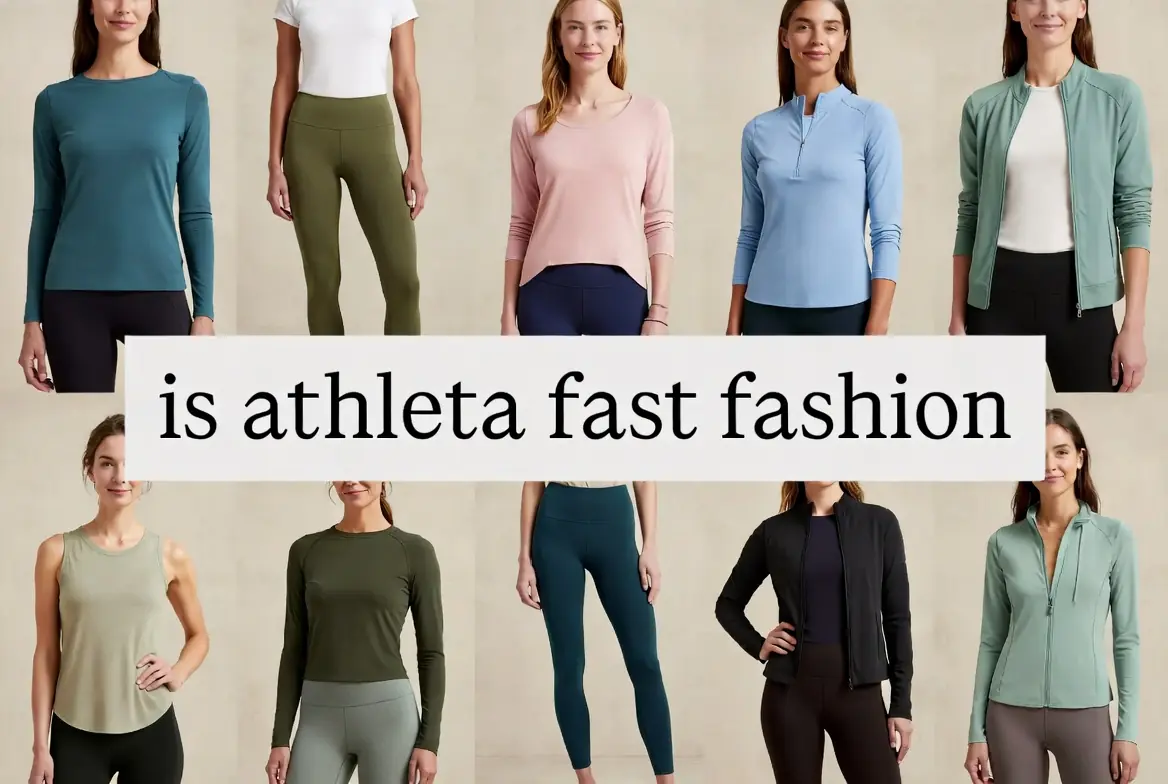
The rise of conscious consumerism has turned a spotlight on the “big players” in the apparel world. If you’ve stepped into a yoga studio or a CrossFit box lately, you’ve seen the Athleta logo. Known for its sleek designs and inclusive sizing, the brand sits in a competitive space between high-end performance gear and everyday mall brands.
But as shoppers try to distance themselves from the environmental wreckage of fast fashion, a vital question remains: Is Athleta fast fashion?
To answer this, we must look past the marketing. We need to examine their production speed, labor practices, and materials. Whether you are a dedicated athlete or someone looking for a reliable pair of leggings, understanding where your money goes is the first step toward a more sustainable closet.
Defining the Fast Fashion Problem
Before we can label Athleta, we need a clear definition of what “fast fashion” actually is. Traditionally, fast fashion relies on three pillars:
- Extreme Speed: Turning a design from a sketch to a store shelf in as little as two weeks.
- High Volume: Releasing dozens of “micro-seasons” a year to keep consumers buying.
- Low Cost/Low Quality: Using cheap synthetic materials and underpaid labor to keep prices artificially low.
Brands like Shein or Zara are the poster children for this model. They thrive on disposability. You buy a shirt for $10, wear it three times, and toss it when the seams unravel.
Athleta operates differently, but because it is owned by Gap Inc.—a retail giant—the lines can feel a bit blurry.
The Gap Inc. Connection: Context Matters
Athleta was founded in 1998 and acquired by Gap Inc. in 2008. This ownership is often where the “fast fashion” suspicion begins. Gap Inc. also owns Old Navy and Gap, both of which lean heavily into traditional mass-production models.
However, Athleta has always been positioned as the “premium” sister brand. While Old Navy focuses on volume and price-point, Athleta focuses on performance and longevity. In the world of corporate retail, parent companies often use different subsidiaries to test different business models. Athleta is Gap Inc.’s vehicle for a more sustainable, value-driven approach.
Is Athleta Fast Fashion? The Verdict
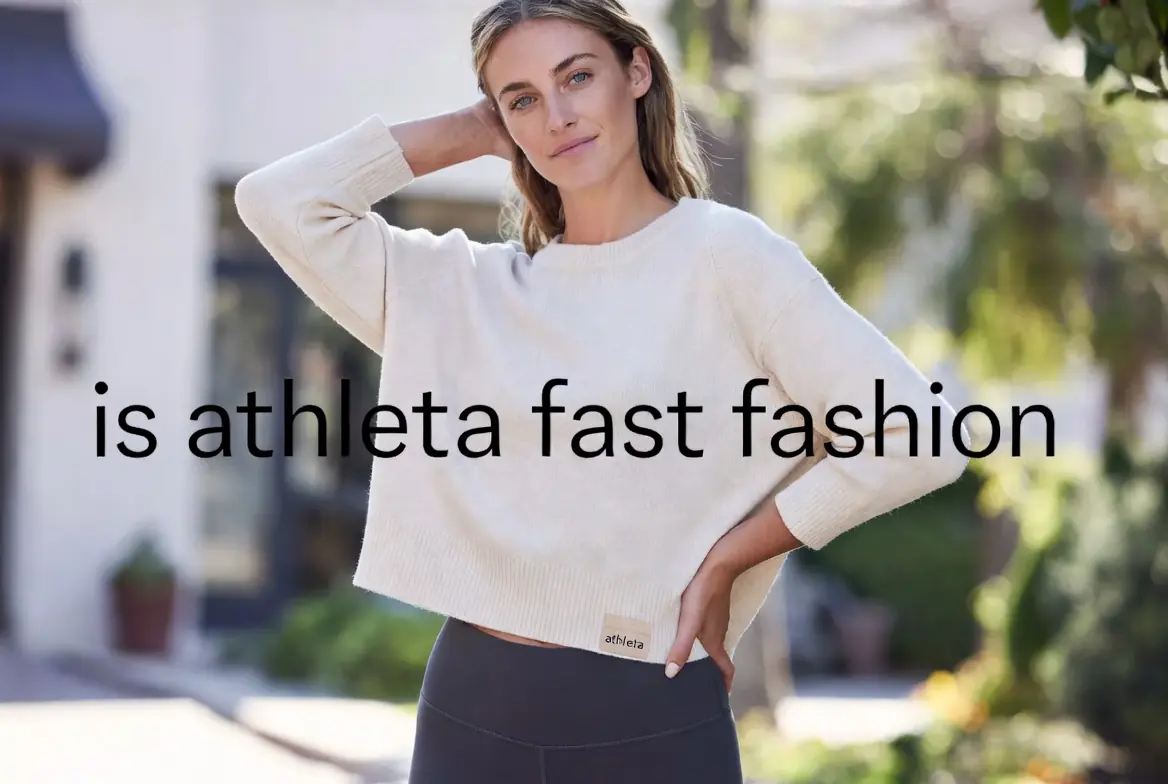
No, Athleta is not a fast fashion brand.
While it is a large-scale retailer, it does not follow the “disposable” logic of fast fashion. Its products feature designs meant for high-intensity use and longevity. More importantly, the brand has achieved B Corp Certification, which is a rigorous third-party validation of its social and environmental impact.
Let’s break down the specific reasons why Athleta sits outside the fast fashion category.
The B Corp Certification: Why It Matters
In 2018, Athleta became a certified B Corp. This isn’t just a badge you buy; it’s a legal commitment to prioritize people and the planet alongside profits.
To maintain this status, a company must score high in several areas:
- Governance: How the company is run.
- Workers: Financial security, health, and safety of employees.
- Community: Diversity and economic impact.
- Environment: Carbon footprint and waste management.
Fast fashion brands almost never qualify for B Corp status because their business model depends on high waste and low labor costs. By achieving this certification, Athleta proves it is operating with a level of transparency that Zara or H&M simply cannot match.
Material Choices and Sustainability
A hallmark of fast fashion is the use of virgin polyester and nylon. These are petroleum-based plastics that shed microplastics into our water systems.
Athleta has made significant strides in shifting its material makeup. Currently, a large percentage of their fabrics come from sustainable sources:
- Recycled Polyester: Made from post-consumer plastic bottles.
- Recycled Nylon: Sourced from fabric scraps and industrial waste.
- Tencel™ and Lenzing™: Fibers derived from sustainably managed forests.
- Organic Cotton: Grown without harmful synthetic pesticides.
By choosing these materials, Athleta reduces its reliance on fossil fuels and lowers its carbon emissions compared to brands that only use virgin synthetics.
Longevity vs. Disposability
The “cost per wear” is a great metric for identifying fast fashion. If a pair of leggings costs $15 but pills after two washes, it’s expensive in the long run.
Athleta gear is known for its durability. Their “PowerVita” and “Ultra-Resilient” fabrics are engineered to withstand hundreds of wash cycles without losing elasticity. This focus on durability is the antithesis of the fast fashion model. When a brand builds clothing to last for five years instead of five months, it actively encourages less consumption.
Fair Labor and Factory Transparency
One of the darkest sides of the apparel industry is the treatment of garment workers. Fast fashion brands often hide behind complex supply chains to avoid accountability for sweatshop conditions.
Athleta participates in the Fair Trade USA program. They produce a significant portion of their goods in Fair Trade Certified™ factories. This ensures:
- Safe working conditions.
- Fair wages.
- Additional “Community Development Funds” paid directly to the workers to invest in their local needs (like healthcare or education).
While no massive corporation is perfect, Athleta’s move toward Fair Trade certification shows a level of ethical responsibility that fast fashion brands ignore.
The “Size Inclusive” Movement
Fast fashion often caters to a narrow range of body types because producing a wide variety of sizes is expensive and slows down the supply chain.
Athleta has been a leader in size inclusivity. They offer almost their entire collection in sizes 0–26 (XXS–3XL). They don’t just “scale up” the patterns; they fit the clothes on different body types to ensure the performance remains consistent. This inclusive approach suggests a brand that cares about its community rather than just chasing the quickest possible trend.
Where Athleta Can Improve
To be fair and objective, we must acknowledge that Athleta is still a “Big Retail” entity. It produces a high volume of clothing and releases new styles frequently.
- The Overproduction Issue: Even with sustainable materials, producing millions of garments a year has an environmental cost.
- Microplastics: While they use recycled synthetics, these items still shed microplastics during washing.
- Supply Chain Complexity: As part of Gap Inc., they share some logistics and shipping networks that are not as “green” as smaller, boutique sustainable brands.
Athleta is “Better Fashion,” but it isn’t “Slow Fashion” in the way a small, handmade brand might be.
How to Shop Athleta More Sustainably
If you love the brand but want to minimize your footprint, consider these strategies:
- Shop the “Preloved” Program: Athleta has a resale platform where you can buy used gear at a discount. This keeps clothes in circulation and out of landfills.
- Wash Cold and Air Dry: This preserves the synthetic fibers and prevents microplastic shedding.
- Use a Guppyfriend Bag: This specialized wash bag catches microfibers before they enter the drain.
- Buy Basics: Instead of chasing seasonal patterns, buy core pieces like the Salutation Stash or Brooklyn Ankle Pant that stay in style for years.
Final Thoughts
So, is Athleta fast fashion? No. It occupies a “middle ground” that the industry desperately needs.
It provides a scalable, accessible alternative to the hyper-fast, disposable clothing market. By combining B Corp standards with high-performance quality, Athleta proves that you don’t have to choose between “mall brand” convenience and an ethical conscience.
While it may not be as “slow” as a local artisan shop, it is a massive step up from the giants of the fast fashion world. It’s a brand built for women who want their leggings to survive a marathon—and want the planet to survive, too.
Frequently Asked Questions
1. Is Athleta more sustainable than Lululemon?
Athleta and Lululemon are often compared. Athleta holds a B Corp Certification, which requires more rigorous third-party auditing of social and environmental impact than Lululemon current reporting. Both use recycled materials, but Athleta’s Fair Trade commitment is currently more prominent.
2. Does Athleta use sweatshops?
Athleta produces many items in Fair Trade Certified™ factories. This program ensures rigorous safety standards and fair pay. While they operate a global supply chain, their B Corp status requires they maintain high ethical standards across their manufacturing partners.
3. Why is Athleta so expensive if it’s owned by Gap?
Athleta uses technical, high-performance fabrics and invests in sustainable sourcing and ethical labor. These factors, along with extensive research and development for fit and durability, lead to a higher price point than “value” brands like Old Navy.
4. Is Athleta’s clothing biodegradable?
Most Athleta gear is made from synthetic blends (nylon/polyester) for performance. These are not biodegradable. However, they use recycled versions of these plastics to reduce the need for new oil extraction.
5. Does Athleta have a recycling program?
Yes, Athleta partners with ThredUp for their “Preloved” program. Customers can send in used clothes for credit, and the brand sells gently used items on their site to promote a circular economy.
6. Are Athleta clothes high quality?
Generally, yes. They are designed for athletes and active lifestyles. Their fabrics are tested for “pilling,” “sheerness” (the squat test), and moisture-wicking capabilities, usually outlasting fast fashion alternatives by years.
7. Where are Athleta clothes made?
Like most major athletic brands, Athleta manufactures in countries like Vietnam, Cambodia, and Sri Lanka. The difference lies in their use of Fair Trade Certified™ facilities in these regions to ensure worker welfare.
8. Is Athleta a “greenwashing” brand?
Greenwashing is when a company claims to be eco-friendly but doesn’t change its practices. Because Athleta is a B Corp, they have to back up their claims with data and legal accountability, making them much less likely to be “greenwashing” than a standard retailer.
9. Does Athleta use real leather or fur?
Athleta is primarily a performance apparel brand and does not use fur. Most of their products are vegan-friendly synthetics or plant-based fibers like Tencel.
10. How often does Athleta release new collections?
Athleta releases seasonal collections, but they do not drop hundreds of new items weekly like fast fashion brands. They maintain a “core” collection of best-sellers that stay on the shelves for years.
11. Is Athleta better for the environment than Nike?
Athleta’s B Corp status generally gives them an edge in transparency and holistic social impact. However, Nike has made massive strides in carbon reduction. For a consumer, Athleta is often seen as the more “community-focused” and “values-driven” choice.
12. Can I repair my Athleta clothes?
Athleta does not have an official in-house repair program like Patagonia, but because their fabric quality is high, most local tailors can easily repair seams or zippers to extend the garment’s life.
Leave a Reply