
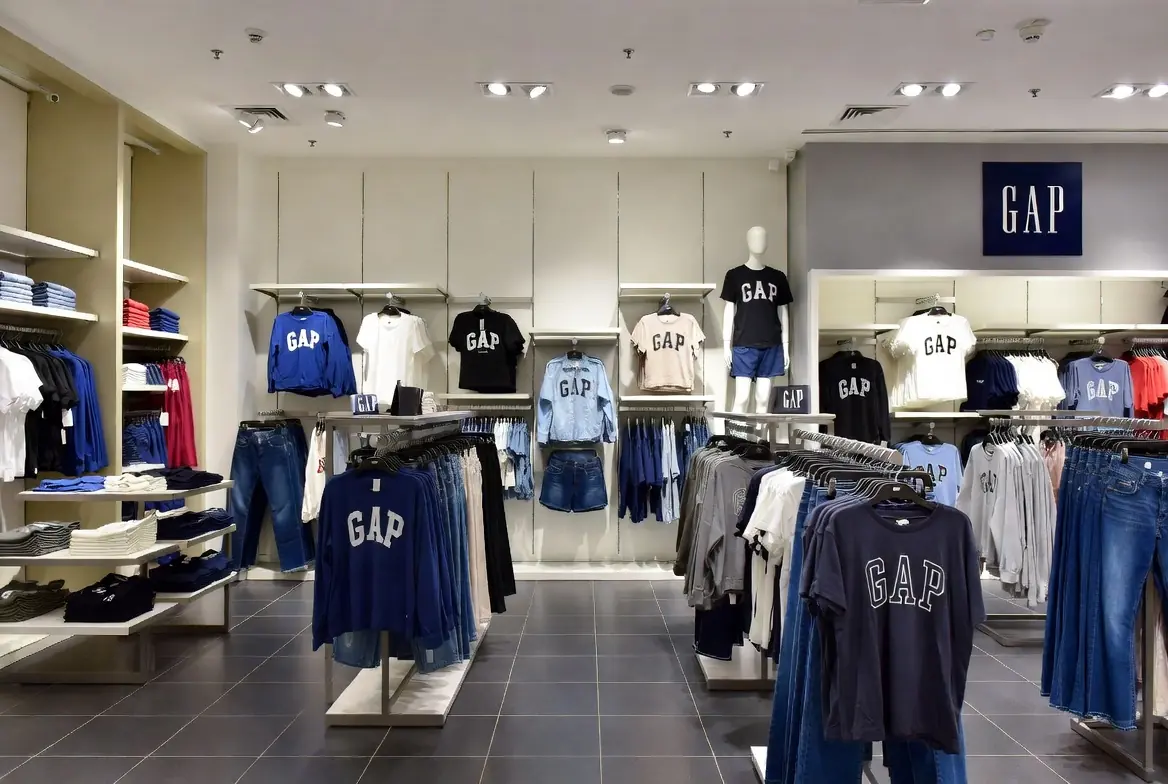
Gap is a titan in American retail. For decades, it has served as the go-to destination for denim, hoodies, and basic tees. However, as consumers become more conscious of sustainability and ethics, a pressing question arises: Is Gap fast fashion?
The fashion industry moves at a breakneck pace. One minute you are looking at a runway show in Paris, and the next, a similar design appears on a rack at your local mall. This cycle defines the modern shopping experience. When we talk about these rapid cycles, the term “fast fashion” always comes up.
The answer isn’t a simple yes or no. Gap sits in a unique middle ground between the traditional retail models of the past and the ultra-fast production cycles of the present. To understand where they truly land, we have to look at their production speed, pricing, and environmental impact.
The Evolution of the Gap Business Model
Gap started in 1969 as a way to make finding a good pair of Levi’s easier. Eventually, they launched their own brand. For a long time, they followed a traditional “seasonal” model. They designed clothes for Spring, Summer, Fall, and Winter.
As the 2000s progressed, the “Zara effect” took over the industry. Every major retailer felt the pressure to move faster. Gap responded by shortening their supply chain. They began updating their inventory more frequently than four times a year.
Today, Gap occupies the “Mid-Market” space. They are faster than luxury brands but slower than the “ultra-fast” giants. They rely heavily on discounts and sales, which is a classic fast fashion tactic used to clear out massive amounts of inventory to make room for the new.
Production Cycles and Trend Reliance
Does Gap chase trends? Occasionally. You will see them release wide-leg jeans or specific seasonal colors when they become popular. However, their core business remains rooted in basics.
The Production Timeline
While an ultra-fast fashion brand might design and ship a shirt in 15 days, Gap typically operates on a 6-month to 10-month lead time for most items. This longer window allows for better quality control compared to the “throwaway” garments found at budget competitors.
Inventory Management
The “fast” in fast fashion often refers to how quickly inventory moves. Gap struggles with this. They often have surplus stock, leading to the massive “60% off” sales we see at malls. This suggests a high-volume production model, which aligns closely with fast fashion principles even if their designs are more conservative.
Labor Practices and Supply Chain Transparency
One of the biggest criticisms of the fast fashion industry is the treatment of garment workers. To keep prices low, many brands outsource production to countries with minimal labor protections.
Gap Inc. (which includes Old Navy, Banana Republic, and Athleta) is a massive corporation. They have faced scrutiny in the past regarding factory conditions. To their credit, they have become much more transparent over the last decade.
- Public Factory Lists: Gap publishes a list of the factories they use. This is a step many fast fashion brands refuse to take.
- Code of Vendor Conduct: They have strict rules regarding child labor and forced labor.
- Wages: While they monitor working conditions, the “living wage” remains a point of contention across the entire garment industry, including Gap’s supply chain.
By being more transparent, Gap distances itself from the “dark side” of fast fashion, though they still face the challenges inherent in mass-market manufacturing.
Environmental Impact: The Sustainability Factor
Fast fashion is the second most polluting industry in the world. The constant production of synthetic fabrics like polyester creates massive carbon footprints and water waste.
Gap has made significant public commitments to change this. They launched the “Gap for Good” initiative, which focuses on:
Water Conservation
The “Washwell” program is a major part of their denim production. Since 2016, this program has saved millions of liters of water by changing how they dye and finish their jeans.
Sustainable Materials
Gap aims to source 100% of its cotton from “more sustainable” sources by 2030. They also use recycled polyester and nylon in many of their athletic and outerwear lines.
Carbon Footprint
The company has set targets to reach net-zero emissions by 2050. While this is a long-term goal, it shows a level of corporate responsibility that typical fast fashion brands rarely prioritize.
Why People Still Call Gap Fast Fashion
Despite their sustainability efforts and focus on basics, many critics still put Gap in the fast fashion category. Why?
- The Scale of Production: Gap produces millions of garments. Any brand operating at this scale contributes to overconsumption.
- Affordability: The low price points (especially at Gap Outlet or during sales) encourage customers to buy more than they need.
- Parent Company Dynamics: Gap Inc. also owns Old Navy. Old Navy is much more “fast fashion” than the flagship Gap brand, often blurring the lines for the entire corporation.
Quality vs. Quantity: How Long Do Gap Clothes Last?
A hallmark of fast fashion is poor quality. If a shirt falls apart after three washes, you have to buy a new one. This is great for the brand’s profits but terrible for the planet.
Generally, Gap garments are known for being mid-tier quality. Their 100% cotton denim and heavyweight hoodies often last for years. This durability is the strongest argument against calling Gap “fast fashion.” If the clothing is designed to last and stay in style for several seasons, it defies the “disposable” nature of the fast fashion movement.
Comparing Gap to the “Big Players”
To see where Gap fits, it helps to look at the competition:
| Feature | Ultra-Fast Fashion (Shein/Temu) | Fast Fashion (Zara/H&M) | Gap |
| New Styles | Thousands per week | Hundreds per month | Seasonal refreshes |
| Primary Goal | Viral trends | High fashion looks for less | Quality basics |
| Sustainability | Very Low | Moderate/Improving | High (for the sector) |
| Durability | Low | Medium | High |
Gap clearly sits on the “slower” side of this spectrum. They prioritize longevity over “of-the-moment” viral aesthetics.
Final Thoughts
If we use a strict, modern definition, Gap is a “Traditional Mass-Market Retailer” that uses some fast fashion tactics.
They aren’t “fast” in the sense of stealing runway designs and mass-producing them in a fortnight. However, they are “fast” in the sense that they produce massive quantities of clothing and rely on a high-turnover sales model to stay profitable.
For the conscious consumer, Gap represents a “better” alternative to ultra-fast fashion, but it is not a “slow fashion” brand. It is a middle-ground option for people who want durable clothes at an accessible price point.
FAQs
1. Does Gap use sweatshops?
Gap has strict vendor codes of conduct and performs regular audits. While they have faced issues in the past, they are now one of the more transparent large retailers regarding their factory locations.
2. Is Gap better for the environment than H&M?
Both brands have massive sustainability programs. Gap tends to focus more on water conservation in denim, while H&M focuses on recycling programs. Gap’s focus on “basics” generally means their clothes stay out of landfills longer.
3. Why are Gap clothes always on sale?
Gap uses a high-low pricing strategy. They set a high initial price and then use deep discounts to move inventory quickly. This is a common tactic in mass-market retail.
4. Is Old Navy the same as Gap?
They are owned by the same parent company, Gap Inc., but they have different models. Old Navy is a true fast fashion brand focused on low prices and trends, while Gap focuses more on quality and classic styles.
5. Where are Gap clothes made?
Gap sources products from several countries, including Vietnam, India, Bangladesh, and Indonesia. You can find specific factory lists on their corporate website.
6. Does Gap use sustainable cotton?
Yes, Gap is a member of the Better Cotton Initiative (BCI) and is working toward using 100% sustainably sourced cotton in the coming years.
7. Is Gap denim high quality?
Gap is widely regarded for its denim. Their higher-end lines use “selvedge” denim or heavy-weight cotton that is much more durable than standard fast fashion jeans.
8. How often does Gap release new collections?
Unlike ultra-fast fashion brands that release new items daily, Gap generally sticks to a monthly or seasonal refresh schedule.
9. Can I recycle my old Gap clothes?
Gap has participated in various take-back programs over the years. Even if a specific store doesn’t have a bin, their clothes are generally made of materials (like cotton) that are easier to recycle than ultra-cheap synthetics.
10. Is Gap a “luxury” brand?
No, Gap is a mid-market “bridge” brand. It is positioned above discount retailers like Walmart but below luxury or “affordable luxury” brands like Coach or Ralph Lauren.
11. Does Gap use real leather?
Yes, Gap uses real leather for some jackets, belts, and shoes. They have policies in place to ensure leather is sourced as a byproduct of the food industry.
12. Is Gap going out of style?
While Gap faced a decline in the 2010s, they have seen a resurgence by leaning into “90s nostalgia” and focusing on their core strengths: hoodies, denim, and khakis.
Leave a Reply