
But one question pops up often: are watch winders bad for your watch? With new tech in winders making them quieter and smarter, it’s time to look at the facts. In 2026, the luxury watch market keeps growing, with more people collecting automatic timepieces like Rolex. This article clears up the myths, shares expert views, and helps you decide if a winder fits your needs. We’ll focus on automatic watches, including Rolex models, using simple tips for beginners.
What Is a Watch Winder and How Does It Work?
A watch winder is a small device that holds your automatic watch and rotates it slowly. This mimics the movement of your wrist, keeping the watch wound and running when you’re not wearing it.
Automatic watches use a rotor inside that spins with your arm movements to wind the mainspring. Without motion, they stop after 1-3 days. A winder prevents that by turning the watch in set directions and speeds.
Modern winders in 2026 come with features like adjustable turns per day (TPD) and quiet motors. They help keep complex features, like date displays, accurate without resets.
The Big Debate: Are Watch Winders Bad for Your Watch?
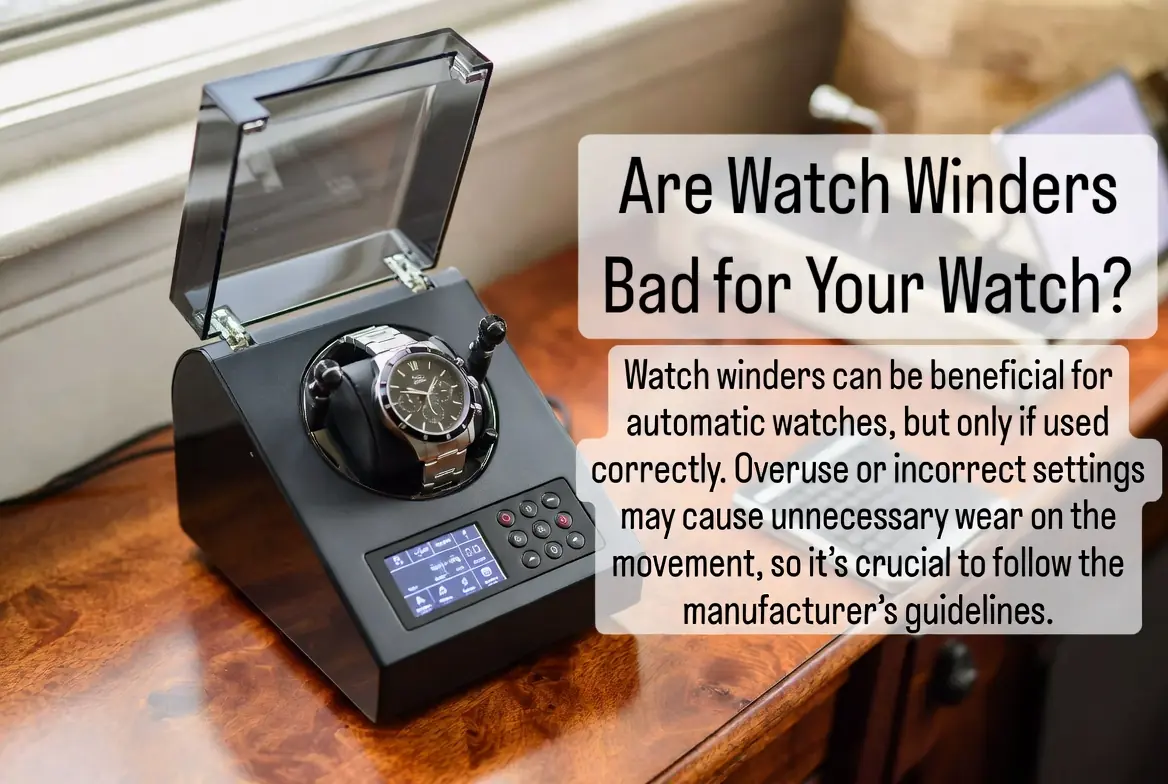
Many worry that watch winders harm watches by causing too much wear or overwinding. But experts say high-quality winders are safe when used right.
From recent talks with watchmakers, the answer is no – they’re not bad for automatic watches. One expert notes that winders prevent oils from drying out, which can happen if a watch sits still too long. Another says the motion is like wearing the watch daily, with no extra damage.
However, cheap winders can vibrate too much or use poor motors, leading to issues like magnetization. Stick to trusted brands for safety.
Are Watch Winders Bad for Rolex?
Rolex watches are tough and built to last. The company stays neutral on winders, but users report no problems. For models like the Submariner or Datejust, a winder keeps them ready without harm. Just match the TPD to Rolex specs – around 650-800 turns bidirectional.
Experts agree: Rolex’s modern movements, like the 32XX series, handle winders well. No overwinding risks thanks to built-in slips.
Are Watch Winders Bad for Automatic Watches in General?
For most automatic watches, winders are fine. They reduce the need to wind by hand, which can wear the crown over time. But don’t run them 24/7. Cycles of 12 hours on and off mimic real use better.
Vintage automatics might need extra care. Some watchmakers suggest manual winding for older pieces to avoid stress.
Pros and Cons of Using a Watch Winder
Watch winders offer perks but aren’t for everyone. Here’s a quick look:
- Pros:
- Keeps your watch set and ready – no resetting time or date.
- Helps distribute lubricants evenly, extending life.
- Great for collectors with multiple watches.
- Protects from dust and scratches in a safe holder.
- Cons:
- Can cause slight wear if used non-stop.
- Low-quality ones might damage through vibration.
- Uses energy and takes space.
- Not needed if you wear your watch daily.
To help decide, check this table comparing watch winder use:
| Scenario | Use a Winder? | Why? |
|---|---|---|
| Daily wearer | No | Natural motion winds it. |
| Collector with 3+ watches | Yes | Keeps all running. |
| Vintage watch owner | Maybe | Check with a pro for settings. |
| Rolex with complications | Yes | Maintains calendar accuracy. |
| Budget-conscious | No | Manual winding works fine. |
Best Practices for Using Watch Winders in 2026

Choose a winder with programmable settings. New models in 2026 have app controls for exact TPD and rest periods.
Set it right:
- Bidirectional for most automatics.
- 600-900 TPD for Rolex.
- Avoid constant run; use timers.
Service your watch every 5-7 years, winder or not. This keeps everything smooth.
Final Thoughts
Watch winders aren’t bad for your automatic watches or Rolex if you pick a good one and use it wisely. In 2026, with smarter designs, they’re more helpful than ever for busy collectors. But if you wear one watch daily, skip it – save the money for your next timepiece. Always prioritize regular servicing for long-lasting wear.
FAQs
Here are answers to top searches on watch winders, based on what people ask online.
1. Do watch winders overwind automatic watches? No, modern watches have safeguards to prevent overwinding. Quality winders stop when full.
2. Are watch winders necessary for automatic watches? Not really. They’re convenient for collectors but not essential if you wear your watch often.
3. Can watch winders damage a Rolex? Only if it’s a cheap winder. High-quality ones are safe and won’t harm Rolex movements.
4. What’s the best TPD setting for my watch? It varies: 650 for many Rolex, 800 for others. Check your watch manual or brand site.
5. Are there alternatives to watch winders? Yes – manual winding or just wearing it. For storage, a simple box works if you don’t mind resetting.
6. Do watch winders affect watch accuracy? They can help maintain it by keeping the watch running, but poor winders might cause issues.
7. How do I choose a good watch winder? Look for quiet motors, adjustable settings, and trusted brands like Wolf or Barrington.
8. Is it bad to leave a watch on a winder all the time? It can add wear. Use rest cycles to mimic real life.
9. Are watch winders bad for vintage watches? They might be. Vintage pieces could wear faster; consult an expert.
10. What myths exist about watch winders? One big myth: They always cause damage. Truth is, quality matters most.
Leave a Reply