Mechanical watches are making a quiet but strong comeback in 2026. As more people invest in automatic watches—especially luxury and heritage brands—the question many new owners are searching for is simple:
How does a watch winder work, and do you really need one?
What Is a Watch Winder? (Quick Overview)
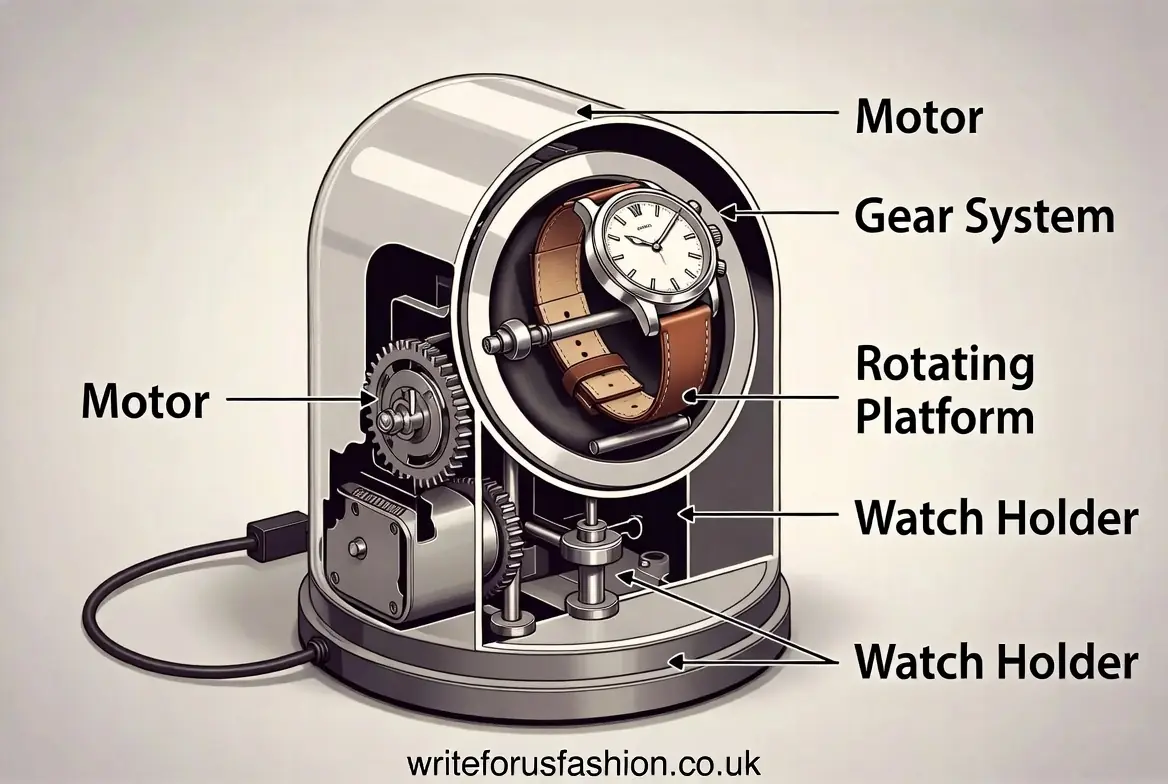
A watch winder is a small device that slowly rotates an automatic (self-winding) watch when it is not being worn. This movement keeps the watch running by mimicking the motion of the human wrist.
How Does a Watch Winder Work? (Simple Explanation)
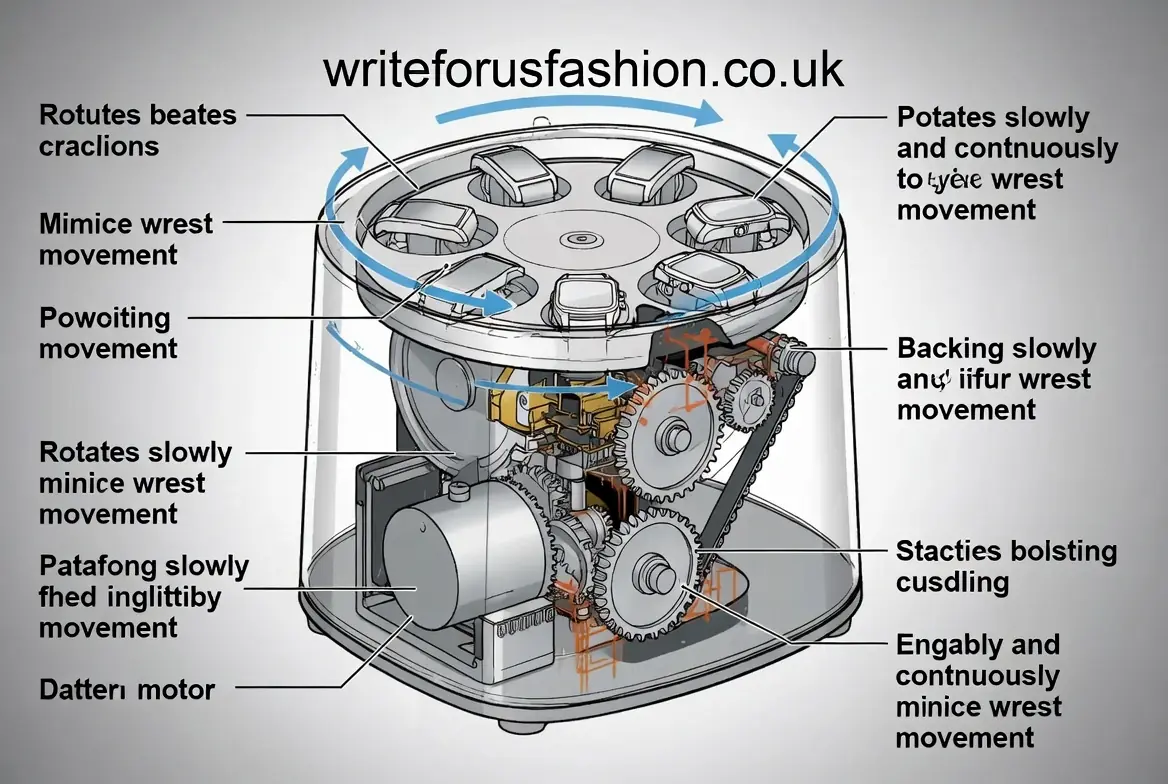
An automatic watch does not use a battery. Instead, it has a rotor inside the case.
Here’s how the process works:
- Inside an automatic watch, there is a metal rotor
- When the watch moves, the rotor spins
- This spinning motion tightens the mainspring
- The mainspring stores energy
- That energy powers the watch
A watch winder works by gently rotating the watch, so the rotor keeps moving—even when the watch is off your wrist.
In short:
No wrist movement → Watch stops
Watch winder movement → Watch keeps running
Why Watch Winders Are Trending Again in 2026

Recent watch industry updates show:
- More people own multiple automatic watches
- Skeleton and moon-phase watches are rising in popularity
- Complicated watches take time to reset manually
Because of this, watch winders are now seen less as luxury accessories and more as practical tools.
What Does “Turns Per Day” (TPD) Mean?
One of the most confusing terms users search for is TPD.
Turns Per Day explained simply:
- TPD means how many times a watch rotates in 24 hours
- Most automatic watches need 650–1,000 TPD
- Too few turns → Watch stops
- Too many turns → Unnecessary wear
Modern watch winders allow you to control TPD, which is a major improvement over older models.
Direction Matters: Clockwise vs Counter-Clockwise
Not all watches wind the same way.
Common winding directions:
- Clockwise
- Counter-clockwise
- Bi-directional
High-quality watch winders let you select the correct direction, making them safer for long-term use.
Watch Winder vs Manual Winding (Quick Comparison)
| Feature | Watch Winder | Manual Winding |
|---|---|---|
| Convenience | Very high | Low |
| Risk of over-handling | Minimal | Higher |
| Best for complications | Yes | No |
| Power consistency | Stable | Depends on user |
| Suitable for daily wear | Optional | Yes |
Are Watch Winders Safe for Automatic Watches?
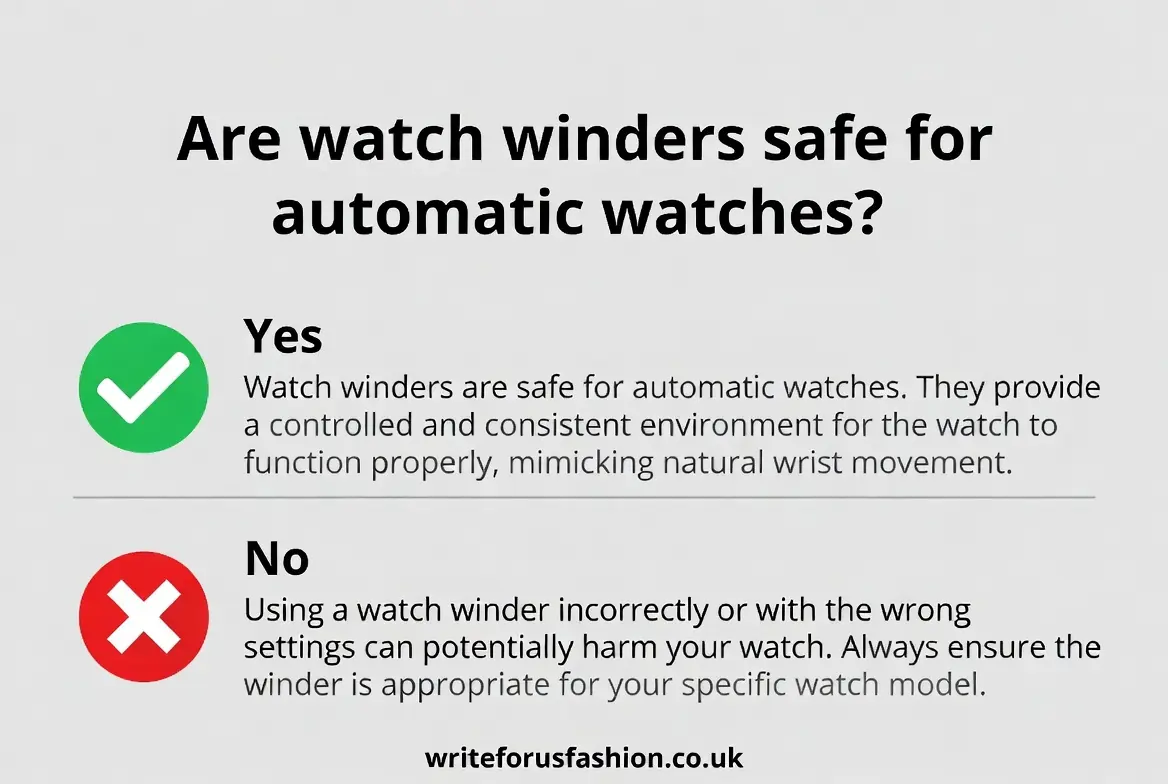
This is one of the most searched questions.
The short answer:
Yes—if used correctly.
A watch winder is safe when:
- TPD is correct
- Direction is correct
- The motor is quiet and smooth
It may cause issues when:
- It spins continuously without rest
- Cheap motors create vibration
- Wrong settings are used
Modern winders now include rest cycles, which reduce stress on the movement.
Who Should Use a Watch Winder?
A watch winder is especially useful if you:
- Own more than one automatic watch
- Wear a watch only on special occasions
- Own watches with date, moon-phase, or GMT functions
- Want accurate time without daily resetting
If you wear the same automatic watch every day, you may not need one.
You may also read: Single Watch Winder: The Stylish Way to Care for Your Automatic Watch in the UK
Common Myths About Watch Winders
Myth 1: Watch winders damage watches
Truth: Poor-quality winders do. Good ones do not.
Myth 2: You must use a winder
Truth: They are optional, not mandatory.
Myth 3: All watches need the same settings
Truth: Each movement is different.
Final Thoughts
So, how does a watch winder work?
It simply replaces wrist movement with controlled rotation to keep your automatic watch running smoothly.
In today’s watch world, a watch winder is no longer just a luxury item. When chosen wisely and used correctly, it becomes a useful tool for accuracy, convenience, and watch care—especially as mechanical watches continue to grow in popularity.
For beginners, understanding how a watch winder works is the first step toward making smarter decisions about long-term watch ownership.
Frequently Asked Questions (FAQs)
1. How does a watch winder work for automatic watches?
It rotates the watch slowly to keep the internal rotor moving, which stores energy in the mainspring.
2. Can a watch winder over-wind a watch?
No. Automatic watches have a slipping clutch that prevents over-winding.
3. Is it better to stop an automatic watch or use a winder?
For occasional use, stopping is fine. For complex watches, a winder is more convenient.
4. How many turns per day does my watch need?
Most watches need between 650 and 1,000 TPD, but this depends on the movement.
5. Does a watch winder use a lot of electricity?
No. Most modern winders use very low power or batteries.
6. Can I leave my watch on a winder all the time?
Yes, if the winder has rest cycles and correct settings.
7. Do Rolex or Omega watches need a watch winder?
They do not need one, but many owners use winders for convenience.
8. Is a watch winder necessary for beginners?
Not necessary, but helpful if you own more than one automatic watch.
